Warm marinated olives are the appetizer that asks the least of the cook and gives back the most: two kinds of good olives warmed for a few minutes in olive oil with strips of lemon and orange peel, toasted fennel and coriander seeds, a sprig of rosemary, bay leaves, a little chili and two smashed garlic cloves, then carried to the table in their oil. They take 15 minutes, they can be made from a jar and a pantry, and a bowl of them on the counter turns the hour before dinner into part of the meal. Green Castelvetrano olives bring a buttery, mild flesh; Kalamatas bring the wine-dark, salty depth; the warm oil carries the citrus and spice over both.
The recipe card at the bottom has the amounts and numbered steps for a bowl that serves 8 as a nibble. This guide covers what a cured olive is and why the two varieties are chosen, why warming changes the flavor so much more than an overnight marinade does, the toasted seeds and citrus peel, the garlic and the heat, and how to serve and store them safely. It sits in the site's recipes collection alongside the whipped mozzarella dip and the caramelized onion dip, the two other bowls that do the same job.
What a Cured Olive Is, and Which Ones to Buy
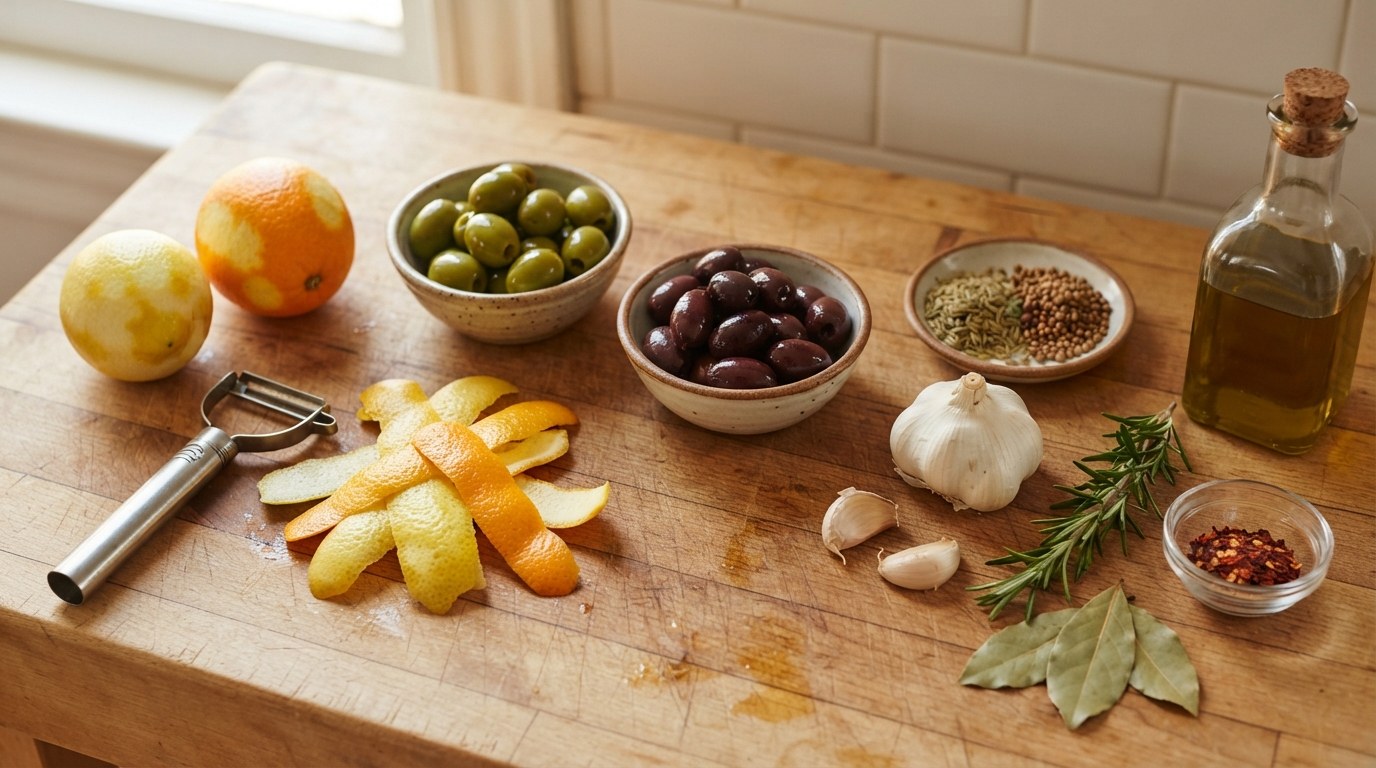
Every olive in a jar has already been transformed by chemistry before it reaches you. Raw olives are inedible, and the University of California's food preservation program explains why: olives picked off the tree contain a very bitter compound called oleuropein, and curing, whether in water, brine, lye or dry salt, works by leaching that water-soluble compound out of the fruit. A brine cure is a fermentation, the same guide notes, converting the fruit's sugars to lactic and acetic acids, which is where a Kalamata's wine-and-vinegar edge comes from. The point for this recipe is that the olive's texture and salt are already fixed when you open the jar; the marinade cannot cure or tenderize anything. It can only dress the surface and flavor the oil, and that is exactly what warming is good at.
Two varieties are better than one because they cover both ends of the olive spectrum. Castelvetrano olives, the bright green Sicilian ones with a snap and a buttery, barely bitter flesh, are picked young and cured briefly, so they stay mild and firm in warm oil. Kalamata olives, the almond-shaped purple-black Greek ones, are picked ripe and brine-cured, so they are softer, saltier and deeper. Buy both pitted or unpitted as you like, but buy them from the olive bar or in brine, not a can; canned black olives are lye-cured and heat-processed into a mild, rubbery fruit that no amount of citrus rescues. Drain them well and pat them dry, because water sitting in the pan cannot get hotter than 212°F, and a wet olive steams rather than warms.
| Ingredient | What it does | Do not substitute with |
|---|---|---|
| Castelvetrano olives, 1½ cups | Green, buttery, firm; the mild half of the bowl | Canned black olives (lye-cured, rubbery) |
| Kalamata olives, 1½ cups | Ripe, brine-fermented, salty and deep | Stuffed cocktail olives (pimento bleeds, too soft) |
| Extra-virgin olive oil, ⅓ cup | The carrier: dissolves the citrus and spice oils and coats every olive | Vegetable oil (no flavor of its own) |
| Lemon and orange peel, in strips | Limonene-rich zest oil; the aroma of the dish | Bottled juice (acid, no aroma, and it spits in hot oil) |
| Fennel and coriander seeds, toasted | Anethole and citrus-like terpenes released by dry heat | Ground spices (they burn and turn the oil muddy) |
| Rosemary, bay, chili flakes | Resinous and warm notes that infuse into the oil | Dried rosemary (woody, sticks to the olives) |
| Garlic, smashed, added late | Sweet, mellow garlic without browning | Garlic powder or minced garlic (burns in seconds) |
Why Warming Beats an Overnight Marinade
Warm olives taste more of everything, and the reason is not that the marinade has soaked in. It has not. Marinades work on the surface of food; the flavor molecules in oil, citrus and spice are far too large to travel into a dense olive, so an overnight soak seasons the outside and the oil and leaves the inside untouched. Salt is the one ingredient that moves through food, and a cured olive already has all the salt it can hold. What changes when you warm the bowl is physics rather than penetration. The aroma of citrus peel and fennel lives in volatile, fat-soluble oils, and gentle heat does two things to them at once: it draws them out of the peel and seeds into the olive oil, and it speeds their evaporation, so more of them reach your nose with every bite. A cold marinated olive from the refrigerator smells of very little; the same olive at serving warmth smells of orange and anise before it reaches your mouth.
Advertisement
Temperature also changes how much you taste on the tongue. Taste receptors are most active when food sits at roughly 86°F to 95°F, warm rather than hot, which is why refrigerator-cold olives read as flat and salty and warm ones read as rich. That is the target for this dish: warmed through and served warm, not hot, and never fried. The oil should barely shimmer and the peel should sizzle only at its edges. Extra-virgin olive oil starts to smoke and turn acrid around 375°F, and long before that the garlic browns, so the whole cook happens over low heat and takes about 8 minutes. If you see the olives blistering or the garlic coloring, the pan is too hot; pull it off the burner for a minute.
Toast the Seeds First, Then Warm the Peel in the Oil
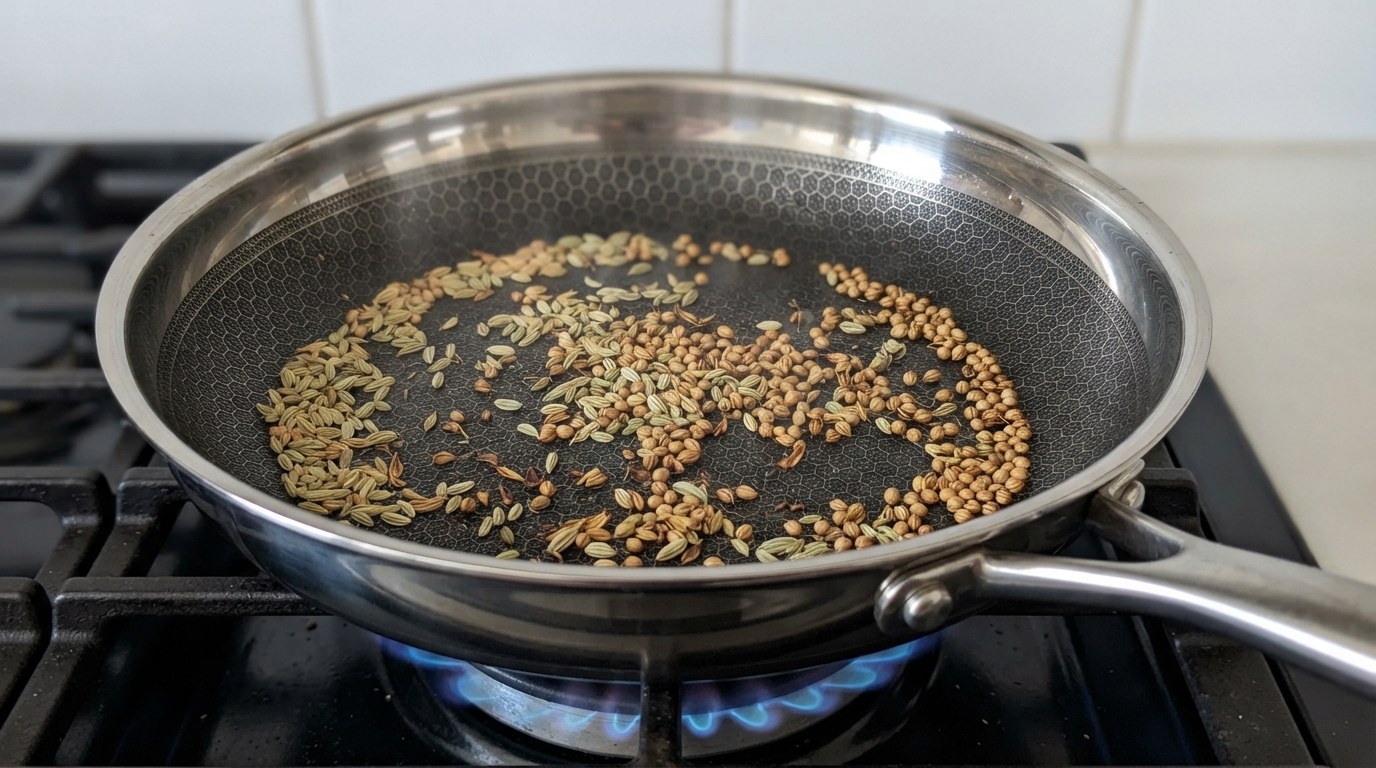
Fennel and coriander seeds go into a dry skillet over medium heat for about a minute, until they smell like licorice and orange and one or two of them crack. Dry toasting warms the oils sealed inside the seed so they come out faster once the olive oil goes in; fennel seed oil is 50 to 60 percent anethole, the compound that reads as anise, according to Montana State University's herb-oil research, and coriander seed carries a lemony, floral set of terpenes that sits naturally beside citrus peel. Crush the toasted seeds lightly with the flat of a knife so more surface meets the oil, the way Ramsay cracks peppercorns rather than grinding them to dust: the flavor is released, the seed is still a seed.
Take the peel from the lemon and orange with a vegetable peeler in wide strips, pressing lightly so you take the colored skin and leave the white pith behind, which is bitter. The color layer is where the fruit keeps its perfume; NIH-published research on citrus peel describes the oil glands packed into the flavedo, the outer peel, and finds limonene making up more than 90 percent of the oil inside them. Those glands rupture when the peel is bent and heated, which is why a strip of peel warmed in oil scents the whole pan and a squeeze of juice does not. Add the oil, the peel, the rosemary, the bay leaves and the chili flakes to the toasted seeds, drop the heat to low, and give it 3 minutes; the peel will curl and the oil will take on a faint gold. Nothing should brown.
Add the Olives and the Garlic Late, and Keep the Heat Low
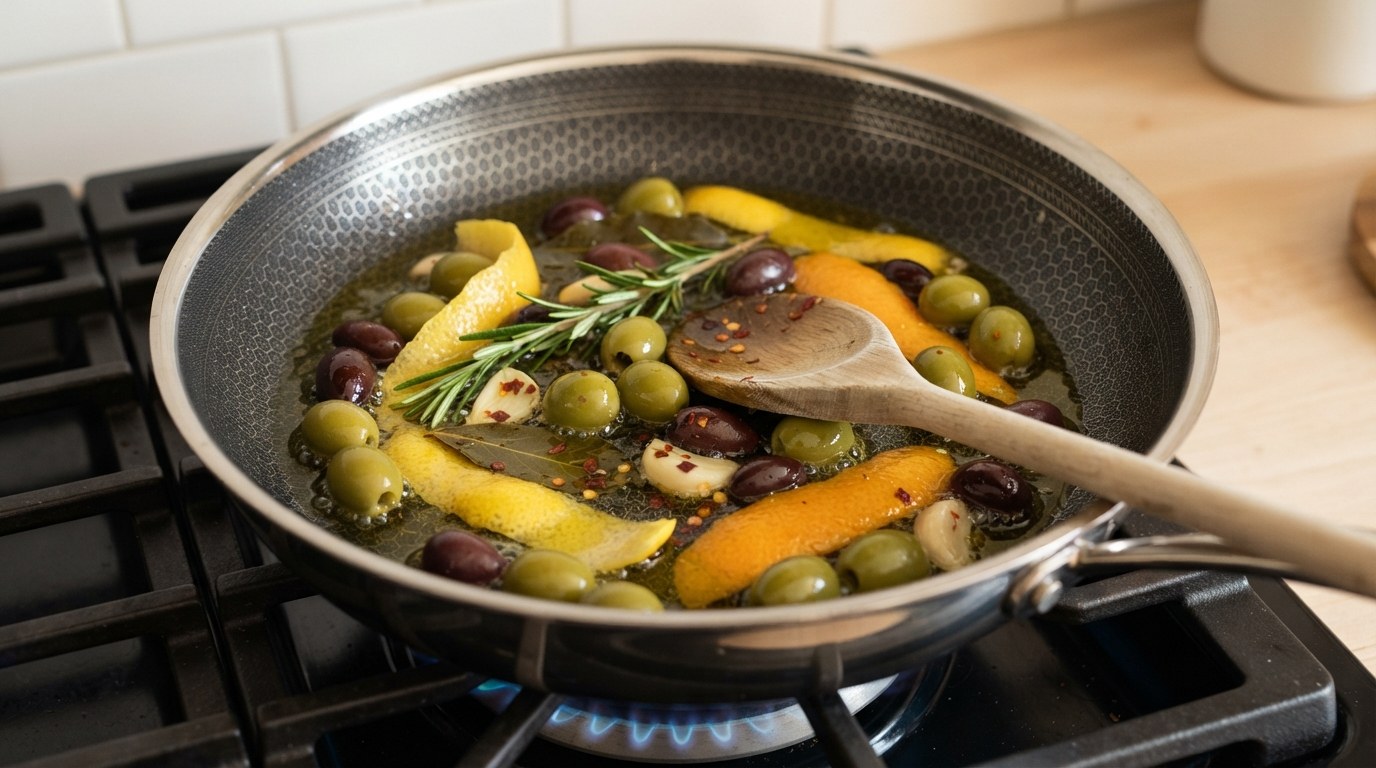
Once the oil is scented, add the drained olives and the two smashed garlic cloves together and warm them for 4 to 5 minutes, turning them in the oil with a spoon so every olive gets coated. The garlic goes in this late for the same reason it goes in late on the site's burst-tomato mozzarella dip: sliced or smashed garlic begins browning as soon as its surface dries and climbs past 284°F, the point where the Maillard reactions that make toast and seared steak also make garlic bitter, and in hot oil that takes under two minutes. Kept low and cushioned by the olives, the cloves soften and sweeten instead, and the oil picks up a mellow garlic note rather than a harsh one. Smashed, not minced, is deliberate: a crushed whole clove gives up its flavor slowly and can be fished out at the table by anyone who does not want to eat it.
Advertisement
The olives themselves want only to be warmed through. Olive flesh is held together by pectin, and a gentle warm leaves it firm and snappy, while a real fry dissolves that structure and leaves the olives wrinkled and soft. When they are glossy and a Castelvetrano feels warm to a fingertip, they are done. Take the pan off the heat, grind black pepper over, and let it stand 5 minutes; the carryover heat in the oil keeps working on the peel and seeds while the bowl cools toward serving warmth. There is no salt in this recipe on purpose. Both olives are cured in brine and already carry as much as the dish needs, and Ramsay's rule to taste before you serve applies here in reverse: taste, and resist the urge to season.
| Stage | Number | What you see |
|---|---|---|
| Toast the seeds | Medium heat, about 1 minute, dry pan | Fragrant; a seed or two cracks; no color beyond pale gold |
| Warm the peel and herbs in the oil | Low heat, 3 minutes | Peel curls and sizzles only at its edges; oil turns faintly gold |
| Warm the olives and garlic | Low heat, 4 to 5 minutes | Olives glossy and warm to the touch; garlic soft, never browned |
| Rest | Off the heat, 5 minutes | Oil cools toward serving warmth; aroma at its peak |
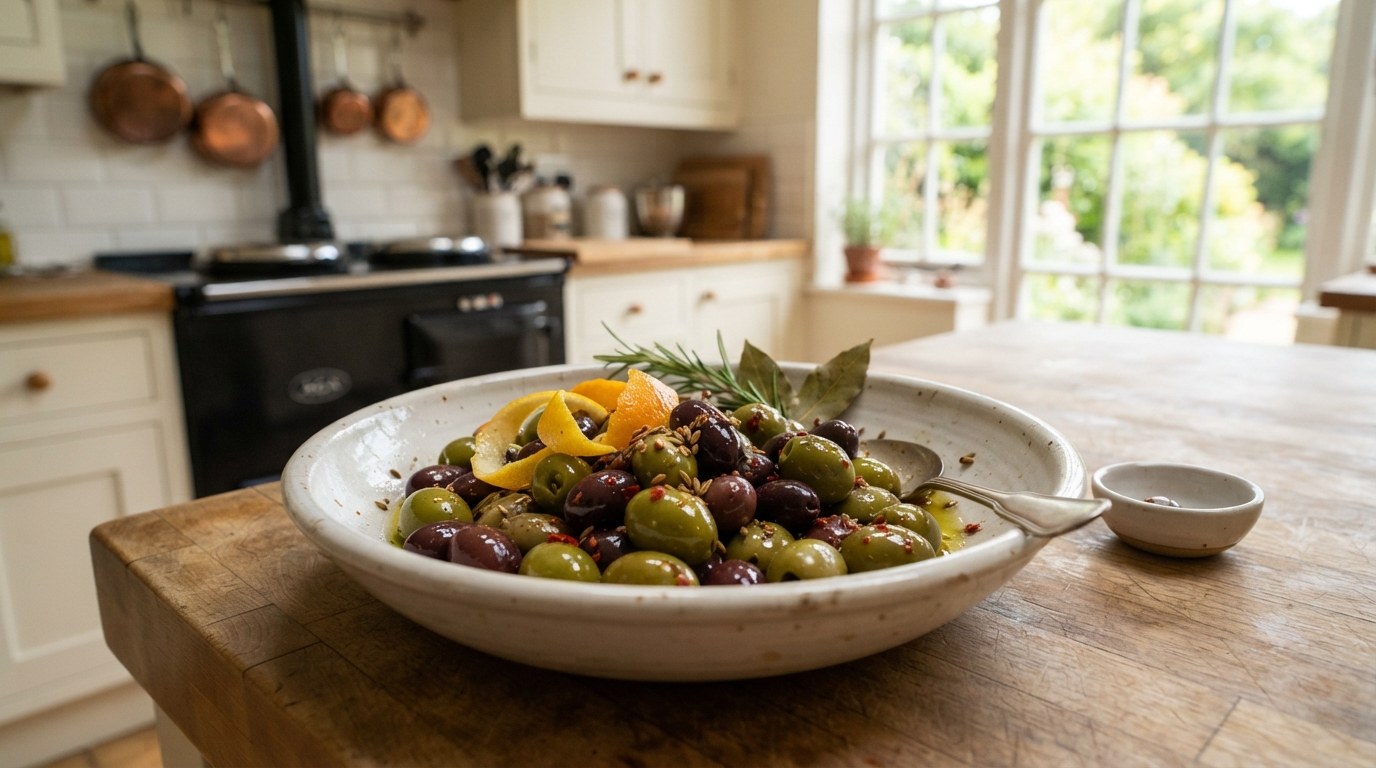
| Serve | Warm, not hot | In a shallow bowl with the oil, peel and herbs, a dish for pits beside it |
Serving, Make-Ahead and the Garlic-in-Oil Rule
Serve the olives warm in a shallow bowl with all of their oil, peel and herbs, a small dish for pits, and bread to drag through the oil, which by then is the best thing on the table. They belong with a glass of something cold in the hour before a holiday dinner, beside the cranberry-walnut cheese log and a bowl of salted almonds, or as the first plate of a longer spread built from the site's dinner-party appetizers. Count on about a third of a cup of olives per person as one of several nibbles. Any olives left over are good chopped into a pan sauce, scattered over roast chicken, or folded through pasta with the infused oil, which is Ramsay's waste-nothing rule at work.
Make-ahead has one hard limit, and it is a food safety rule rather than a flavor one. The finished olives keep, covered, in the refrigerator, and rewarm gently in a pan or a low oven in a few minutes. But the fresh garlic sitting in oil is the issue: the University of Maine Cooperative Extension's guidance on flavored oils warns that fresh vegetables, herbs and garlic used to flavor oils most likely contain Clostridium botulinum spores, and oil is the oxygen-free environment those spores need to grow at room temperature. So never leave the bowl out overnight, refrigerate it within 2 hours, and eat the olives within 4 days. If you want to marinate a bigger batch for the week, leave the garlic out until you warm each serving; the citrus, herbs and spice keep in the oil for 2 weeks in the refrigerator without it. The oil will cloud and firm in the cold, which is normal for olive oil; 10 minutes at room temperature or a minute in the pan clears it.
Warm Marinated Olives with Citrus and Fennel
Ingredients
- 1½ cups Castelvetrano olives, drained and patted dry (about 8 oz)
- 1½ cups Kalamata olives, drained and patted dry (about 8 oz)
- 1 tsp fennel seeds
- 1 tsp coriander seeds
- ⅓ cup extra-virgin olive oil
- 1 lemon, peel only, taken off in wide strips with a vegetable peeler
- 1 orange, peel only, taken off in wide strips with a vegetable peeler
- 1 sprig fresh rosemary
- 2 bay leaves
- ½ tsp red chili flakes
- 2 garlic cloves, smashed with the flat of a knife
- ½ tsp freshly cracked black pepper
Instructions
- Drain both olives and pat them dry on a towel. Peel the lemon and orange in wide strips, pressing lightly so you take the colored peel and leave the white pith behind.
- Toast the fennel and coriander seeds in a dry 10-inch skillet over medium heat for about 1 minute, shaking the pan, until fragrant and a seed or two cracks. Tip them onto a board and crush lightly with the flat of a knife.
- Return the seeds to the skillet with the olive oil, citrus peel, rosemary, bay leaves and chili flakes. Reduce the heat to low and warm for 3 minutes, until the peel curls and sizzles only at its edges and the oil turns faintly gold. Nothing should brown.
- Add the olives and the smashed garlic. Warm over low heat for 4 to 5 minutes, turning the olives in the oil, until they are glossy and warm to the touch and the garlic has softened without coloring.
- Remove from the heat, grind over the black pepper, and let stand 5 minutes. Serve warm in a shallow bowl with all of the oil, peel and herbs, with a small dish for pits and bread for the oil.
Notes
Advertisement
Warm Marinated Olives FAQs
The questions that come up most: which olives to use, whether they can be served cold, how long marinated olives keep, whether the garlic is safe in the oil, what to do with the leftover oil, whether they can be made in the oven, and whether they need salt.
What are the best olives for marinating?
Two kinds from the olive bar or a jar in brine, one green and one black: Castelvetrano for a mild, buttery, firm bite and Kalamata for a ripe, salty depth. Cerignola, Picholine and Niçoise all work in the same roles. Skip canned black olives, which are lye-cured and heat-processed into a mild, rubbery fruit that a marinade cannot fix.
Can marinated olives be served cold?
They can, but they taste of far less. Taste receptors are most active at about 86°F to 95°F, and the citrus and fennel aromas are volatile oils that evaporate toward your nose much faster when the olives are warm. Cold from the refrigerator, the same bowl reads as flat and salty. Let them come to room temperature at the very least; a few minutes in a pan is better.
How long do marinated olives keep?
With fresh garlic in the oil, 4 days in the refrigerator, and never at room temperature for more than 2 hours. Without the garlic, the olives keep 2 weeks in their oil in the refrigerator; add a smashed clove when you rewarm them. The oil clouds and firms when cold, which is normal, and clears again at room temperature.
Is garlic in olive oil safe?
Only refrigerated and only for a few days. University extension food-safety guidance warns that fresh garlic and herbs carry Clostridium botulinum spores, and oil creates the oxygen-free environment they need to grow at room temperature. Refrigerate the olives within 2 hours of serving and eat them within 4 days, or leave the garlic out of any batch you plan to keep longer.
What can I do with the leftover oil?
It is an infused oil flavored with citrus, fennel, rosemary and garlic, and it is the best part. Drag bread through it at the table, toss it with hot pasta, spoon it over roast chicken or fish, or whisk it with lemon juice into a vinaigrette. Keep it refrigerated and use it within 4 days for the same garlic-in-oil reason as the olives.
Can I make marinated olives in the oven?
Yes. Combine everything in a small baking dish and bake at 325°F for 15 to 20 minutes, stirring once, until the olives are warmed through and the oil is fragrant. The oven is gentler than a burner, so the garlic is less likely to brown, and it frees the stovetop on a busy day. Do not go hotter; the aim is warm, not fried.
Do marinated olives need salt?
No. Both olives are brine-cured and already carry more salt than the dish needs, which is why the recipe adds none and leans on citrus, spice and pepper instead. If the olives taste too salty for you, rinse them briefly and pat them dry before warming; drying matters, because wet olives steam in the pan instead of warming.

About the Author
John Siracusa is the founder of Hell’s Kitchen Recipes. He focuses on technique-first, reproducible home cooking and researches recipes & kitchen equipment from published food science and professional chef methods since 2016.