Christmas tree deviled eggs are the classic deviled egg dressed for December: the yolk filling is blended with basil pesto until it is pale green, piped into each egg white with a star tip in stacked rings so it stands up like a little tree, then hung with tiny cubes of red bell pepper as ornaments, topped with a yellow pepper star, and dusted with finely grated Parmesan for snow. They are a party trick, but underneath they are a very good deviled egg, and a good deviled egg starts an hour earlier with how the eggs are cooked. A yolk that is bright yellow and creamy, a white that peels clean, and a filling smooth enough to pipe are all decisions, and this page explains them.
The recipe card at the bottom has the amounts and numbered steps for 24 halves. This guide covers cooking the eggs so the yolks stay bright with no gray ring, peeling, the pesto filling and why it is sieved, piping the trees, the decorations, and make-ahead and food safety. It sits in the site's recipes collection with the site's standard deviled eggs, which cover the classic filling, and the rest of the holiday and seasonal table.
Cooking the Eggs: Off the Heat, Then Ice
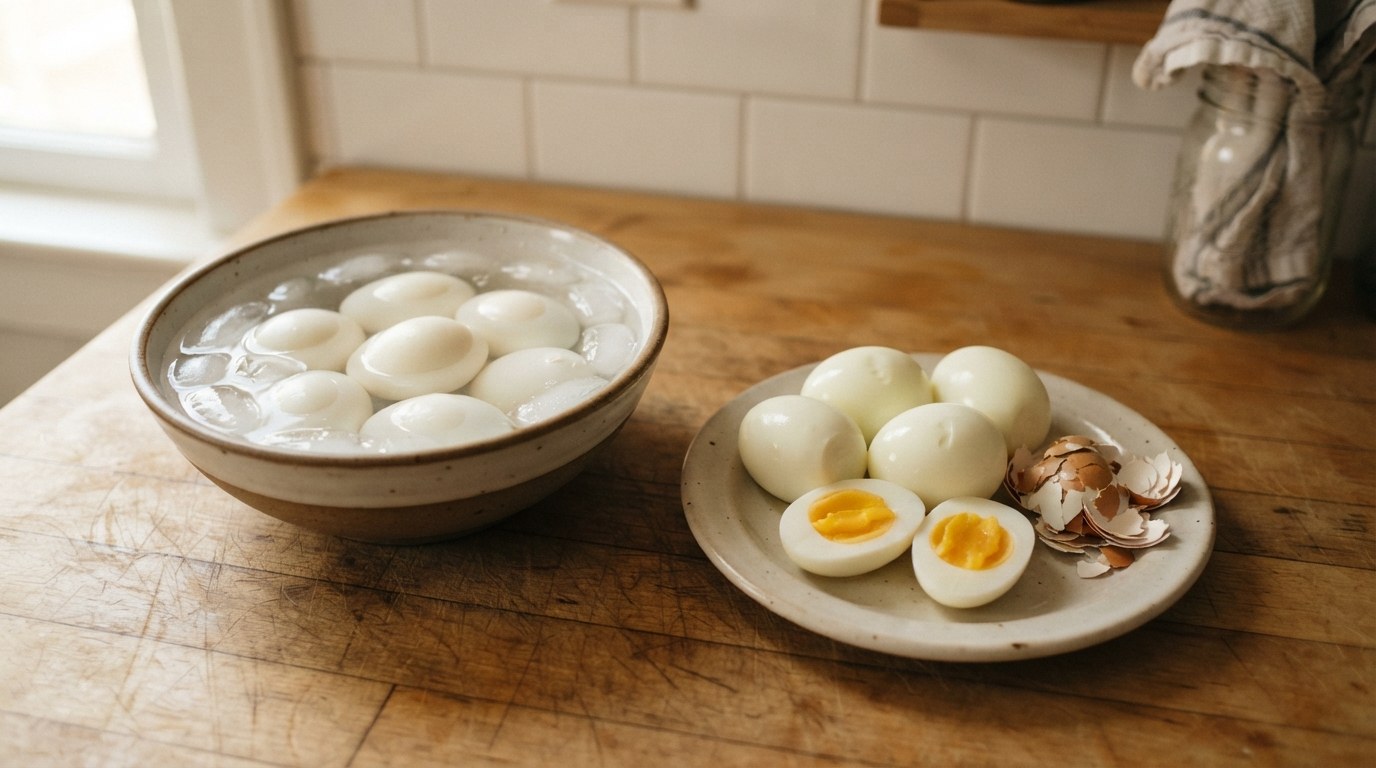
The American Egg Board's method is the one to use, because it never actually boils the eggs: set them in a single layer in a saucepan, cover with cold water by an inch, bring the water just to a boil over high heat, then take the pan off the burner, cover it, and let the eggs stand in the hot water for 12 minutes for large eggs. The water starts near boiling and drifts down, and that gentler heat is the point. Egg white proteins begin to set in the 140s°F and the yolk a little higher, and both keep tightening the hotter and longer they cook; a rolling boil for 12 minutes gives rubbery whites and a chalky yolk, while 12 minutes of standing in water that is cooling from 212°F gives a white that is set but tender and a yolk that is fully cooked but still creamy, which is what a smooth filling needs.
Then the ice bath, immediately. The gray-green ring that shows up around an overcooked yolk is a chemical event, and the University of Nebraska-Lincoln Extension describes it: sulfur from the egg white and iron from the yolk react at the yolk's surface to form ferrous sulfide, and the reaction is driven by overcooking and by slow cooling. It is harmless, but it turns a green pesto filling muddy. Its prevention is cooling the eggs fast, in a bowl of ice water until they are completely cold, which stops the cooking and the reaction together. The Egg Board adds the peeling rule: fresh eggs are the hardest to peel, so buy them a week to ten days ahead, and peel them right after they cool, when the shell releases most easily. Crack each egg all over, roll it under your palm, and peel under a thin stream of water.
| Ingredient | What it does | Do not substitute with |
|---|---|---|
| Large eggs, 12, a week old | Older eggs peel clean; large is what the 12-minute stand is timed for | Farm-fresh eggs (they tear when peeled) |
| Mayonnaise, ⅓ cup | The emulsion that makes the filling creamy and pipeable | Miracle Whip (sweet and thin) |
| Basil pesto, 3 Tbsp | The green and the flavor | Dried basil (no color; dusty) |
| Dijon and lemon juice | Sharpness; the acid also slows the pesto browning | Yellow mustard alone (flat) |
| Red bell pepper, diced tiny, and a yellow pepper star | Ornaments and the star | Cherry tomatoes (wet; they slide off) |
| Parmigiano Reggiano, finely grated | The snow, and a salty finish | Pre-grated canned cheese (dusty and sour) |
The Pesto Filling: Smooth Enough to Pipe
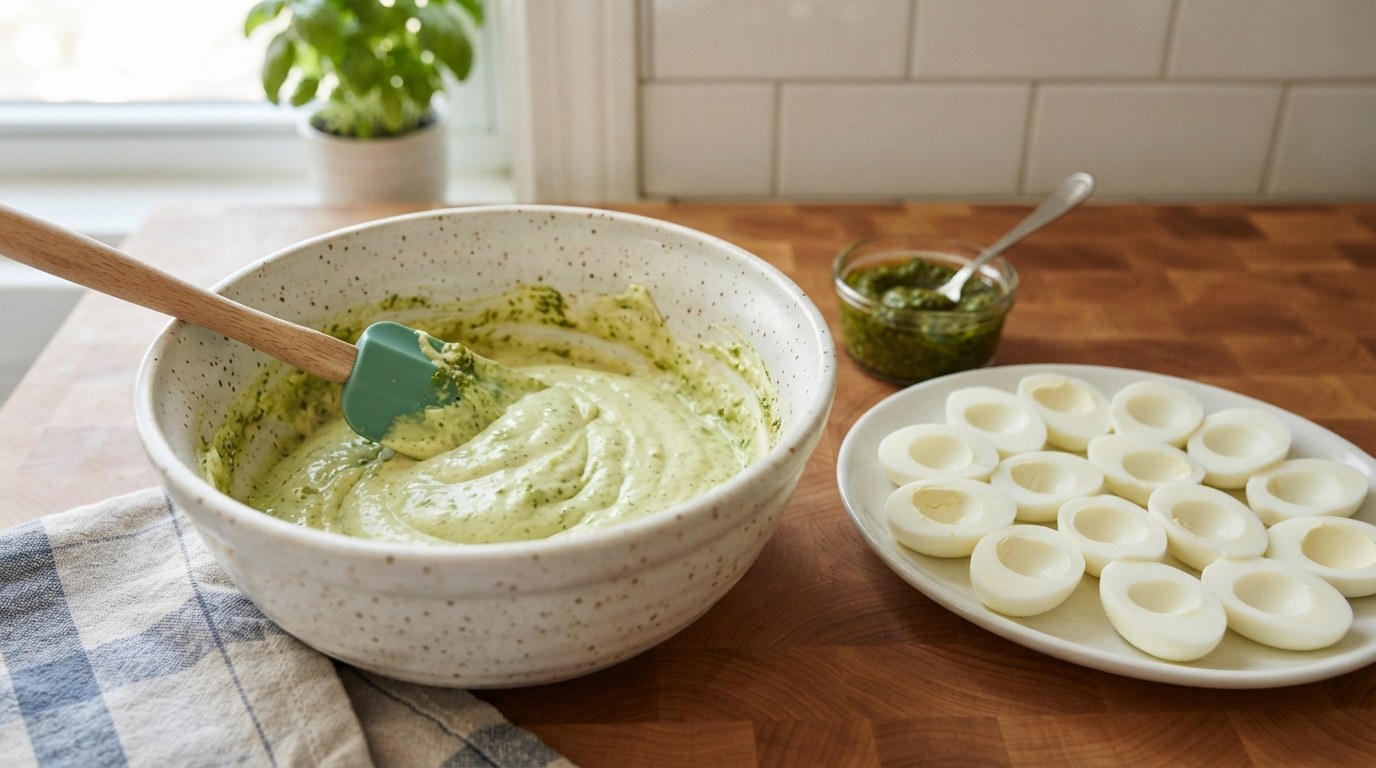
Halve the peeled eggs lengthwise, pop the yolks into a bowl, and set the whites on a tray. A tree needs a filling stiffer and smoother than a spoon-filled deviled egg does, because a star tip shows every lump and a soft filling slumps. So the yolks are mashed with a fork, then beaten with the mayonnaise, pesto, Dijon, lemon juice, salt and pepper until they form a paste, and then pushed through a fine sieve with the back of a spoon. Sieving is the step most recipes skip and the one that makes the ridges sharp: it breaks up the last bits of cooked yolk into a uniform cream. The filling should hold a peak on the spoon; if it is loose, add a mashed extra yolk or a spoon of grated Parmesan, and if it is stiff, a teaspoon more mayonnaise.
Advertisement
The green comes from the pesto, and pesto is basil, which browns. Cut or crushed basil leaves darken through enzymatic browning as their cell contents meet air, and Rutgers' postharvest guide to basil lists blackening as the leaf's response to damage and cold. A fresh pesto with a bright green color, either homemade with plenty of oil or a refrigerated one rather than a jar from the shelf, gives the best tree, and the lemon juice in the filling slows the browning down; acid is the reason a squeeze of lemon keeps guacamole green, and it works here the same way. Chill the filling 20 minutes before piping so it firms and the trees stand.
Piping the Trees and Hanging the Ornaments
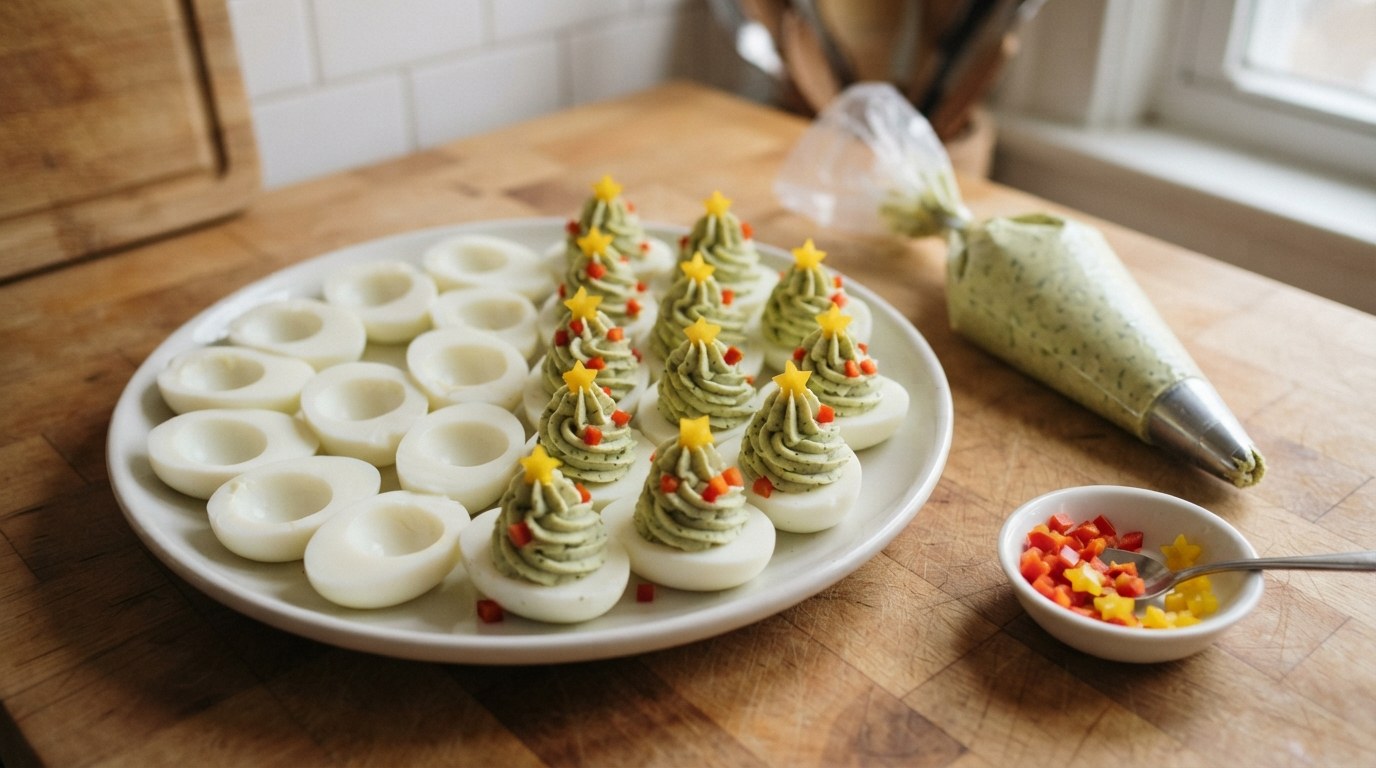
Fit a piping bag with an open star tip, the medium size used for cupcake frosting, and fill it with the cold filling. Hold the bag straight up over the hollow of an egg white and pipe a ring that fills the cavity, then a smaller ring on top of it, then a smaller one, lifting slightly between each, three or four tiers, and pull the bag straight up to leave a point. Each tree takes about five seconds once you have done two. Pipe all 24 before decorating, and keep the tray in the refrigerator between batches on a warm day; the filling softens as the mayonnaise's fat warms.
For the ornaments, dice a red bell pepper into cubes as small as you can cut, about an eighth of an inch, and press them into the ridges of each tree with the tip of a knife; pomegranate arils or halved cranberries work too. For the stars, cut thin slices of yellow bell pepper and punch them with the smallest star cutter from a fondant set, or cut them by hand with a paring knife, and set one on each point. Finish with Parmigiano Reggiano grated on a fine rasp so it falls like snow; the consortium specifies that it is made of milk, salt and rennet only and aged at least 12 months, and the aged cheese grates into a dry, fluffy powder where a young cheese clumps.
| Stage | Number | What you see |
|---|---|---|
| Cook the eggs | Just to a boil, off heat, covered, 12 minutes | Whites set and tender, yolks creamy |
| Ice bath | Until completely cold | No gray ring; shells release |
| Filling | Beat, sieve, chill 20 minutes | Smooth, holds a peak |
| Pipe | 3 to 4 stacked rings, star tip | Tall trees with sharp ridges |
| Decorate and chill | Within 4 hours of serving | Ornaments set in the ridges; snow on top |
Make-Ahead, Food Safety and Variations
Cook and peel the eggs up to two days ahead and keep them whole in the refrigerator; halve them and make the filling up to a day ahead, storing the whites covered and the filling in the piping bag. Pipe and decorate within 4 hours of serving and keep the tray refrigerated until it goes out. Cooked eggs are a perishable food, so the platter should not sit out longer than 2 hours, and it goes back in the cold between rounds at a long party. The whites will weep a little liquid on the tray as they sit; a paper towel under them for the first hour absorbs it.
Advertisement
Variations: avocado mashed into the yolks in place of half the mayonnaise for a creamier green, with extra lemon to hold the color; a spinach-and-herb pesto for a deeper green without basil; a pinch of smoked paprika on the snow. For the classic filling underneath the decorations, the site's deviled eggs page is the reference. Beside them on the table, the caprese bites and the cranberry walnut cheese log keep the red and green going.

Christmas Tree Deviled Eggs (Pesto)
Ingredients
- 12 large eggs, at least a week old
- ⅓ cup mayonnaise
- 3 Tbsp basil pesto, fresh and bright green
- 1 tsp Dijon mustard
- 1 tsp fresh lemon juice
- ¼ tsp fine sea salt, plus black pepper
- ¼ red bell pepper, diced into ⅛-inch cubes
- ¼ yellow bell pepper, sliced thin, for 24 small stars
- 3 Tbsp Parmigiano Reggiano, finely grated
Instructions
- Set the eggs in a single layer in a saucepan and add cold water to cover by 1 inch. Bring just to a boil over high heat, then remove the pan from the burner, cover, and let stand 12 minutes. Transfer the eggs to a bowl of ice water and cool completely.
- Peel the eggs, halve them lengthwise, and put the yolks in a bowl. Arrange the whites on a tray.
- Mash the yolks with a fork, then beat in the mayonnaise, pesto, Dijon, lemon juice, salt and pepper until a paste forms. Push the filling through a fine sieve with the back of a spoon into a clean bowl. It should hold a peak; adjust with a spoon of Parmesan (stiffer) or mayonnaise (looser). Chill 20 minutes.
- Fill a piping bag fitted with an open star tip. Holding the bag straight up over each white, pipe a ring to fill the hollow, then two or three smaller rings on top, lifting between each, and pull up to a point.
- Press the red pepper cubes into the ridges as ornaments. Cut the yellow pepper slices into small stars and set one on each tree. Grate the Parmigiano Reggiano over the trees as snow. Refrigerate until serving, within 4 hours; do not leave out longer than 2 hours.
Notes
Advertisement
Christmas Tree Deviled Eggs FAQs
The questions that come up most: how to make the filling green, why the filling would not pipe, how to avoid the gray ring on the yolks, how to peel eggs cleanly, how far ahead they can be made, how long they can sit out, what to use for the ornaments and star, and whether avocado works.
How do you make the deviled egg filling green?
Basil pesto beaten into the yolks, about 3 tablespoons for a dozen eggs, gives a pale, natural green with the flavor to match. Use a fresh, bright pesto rather than a shelf-stable jar, add a teaspoon of lemon juice to slow the basil's browning, and skip food coloring, which tastes of nothing and turns the filling an unnatural shade.
Why won't my filling pipe into a tree?
It is lumpy or too soft. Beat the yolks with the mayonnaise and pesto into a paste, then push the filling through a fine sieve so a star tip shows sharp ridges instead of cooked-yolk bits, and chill it 20 minutes so it stands. If it is loose, add a mashed extra yolk or a spoon of Parmesan.
How do I avoid the gray-green ring around the yolk?
Do not overcook, and cool fast. The ring is ferrous sulfide, formed when sulfur from the white meets iron in the yolk during overcooking or slow cooling. Use the off-the-heat method: bring the covered eggs to a boil, remove the pan from the burner, cover, stand 12 minutes for large eggs, then straight into ice water until cold.
How do I get hard-boiled eggs to peel cleanly?
Use eggs that are a week to ten days old, cool them completely in ice water, and peel them right after cooling; very fresh eggs cling to their shells. Crack the shell all over, roll the egg under your palm, and peel under a thin stream of running water.
How far ahead can I make Christmas tree deviled eggs?
Cook and peel the eggs up to 2 days ahead; halve them and make the filling up to a day ahead, with the filling in the piping bag. Pipe and decorate within 4 hours of serving and refrigerate until the platter goes out.
How long can deviled eggs sit out?
Two hours at most, like any cooked egg dish. Put the tray back in the refrigerator between rounds at a long party, and set it on a chilled platter or over ice for a buffet.
What can I use for the ornaments and the star?
Tiny cubes of red bell pepper, pomegranate arils, or halved dried cranberries for ornaments, pressed into the ridges; a star punched from a thin slice of yellow bell pepper with a small cutter, or a shaving of cheddar cut by hand. Finely grated Parmigiano Reggiano is the snow.
Can I use avocado in the filling?
Yes. Mash half an avocado into the yolks in place of half the mayonnaise for a creamier, deeper green, and double the lemon juice, since avocado browns faster than basil. Serve avocado versions within 2 hours of piping.

About the Author
John Siracusa is the founder of Hell’s Kitchen Recipes. He focuses on technique-first, reproducible home cooking and researches recipes & kitchen equipment from published food science and professional chef methods since 2016.