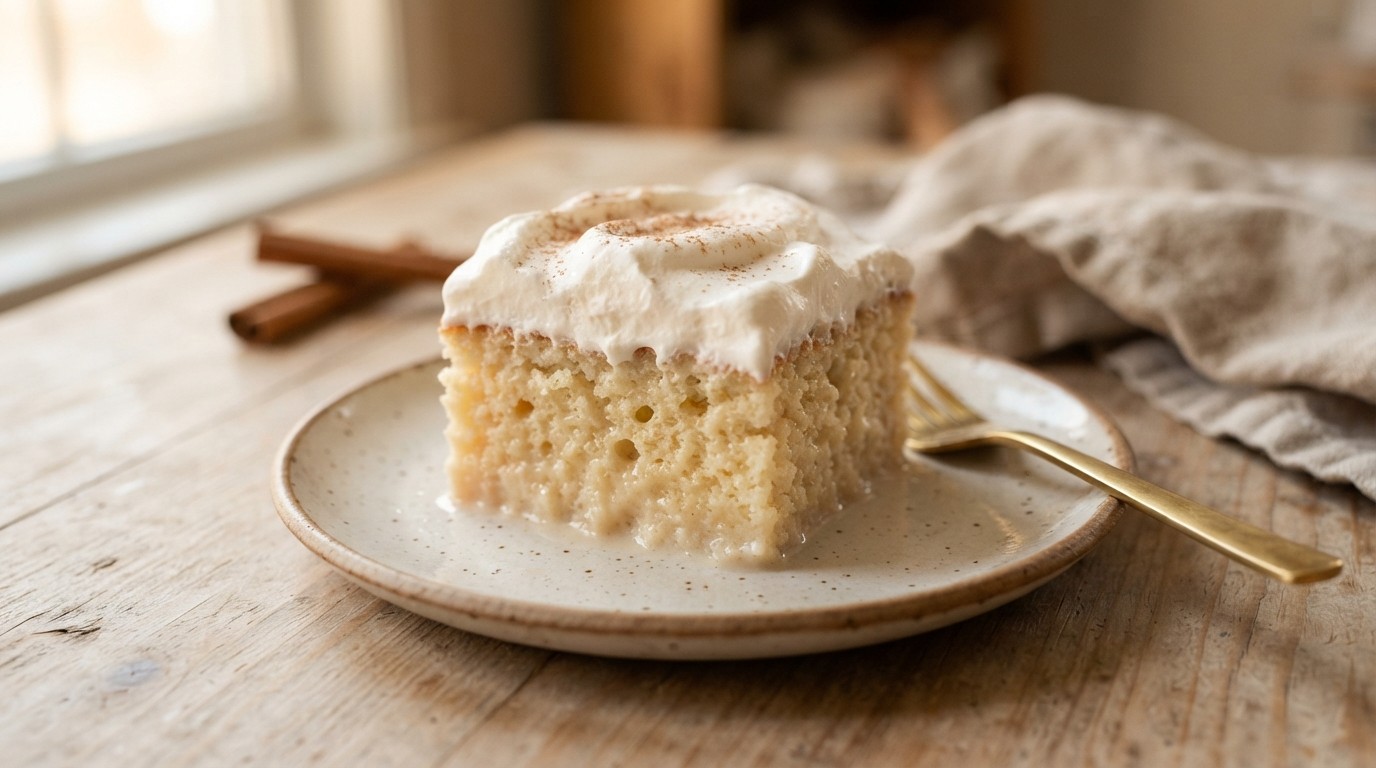
Toasted milk tres leches cake is the classic Latin American soaked sponge with one upgrade: the milk gets browned before it ever touches the cake. Toasting dry milk powder in a dry skillet caramelizes its sugars and proteins into a deep, nutty flavor, and that toasted powder then goes into both the sponge and the three-milk soak. The result tastes like tres leches with the volume turned up, the same tender, milk-drenched crumb carrying a butterscotch depth behind it.
Structurally it is still a sponge cake built to drink. Whipped egg whites make it airy enough to soak up a flood of sweetened condensed, evaporated, and whole milk without slumping into pudding. Adding a fourth dairy, the toasted milk powder, technically makes it cuatro leches, and it is the single change that sets a homemade version apart from any box-mix shortcut. This guide covers the technique, the same way we break down every recipe in our cooking techniques library.
What is tres leches cake?
Tres leches cake is a light sponge soaked in three milks, sweetened condensed milk, evaporated milk, and whole milk or cream, until it is saturated but still holds its shape. The name is Spanish for "three milks." The dessert is a staple across Latin America, most often credited to Nicaragua and spread in the 20th century by recipes printed on the labels of canned-milk brands. It is served cold, blanketed with whipped cream, and usually finished with a dusting of cinnamon. If you like this style of custardy, milk-forward dessert, our pumpkin crème brûlée works the same rich-dairy territory from a different angle.
What makes toasted milk tres leches different
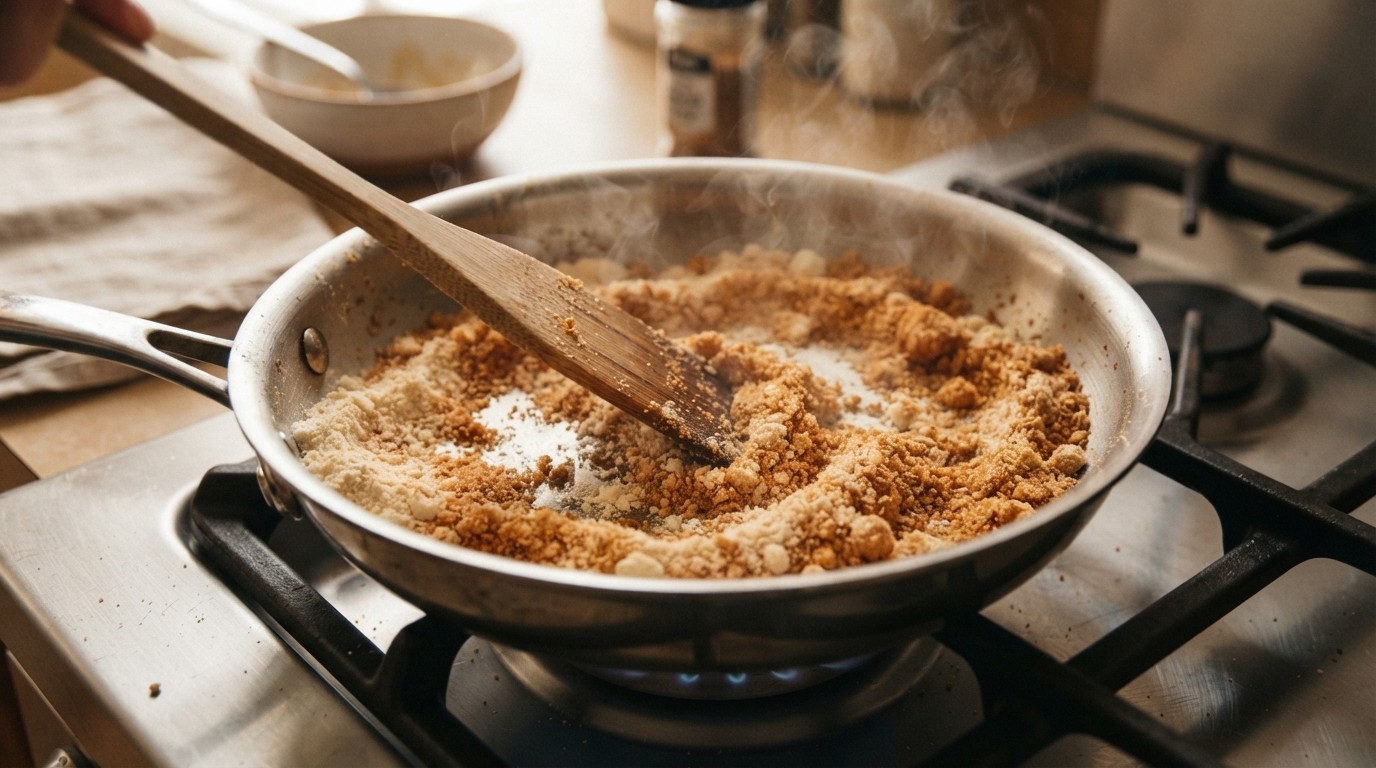
Toasting the milk is the change that separates this version from a standard tres leches. Heating dry milk powder in a dry pan triggers the Maillard reaction, the browning chemistry that gives seared meat and toasted bread their savory depth, described by Britannica as the reaction between amino acids and sugars under heat. As the milk’s lactose and proteins brown, they build new flavor compounds that read as caramel, malt, and toffee. Keep the powder moving in the pan and pull it at deep golden; taken past that point it turns bitter. Folding the cooled toasted powder into both the batter and the soak carries that flavor through every layer of the cake.
The three milks, and the fourth
The soak is what defines tres leches, and each milk plays a distinct role. Sweetened condensed milk brings thick, caramel-edged sweetness; evaporated milk adds concentrated, gently cooked dairy flavor; whole milk thins the mixture so it flows into the crumb instead of sitting on top. Here the toasted milk powder whisks in as a fourth element, which is why the cake earns the name cuatro leches. According to Serious Eats, the cake absorbs its own weight in liquid without collapsing when the sponge is built for it, so the soak should be poured over the warm, poked cake in stages and given time to settle rather than dumped on all at once.
The sponge that holds the soak
A tres leches sponge stays intact under all that liquid because it is leavened with whipped egg whites rather than butter. You separate the eggs, whip the whites with a little cream of tartar to stiff, glossy peaks, and fold them gently into the yolk-and-flour batter so the air survives. That open, elastic crumb behaves like an actual sponge and draws the milk inward. King Arthur Baking notes that folding, rather than stirring, is what preserves the whipped-in air, so use a light hand and stop as soon as the streaks disappear. Room-temperature eggs whip to greater volume, which is why the recipe calls for pulling them from the fridge ahead of time.
Is tres leches cake soggy?
Properly made, tres leches is moist and custardy rather than soggy. The difference comes down to the sponge structure and controlled soaking. Poke holes across the whole surface while the cake is still warm, pour the milk gradually so each addition disappears before the next, and let the cake rest chilled for at least three hours, ideally overnight, so the liquid distributes evenly all the way through. Soggy tres leches almost always traces back to a dense, under-whipped cake that cannot hold the liquid, or to flooding the soak on all at once. Get the sponge right and the crumb stays saturated and sliceable.
The whipped cream top and cinnamon finish
The topping is a separate, fresh whipped cream, not part of the soak. Whip cold heavy cream with a spoonful of confectioners’ sugar and a little vanilla to soft, spreadable peaks, then swirl it over the chilled, soaked cake. Stop at soft peaks; overwhipped cream turns grainy and can weep as it sits. A final dusting of ground cinnamon and a little of the reserved toasted milk powder ties the topping back to the caramelized flavor running through the cake. Serve it cold, straight from the dish, and keep leftovers covered in the refrigerator.
Common problems, and how to avoid them
Almost every tres leches problem comes back to the sponge or the soak. Here is the quick diagnosis:
| Problem | Cause | Fix |
|---|---|---|
| Soggy, falling-apart cake | Whites under-whipped or batter deflated; too much soak at once | Whip whites to stiff peaks, fold gently, add the soak in stages |
| Cake will not absorb the milk | Not poked, or poured while cold; edges overbaked dry | Poke all over while warm and pour the soak slowly in additions |
| Toasted milk tastes bitter | Milk powder scorched in the pan | Toast over medium heat, stir constantly, pull it at deep golden |
| Weeping whipped cream | Cream overwhipped or added too far ahead | Whip only to soft peaks and top within a few hours of serving |
Toasted Milk Tres Leches Cake
Ingredients
- 1 cup dry whole milk powder
- 5 large eggs, separated, at room temperature
- 1 cup granulated sugar, divided
- 1/2 cup whole milk
- 1 cup all-purpose flour
- 1 tsp baking powder
- 3/4 tsp fine salt
- 1/4 tsp cream of tartar
- 3/4 cup sweetened condensed milk
- 3/4 cup evaporated milk
- 1/2 cup whole milk
- 2 cups cold heavy cream
- 1/4 cup confectioners' sugar
- 1 tsp vanilla extract
- Ground cinnamon, for dusting
Toasted milk
- undefined
Sponge
- undefined
Three-milk soak
- undefined
Whipped cream + garnish
- undefined
Instructions
- Toast the milk: cook the dry milk powder in a dry skillet over medium heat, stirring constantly, until deep golden and fragrant, 5 to 7 minutes. Watch it closely so it does not scorch. Scrape it onto a plate and let it cool completely. Reserve 2 tablespoons for garnish.
- Heat the oven to 350°F (175°C). Have an ungreased 9-inch square or round ceramic or glass baking dish ready.
- Beat the egg yolks with 1/2 cup of the sugar until thick and pale, 1 to 2 minutes, then beat in the 1/2 cup whole milk until combined.
- Whisk the flour, 1/3 cup of the toasted milk powder, the baking powder, and salt in a bowl. Fold this into the yolk mixture until just combined; the batter will be thick.
- In a clean bowl, whip the egg whites with the cream of tartar to soft peaks. With the mixer running, add the remaining 1/2 cup sugar in a slow stream and whip to stiff, glossy peaks. Stir a quarter of the whites into the batter to loosen it, then gently fold in the rest in two or three additions until no streaks remain.
- Scrape the batter into the dish, smooth the top, and tap the dish to settle it. Bake until a pick inserted in the center comes out clean, 32 to 38 minutes. Cool 10 minutes, then poke holes every 1/2 inch across the whole surface with a skewer.
- Make the soak: whisk together the sweetened condensed milk, evaporated milk, 1/2 cup whole milk, and the remaining toasted milk powder (less the reserved 2 tablespoons). Slowly pour it over the warm cake in stages, letting each addition soak in. Cover and refrigerate at least 3 hours or overnight.
- To serve, whip the cold heavy cream with the confectioners’ sugar and vanilla to soft peaks. Spread over the chilled cake, dust with cinnamon and the reserved toasted milk powder, and serve cold.
Notes
Toasted Milk Tres Leches FAQs
The questions that come up most: which milks go into the cake, whether it is supposed to be soggy, making it ahead, how long it keeps, and using a box mix.
What milks are in a tres leches cake?
A classic tres leches uses three: sweetened condensed milk, evaporated milk, and whole milk or cream. This toasted-milk version adds a fourth, toasted dry milk powder whisked into the soak, which is why it is sometimes called cuatro leches (four milks).
Is tres leches cake supposed to be soggy?
It should be very moist and custardy, but not soggy or falling apart. A properly whipped egg-white sponge holds the three-milk soak while staying sliceable. Sogginess usually means the cake was too dense to absorb the liquid evenly, or the soak was poured on all at once instead of in stages.
Can I make tres leches cake ahead or freeze it?
Make-ahead is the ideal way to serve it, because the cake needs at least three hours (and preferably overnight) in the refrigerator to soak through. Freezing is not recommended once it is soaked and topped, since the whipped cream and the milk-saturated crumb both lose their texture when thawed.
How long does tres leches cake last in the fridge?
Kept covered and cold, it holds for about three to four days, in line with the general refrigerator guidance from the USDA. The soaked crumb actually improves for the first day or so; add the whipped cream close to serving for the best texture.
Can I use a box cake mix for tres leches?
You can, and many quick versions do, but a from-scratch egg-white sponge holds the soak better and tastes lighter. Box mixes are formulated with more fat and a tighter crumb, so they absorb less liquid and can turn gummy under a full tres leches soak.
How do you pronounce tres leches?
It is pronounced "trays LEH-chess," from the Spanish for three milks. The dish is spelled tres leches, and the toasted, four-milk variation here is a cuatro leches ("KWAH-troh LEH-chess").

About the Author
John Siracusa is the founder of Hell’s Kitchen Recipes. He focuses on technique-first, reproducible home cooking and researches recipes & kitchen equipment from published food science and professional chef methods since 2016.