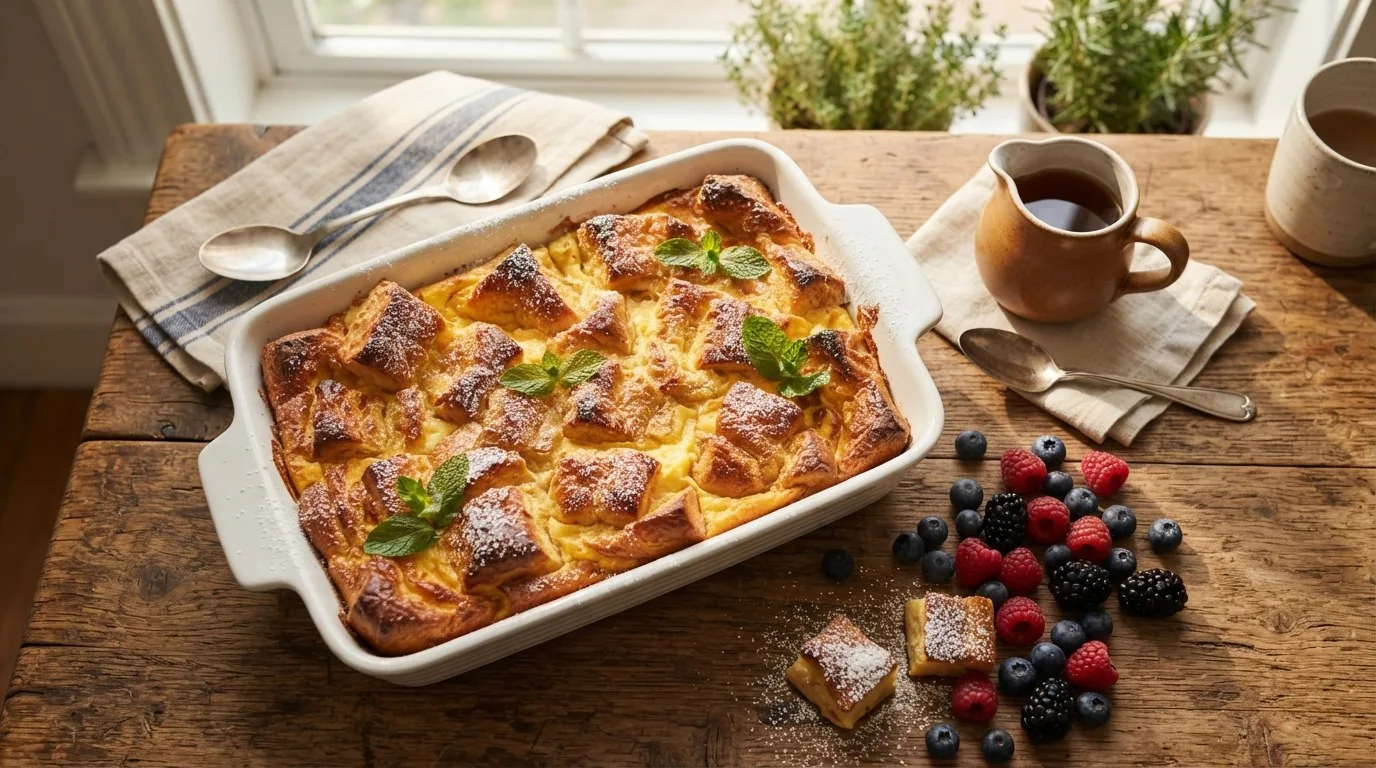
French toast bread pudding is baked, sliceable French toast: cubes of enriched bread soaked in a sweet egg custard and baked in one dish until the top turns crisp and golden and the center sets into something between custard and cake. It fixes the biggest hassle of skillet French toast, frying one slice at a time, by cooking the whole batch at once, which is why it has become a brunch-table staple.
The version below uses a custard of five eggs to one pint of half-and-half poured over a pound of day-old challah. That ratio, rich but not soupy, is what keeps the middle creamy instead of wet, and it scales cleanly to a 9x13 dish that serves ten. Assemble it the night before, and breakfast is a 40-minute bake away.
What Is French Toast Bread Pudding?
French toast bread pudding is a baked custard-and-bread dish that sits between two classics: the eggy, cinnamon-scented flavor of French toast and the soft, spoonable body of a traditional bread pudding. You will also see it sold as "baked French toast" or a "French toast casserole," the same idea under a breakfast name rather than a dessert one.
Unlike a savory strata, which leans on cheese and vegetables, this is a sweet dish: sugar, vanilla, and lemon zest go into the custard, and it is finished with confectioners' sugar and maple syrup. That makes French toast bread pudding as at home on a dessert plate as it is on a brunch buffet.
The Best Bread for French Toast Bread Pudding
Challah and brioche are the best breads for French toast bread pudding. Both are enriched (made with egg and butter), so they drink up custard while keeping enough structure to hold their shape instead of collapsing. King Arthur Baking recommends enriched breads like these for French toast, and the same logic carries into the oven. Day-old bread beats fresh, because a slightly dry crumb absorbs the custard evenly.
Advertisement
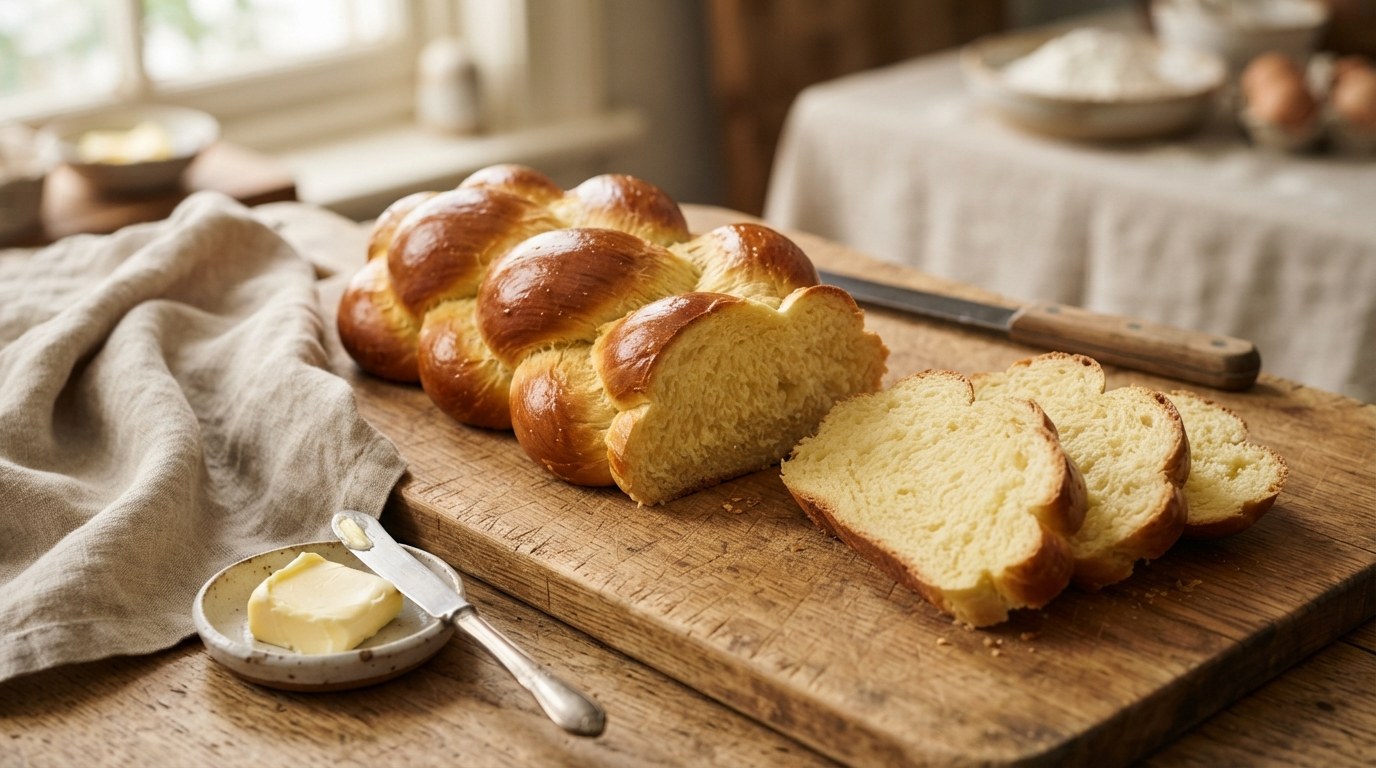
| Bread | Texture in the bake | Best for |
|---|---|---|
| Challah | Light, custardy, tender | The classic, plush result |
| Brioche | Richest, almost cake-like | A dessert-leaning pudding |
| French bread / baguette | Chewier, defined cubes | A firmer, less sweet bake |
| White sandwich loaf | Soft, can go dense | A budget option; dry it well first |
Whatever you choose, cut it into ¾-inch pieces. Bigger cubes stay distinct and give a range of textures (crisp edges, custardy centers) while very small pieces melt together into a denser pudding.
The Custard Ratio That Sets Every Time
The custard is five large eggs whisked with one pint (two cups) of half-and-half, ⅔ cup granulated sugar, and ¼ cup dark brown sugar. The eggs do the setting: as the pudding bakes, their proteins coagulate and firm the liquid into a sliceable custard. Whole eggs begin to set at around 145°F, which is why the dish needs only a moderate 375°F oven — hot enough to cook through, gentle enough not to curdle. (The American Egg Board keeps a full reference on egg-cookery temperatures.)
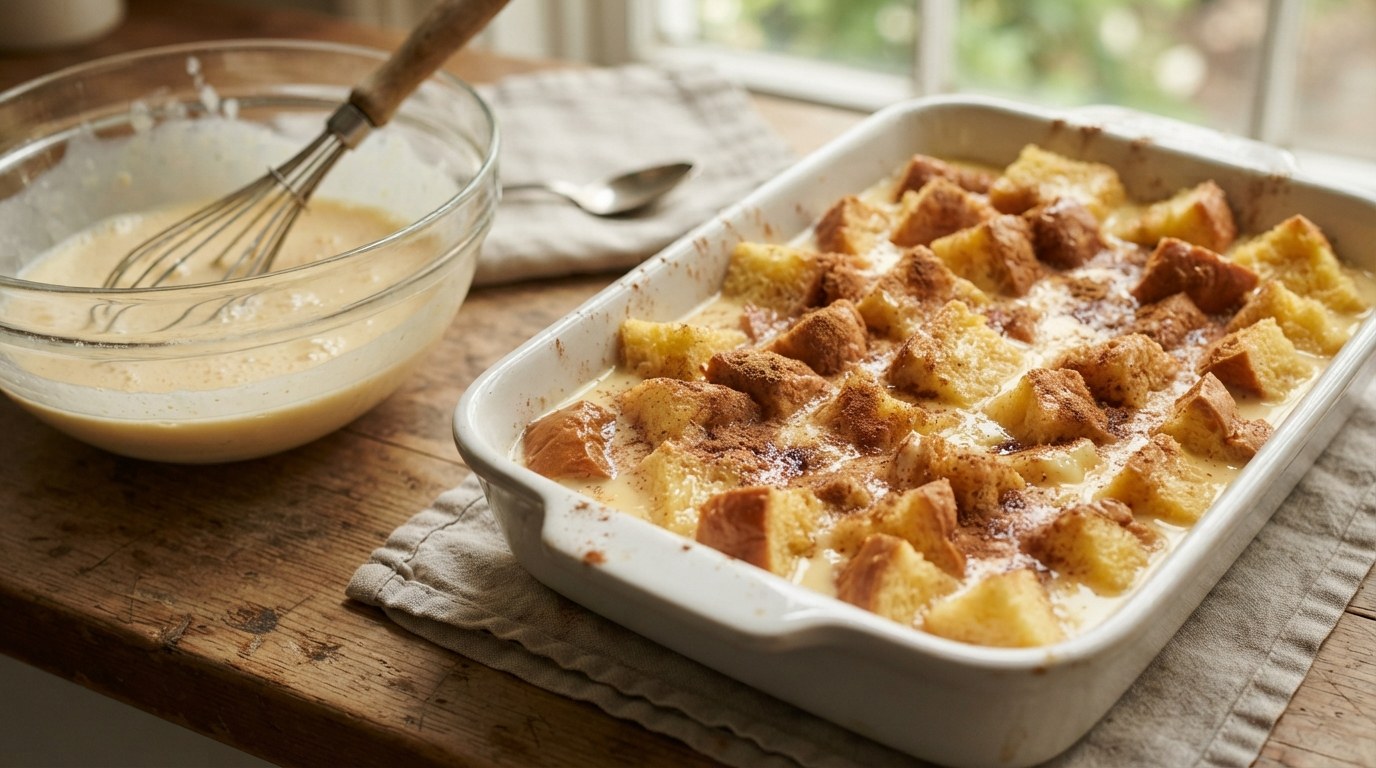
Half-and-half is the middle path between milk and heavy cream: rich enough for a silky custard, light enough that the pudding does not turn greasy. Vanilla, a teaspoon of lemon zest, cinnamon, and a little salt round it out. Pour the custard over the bread, press every piece under the surface, and let it soak at least 20 minutes so the liquid reaches the center of each cube.
How to Make French Toast Bread Pudding (Make-Ahead)
Soak the bread, then bake at 375°F for 35 to 40 minutes, until the top is golden and the center is puffed and set. The dish is done when a knife slipped into the middle comes out clean and the center reaches about 170–175°F. For a make-ahead brunch, assemble everything through the soak the night before, cover, and refrigerate; in the morning it goes straight into the oven.
Advertisement
Storing and Reheating Leftovers
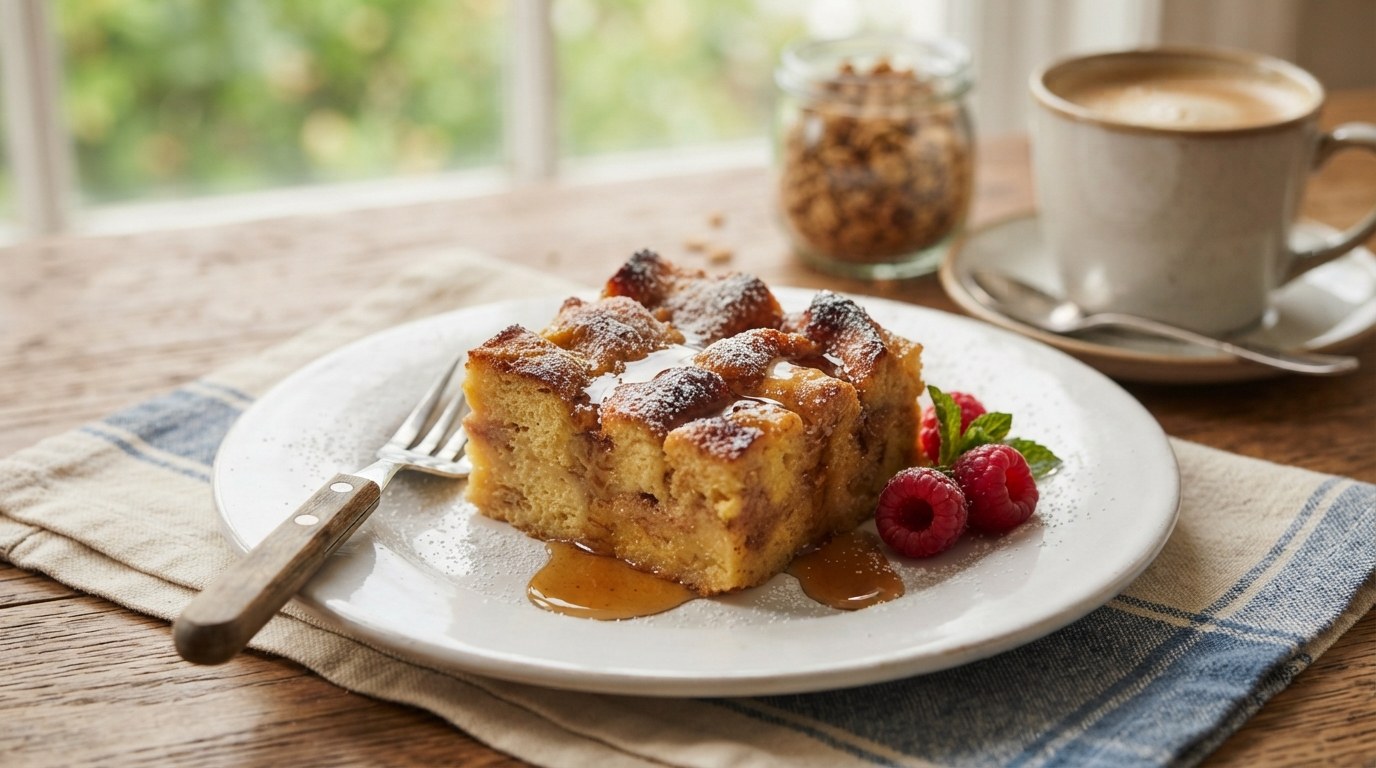
Cool leftovers, cover them, and refrigerate for three to four days, the USDA limit for cooked egg dishes. Reheat portions in a 325°F oven until warmed through, or microwave a single serving with a splash of milk to loosen the custard. Baked French toast bread pudding also freezes well for up to a month; thaw it overnight in the fridge before reheating.
Here is the full French toast bread pudding recipe, scaled for a 9x13 dish that serves ten.
French Toast Bread Pudding
Ingredients
- 1 lb challah or brioche, cut into ¾-inch slices (about 10 cups cubed), preferably day-old
- 5 large eggs
- ⅔ cup granulated sugar
- ¼ cup dark brown sugar, packed
- 2 cups half-and-half (1 pint)
- 1 tsp pure vanilla extract
- 1 tsp lemon zest (about 1 lemon)
- ½ tsp kosher salt
- ¼ tsp ground cinnamon
- 2 Tbsp unsalted butter, for the dish
To finish
- Confectioners' sugar, for dusting
- Maple syrup, for serving
Instructions
- Preheat the oven to 375°F (190°C) and butter a 9x13-inch baking dish.
- Cut the challah into ¾-inch slices, then into cubes. If the bread is fresh, spread it on a sheet pan and dry it in the oven for 10 minutes so it soaks without turning to mush.
- In a large bowl, whisk the eggs with the granulated and dark brown sugar until smooth. Whisk in the half-and-half, vanilla, lemon zest, salt, and cinnamon.
- Pile the bread into the buttered dish. Pour the custard evenly over the top and press the bread down so every piece is submerged. Let it stand 20 minutes, or cover and refrigerate overnight.
- Bake 35 to 40 minutes, until puffed and set in the center and golden on top. A knife inserted in the middle should come out clean; the center should reach about 170–175°F.
- Rest 10 minutes, dust with confectioners' sugar, and serve warm with maple syrup.
Notes
Advertisement
More brunch favorites: pair it with Gordon Ramsay’s eggs Benedict, or bake another enriched-bread classic with our perfect French croissant recipe and Gordon Ramsay banana bread.
French Toast Bread Pudding FAQs
A few questions come up again and again with French toast bread pudding — which bread holds up, whether you can build it ahead, and how it differs from a French toast casserole. Here are the short answers.
What is the best bread for French toast bread pudding?
Challah and brioche are the best choices. Both are enriched with egg and butter, so they soak up custard while holding their shape. French bread or a sturdy white sandwich loaf also work; skip thin, flimsy slices that turn to paste.
Can I make French toast bread pudding the night before?
Yes, and it is one of its biggest advantages. Assemble the dish through the custard soak, cover it, and refrigerate overnight. Bake it straight from the fridge in the morning, adding a few minutes if needed.
Does the bread need to be stale?
Day-old bread soaks better and keeps a custardy, not soggy, center. If your bread is fresh, spread the cubes on a sheet pan and dry them in a 375°F oven for about 10 minutes before adding the custard.
What is the difference between French toast bread pudding and French toast casserole?
They are essentially the same dish: enriched bread baked in a sweet egg custard. "Casserole" usually signals a breakfast framing, while "bread pudding" leans dessert; the pudding version is often a touch richer and softer in the middle.
How do I store and reheat leftovers?
Cool leftovers, cover, and refrigerate up to three to four days, per USDA guidance for cooked egg dishes. Reheat portions in a 325°F oven or the microwave until warmed through; a splash of milk keeps them moist.

About the Author
John Siracusa is the founder of Hell’s Kitchen Recipes. He focuses on technique-first, reproducible home cooking and researches recipes & kitchen equipment from published food science and professional chef methods since 2016.