Cookie butter truffles are the three-ingredient candy that tastes like far more: cookie butter, the spread made from ground caramelized speculoos cookies, mixed with cream cheese and crushed cookies into a dense, spiced, caramel-flavored paste, rolled into bites and dipped in white chocolate, with more cookie crumbs pressed on top. There is no oven and no thermometer, they take 30 minutes plus chilling, and a batch of two dozen keeps for a week. The two things that decide whether they come out neat and snappy or soft and streaky are the temperature of the filling and the handling of the white chocolate, and both are explained below.
The recipe card at the bottom has the amounts and numbered steps for 24 truffles. This guide covers what cookie butter and speculoos actually are, the filling and why it has to chill, rolling, white chocolate and why it misbehaves, dipping cold rather than frozen, and storage and gifting. It sits in the site's baking and desserts section with the pecan pie truffles, the dark-chocolate cousin on the same holiday tray.
What Cookie Butter and Speculoos Are
Speculoos is the Belgian spiced shortcrust cookie, and the one in every American grocery store is Lotus Biscoff, which the maker describes as a cookie with a surprisingly crunchy bite and a distinctive caramelized taste. Its ingredient list explains the flavor: wheat flour, sugar, vegetable oil, brown sugar syrup, a leavener, soy flour, salt and cinnamon. The caramel note is not added; it is made in the oven, where the sugar and brown sugar syrup brown and caramelize on the thin cookie's surface, and the cinnamon is what reads as "spiced." Cookie butter, sold as Biscoff spread or under store labels, is those same cookies ground fine and blended with oil into a spread the texture of peanut butter.
That composition sets the rules for the truffle. Because the spread's fat is vegetable oil rather than butter or cocoa butter, cookie butter stays soft at room temperature and never sets on its own, so the filling needs two things added: cream cheese, whose milkfat firms hard in the cold and gives the truffle body, and crushed cookies, which soak up the oil and turn the paste into something that rolls. And because the cookies are already sweet and spiced, the filling needs no sugar and no cinnamon. Cream cheese, under the federal standard of identity, is at least 33 percent milkfat and no more than 55 percent moisture, which is why a full-fat block, not a whipped tub, is required: the fat is doing the structural work.
| Ingredient | What it does | Do not substitute with |
|---|---|---|
| Cookie butter (Biscoff spread), 1 cup | The flavor; ground caramelized cookies in oil | Peanut butter (a different truffle entirely) |
| Full-fat block cream cheese, 4 oz, softened | Milkfat that firms cold and gives the bite body | Whipped or low-fat cream cheese (soft; weeps) |
| Speculoos cookie crumbs, 1¾ cups plus extra for the top | Absorb the oil so the paste rolls; the crust on top | Graham crumbs (blander, but they work in a pinch) |
| Real white chocolate, 10 oz | A shell that snaps when melted gently and seeded | Palm-oil white baking chips (waxy, never fluid) |
| A pinch of salt | Sharpens the caramel | Skipping it (flat and cloying) |
The Filling: Mix, Then Chill
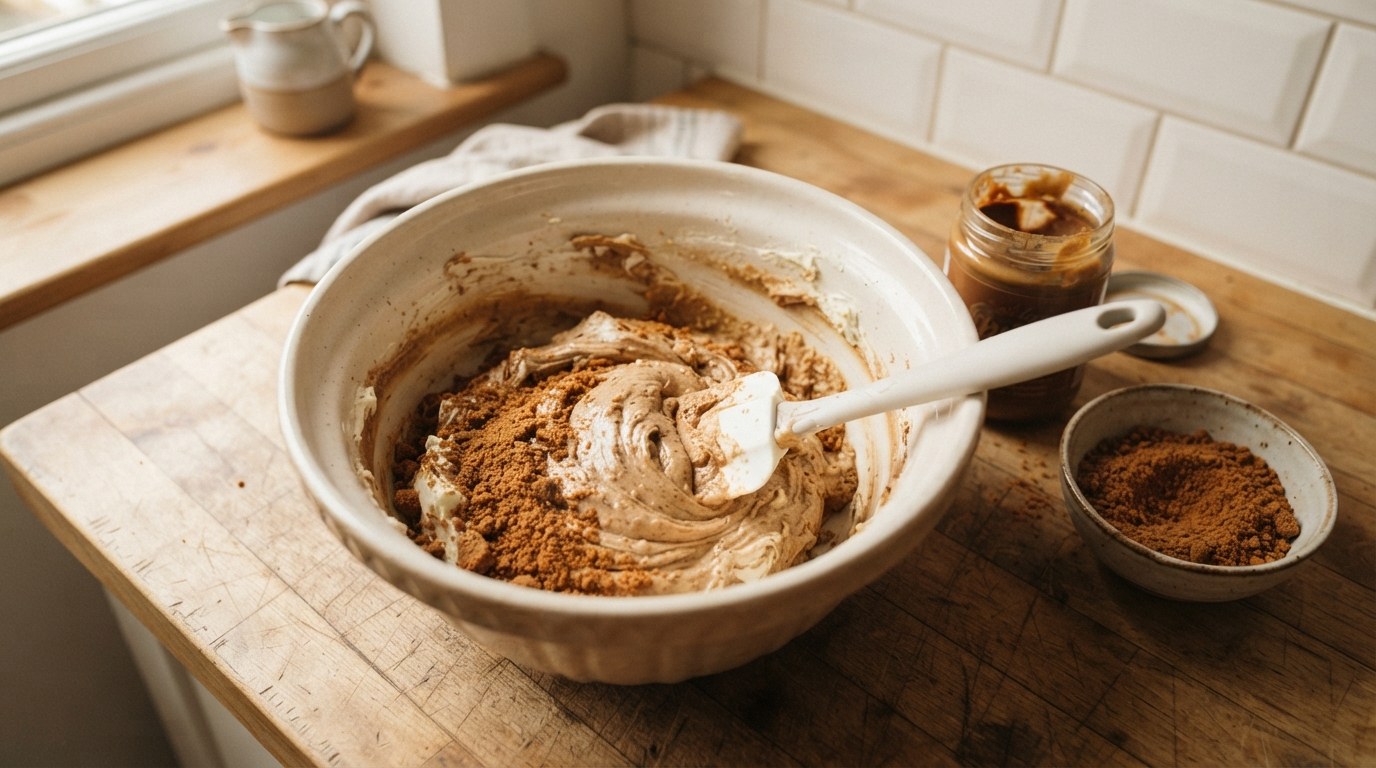
Crush the cookies to fine crumbs in a food processor or a bag with a rolling pin; the finer they are, the smoother the truffle, and a few coarse bits are fine for texture. Beat the softened cream cheese smooth first, so there are no lumps, then beat in the cookie butter and salt until uniform, and fold in the crumbs until the mixture is a thick, sticky paste that holds together when pressed. It will be too soft to roll. That is the cream cheese and the spread's oil at room temperature, and 30 minutes in the refrigerator fixes it: the milkfat solidifies, the oil thickens, and the crumbs finish absorbing what they can, and the paste comes out firm enough to scoop and roll cleanly between your palms.
Advertisement
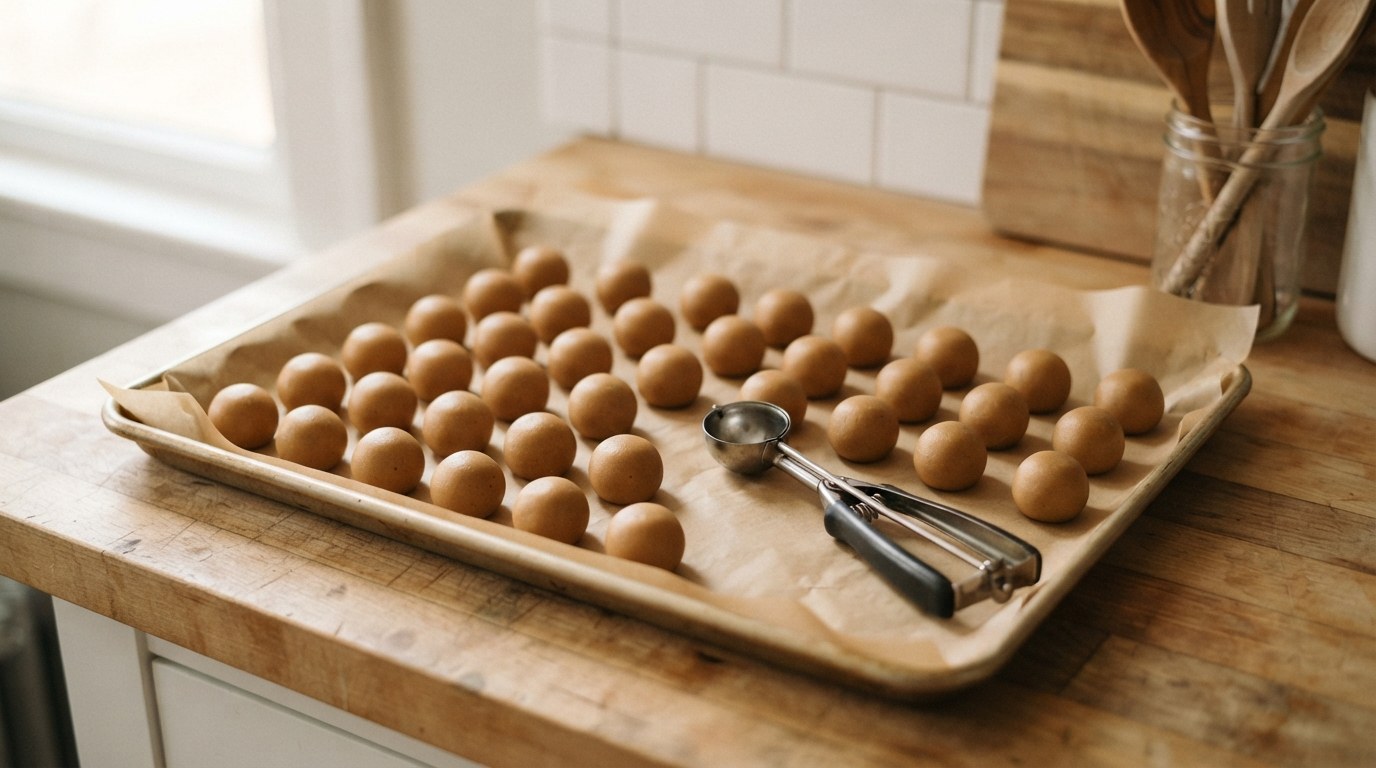
Scoop level tablespoons and roll 24 balls, setting them on a parchment-lined pan, then refrigerate them again for 20 minutes so they go into the chocolate cold. Cold matters for the dip in two ways: a cold ball sets the shell in a minute or two, and a cold ball does not soften and smear when the fork rolls it. Cold is the target, not frozen; the reason is in the dipping section. Meanwhile, set aside a quarter cup of crumbs for the tops.
White Chocolate: Gentle Melt, Bone-Dry Bowl
White chocolate is the most fragile coating in the candy kitchen, and its makeup is why. Under the federal standard of identity it is at least 20 percent cocoa butter, at least 14 percent milk solids and no more than 55 percent sugar, with no cocoa solids at all. Milk solids and sugar scorch and clump at a lower temperature than cocoa solids tolerate: Guittard puts the melting range for white chocolate at 115 to 117°F, well below dark chocolate's 120 to 122°F, with a working range of 86 to 88°F. Callebaut gives the same working temperature, 28 to 29°C, and the reason to bother: tempered chocolate becomes hard and shiny as it cools and releases cleanly. Overheat it and the milk solids seize the melt into a grainy, yellowing paste.
The home method is seeding. Chop a 10-ounce bar of real white chocolate, one whose first ingredients are sugar and cocoa butter, or use chips that list cocoa butter; the bags of white baking chips made with palm kernel oil never melt fluid. Melt two-thirds in a dry bowl in 15-second bursts, stirring between each and stopping while a few pieces remain, then add the remaining third and stir until it is smooth and reads 86 to 88°F. Keep water out entirely; Guittard's warning that exposure to water or steam makes chocolate seize applies hardest to white chocolate, whose sugar turns to glue at a drop. A teaspoon of coconut oil thins a stubborn melt at the cost of a slightly softer shell.
Dipping: Cold, Not Frozen
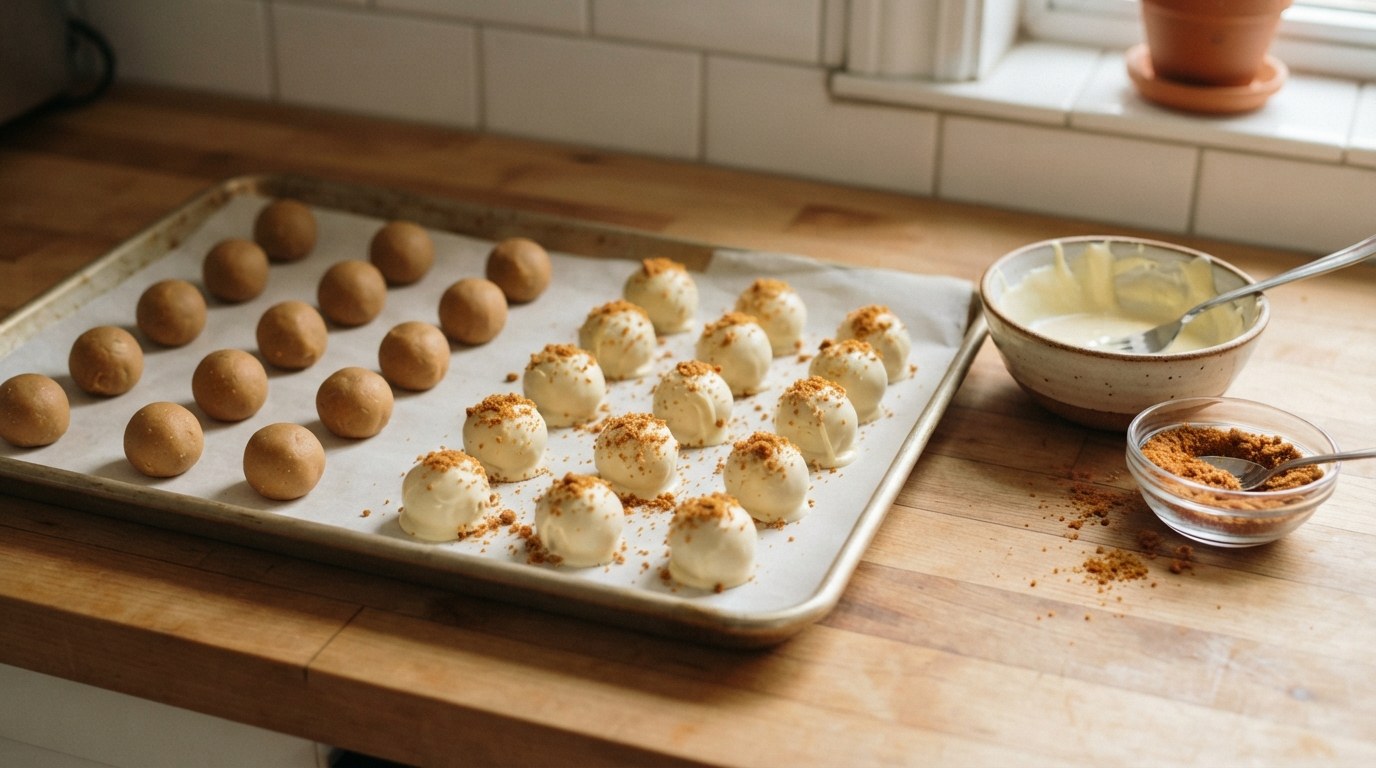
Drop a cold truffle into the white chocolate, roll it with a fork to coat, lift it on the fork, tap the excess off against the rim, and slide it back onto the parchment. Sprinkle a pinch of the reserved crumbs over the top while the shell is wet so they stick. Work with a few truffles out of the refrigerator at a time and keep the rest cold. Many recipes freeze the balls first, and it does make the shell set instantly, but a frozen center sweats as it warms, and that condensation under the shell cracks and dulls it within hours; refrigerator-cold balls set the shell in a minute or two with no sweat. Let the truffles set at room temperature for 20 minutes, then refrigerate.
Advertisement
| Stage | Number | What you see |
|---|---|---|
| Mix the filling | Until it holds when pressed | Thick, sticky, too soft to roll |
| Chill, roll, chill | 30 minutes; roll 24; 20 minutes more | Firm, clean balls, refrigerator-cold |
| Melt and seed the white chocolate | Two-thirds in 15-second bursts, then seed to 86 to 88°F | Smooth and fluid, like warm honey |
| Dip and top | One at a time, crumbs on wet | Shell sets in 1 to 2 minutes |
| Set | 20 minutes at room temperature, then refrigerate | Hard, smooth, matte-glossy shell |
Storage, Gifting and Variations
The truffles keep a week in an airtight container in the refrigerator, and 2 months frozen; thaw them in the refrigerator still sealed so the condensation lands on the container, not the shell. Serve them cool or at room temperature, when the center is soft and the shell snaps. They are sweet, so a pinch of flaky salt on each with the crumbs is worth it, and a drizzle of melted cookie butter over the set shell is the classic finish. On the tray, they sit beside the Christmas fudge and the cookie brittle; the hot cocoa cookies use the same seeding method for their drizzle in dark chocolate.
Variations that hold up: dip in semisweet chocolate instead, which is far more forgiving to melt and sets darker against the pale filling; roll the balls in crumbs alone for a no-dip version; fold a quarter cup of finely chopped toasted pecans into the filling; or press a single whole Biscoff cookie half onto each dipped truffle as a lid. Gluten-free speculoos-style cookies exist and swap in one for one. Whatever the coating, the rule is the same: cold filling, gentle melt, dry bowl.

Cookie Butter Truffles (White Chocolate Dipped)
Ingredients
- 2 cups fine speculoos (Biscoff) cookie crumbs, divided (about 28 cookies)
- 4 oz full-fat block cream cheese, softened
- 1 cup cookie butter (Biscoff spread)
- ⅛ tsp fine sea salt
- 10 oz real white chocolate (bar, chopped, or chips with cocoa butter)
- 1 tsp coconut oil (optional, for a thinner coating)
Instructions
- Beat the cream cheese until smooth. Beat in the cookie butter and salt until uniform, then fold in 1¾ cups of the cookie crumbs until the mixture is a thick, sticky paste. Cover and refrigerate 30 minutes.
- Scoop level tablespoons and roll into 24 balls. Set on a parchment-lined sheet pan and refrigerate 20 minutes, until cold and firm (not frozen).
- Melt two-thirds of the white chocolate (with the coconut oil, if using) in a dry microwave-safe bowl in 15-second bursts, stirring between each, stopping while a few pieces remain. Add the remaining chocolate and stir until smooth and the chocolate reads 86 to 88°F.
- Working with a few cold balls at a time, drop each into the chocolate, roll with a fork to coat, lift, tap off the excess, and return to the parchment. Immediately sprinkle with a pinch of the remaining ¼ cup crumbs. Repeat.
- Let set at room temperature 20 minutes, then refrigerate in an airtight container up to a week. Serve cool or at room temperature.
Notes
Advertisement
Cookie Butter Truffles FAQs
The questions that come up most: what cookie butter is, why the filling would not roll, why the white chocolate seized or cracked, whether they can be frozen, whether cream cheese can be skipped, how long they keep, what to use instead of Biscoff cookies, and whether they can be dipped in dark chocolate.
What is cookie butter?
A spread made from ground caramelized speculoos cookies, the Belgian spiced cookie sold here as Biscoff, blended with oil to the texture of peanut butter. The cookies are flour, sugar, brown sugar syrup, oil and cinnamon, and their caramel flavor comes from the sugars browning in the bake. Biscoff spread and store-brand cookie butter are interchangeable here.
Why won't my truffle filling hold together?
It is warm. Cookie butter's fat is vegetable oil, which never firms at room temperature, so the filling depends on the cream cheese solidifying in the cold; chill the mixture 30 minutes before rolling and the balls 20 minutes before dipping. If it is still too soft, fold in another quarter cup of cookie crumbs.
Why did my white chocolate seize, or the shell crack?
Seizing comes from overheating or water: white chocolate scorches above about 115°F and clumps at a drop of moisture, so melt it in short bursts in a dry bowl and seed it to 86 to 88°F. Cracking comes from dipping frozen truffles, which sweat as they warm; dip them refrigerator-cold instead.
Can cookie butter truffles be frozen?
Yes, for 2 months in an airtight container. Thaw them in the refrigerator without opening the container so condensation forms on the box and not on the white chocolate. Do not freeze the bare balls before dipping.
Can I make them without cream cheese?
Not well. The cream cheese is the fat that firms the filling in the cold; without it the cookie butter and crumbs stay soft and greasy. Mascarpone works as a swap. For dairy-free, use a plant-based cream cheese block and a dairy-free white chocolate.
How long do cookie butter truffles last?
A week in the refrigerator in an airtight container, or 2 months frozen. Serve them cool or at room temperature; the shell snaps and the center softens. Keep them sealed, since sugar pulls moisture from the air and the shell goes tacky if left open.
What can I use instead of Biscoff cookies for the crumbs?
Any speculoos or spiced shortbread cookie, gingersnaps for a sharper spice, or graham crackers for a milder crumb. Gluten-free speculoos-style cookies swap in one for one. Keep the amount the same; the crumbs are what absorb the oil so the paste rolls.
Can I dip them in dark chocolate instead?
Yes, and it is easier. Semisweet or dark chocolate melts to about 120°F without scorching and is seeded to 88 to 90°F; it sets darker against the tan filling and is less sweet. Top with crumbs or a pinch of flaky salt the same way.

About the Author
John Siracusa is the founder of Hell’s Kitchen Recipes. He focuses on technique-first, reproducible home cooking and researches recipes & kitchen equipment from published food science and professional chef methods since 2016.