Pecan pie truffles are the filling of a pecan pie without the pie: toasted pecans ground with graham cracker crumbs, brown sugar, a spoon of syrup, melted butter, vanilla and a splash of bourbon into a dense, chewy, caramel-nutty paste, rolled into bite-sized balls and dipped in dark chocolate. No oven, no custard to set, no soggy crust, and they hold for a week in the refrigerator, which makes them the Thanksgiving dessert you make on Monday. Two things decide whether they are neat, glossy and snappy or soft, dull and sticky: the temperature of the filling when it is rolled and dipped, and how the chocolate is melted.
The recipe card at the bottom has the amounts and numbered steps for 24 truffles. This guide covers what pecan pie is and why the truffle version works, toasting the pecans, the filling and why it needs to chill, rolling and dipping, melting the chocolate so it sets hard and shiny, and storage. It sits in the site's baking and desserts section with the chocolate covered strawberry turkeys, the other dipped Thanksgiving treat, and the rest of the holiday tray.
Pecan Pie, and Why It Works as a Truffle
Pecan pie is younger than it looks. Pecans are native to North America and have been eaten here for millennia, but as Slate's history of the dish traces, there are few accounts of anyone baking them into a pie before the end of the nineteenth century; an 1886 magazine piece called pecan pie fit to be a Texas state pie, and the version most Americans know, corn syrup, sugar, eggs, vanilla and pecans in a shell, came from a Karo corn syrup recipe of the 1930s that eclipsed the older regional ones. What makes that filling taste like pecan pie is three things together: toasted pecans, brown sugar and its molasses, and a syrup that keeps the sugar soft and glossy instead of grainy. A truffle keeps all three and drops the eggs and the oven. The graham cracker crumbs stand in for the crust, and the chocolate shell is the upgrade.
| Ingredient | What it does | Do not substitute with |
|---|---|---|
| Pecans, 2 cups, toasted | The flavor; toasting browns them and draws their oil | Raw pecans (soft, faintly bitter, no toast) |
| Graham cracker crumbs, 1 cup | The "crust"; absorbs the syrup and gives body | Flour (raw) or cookie crumbs (too sweet) |
| Dark brown sugar, ½ cup | Molasses depth; keeps the filling chewy | White sugar (flat and drier) |
| Maple or corn syrup, 2 Tbsp, and 2 Tbsp melted butter | The binder; syrup stays soft, butter firms cold | Honey (crystallizes in the cold; strong flavor) |
| Bourbon, 1 Tbsp, optional | The Southern pecan-pie note; never heated, so it stays | Extract in the same amount (harsh) |
| Semisweet or dark chocolate bar, 8 oz, for dipping | A shell that snaps and shines when seeded | Chocolate chips (melt thick; coat unevenly) |
Toast the Pecans First
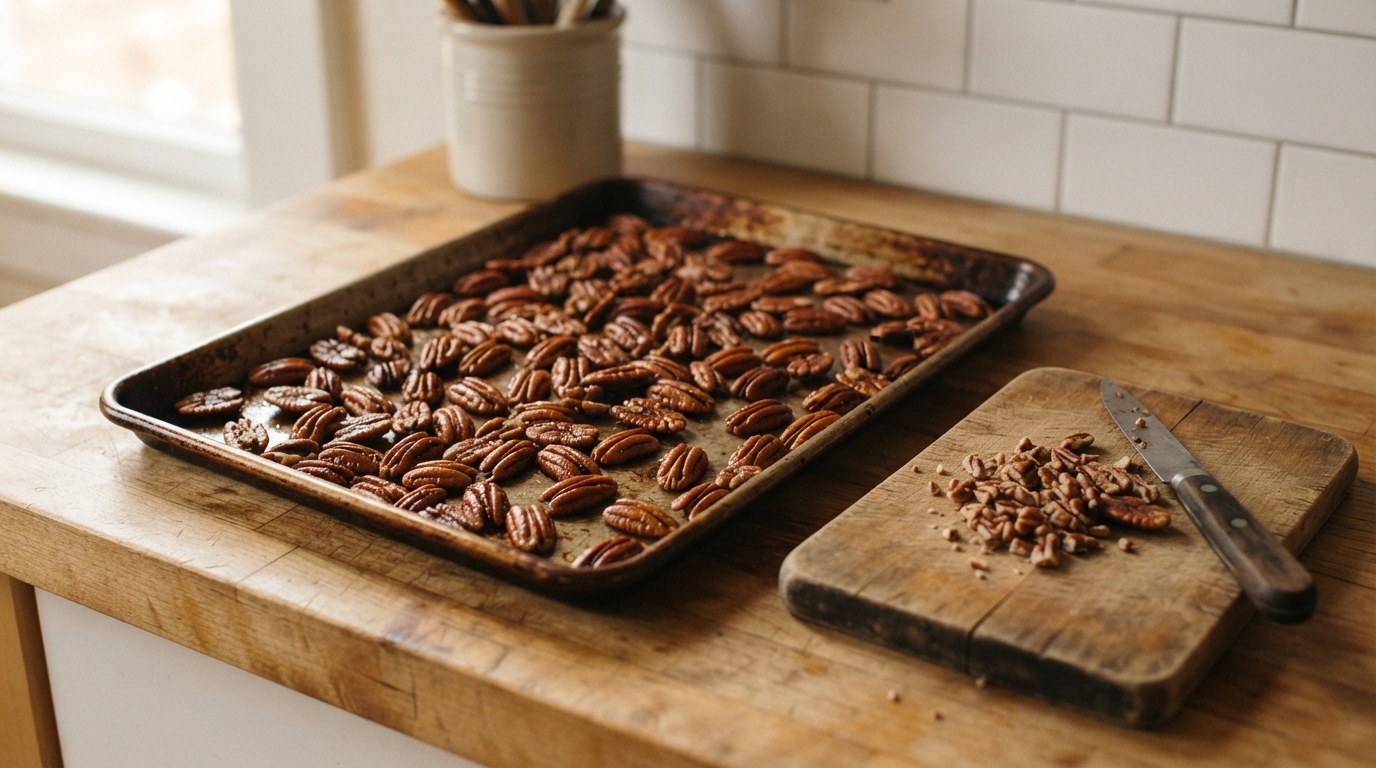
Toasting is the difference between a truffle that tastes like pecan pie and one that tastes like sweet sawdust. The American Pecan Promotion Board gives the method: spread the pecans in a single layer on a baking sheet and roast at 325°F for 10 to 12 minutes, flipping halfway, or toast them in a dry skillet over medium heat for 3 to 5 minutes, stirring. Two things happen. The surface browns through the same Maillard reaction that colors a crust, building the toasted, almost caramel flavor that raw pecans lack, and the heat draws the nut's oil to the surface, which is why toasted pecans look glossy and why they grind into a paste that binds. Cool them completely before they go into the processor; warm pecans grind into butter.
Advertisement
Pecans are an oily nut, and that oil is fragile. The board says fresh pecans smell mild and sweet and that if they smell rancid or oily they should be thrown out, and it recommends keeping shelled pecans in an airtight container in the refrigerator or freezer. Buy them from a store with turnover, smell the bag, and keep what is left cold. A quarter of the toasted pecans are set aside as halves for the tops; the rest go into the filling.
The Filling: Brown Sugar, Syrup, and a Chill
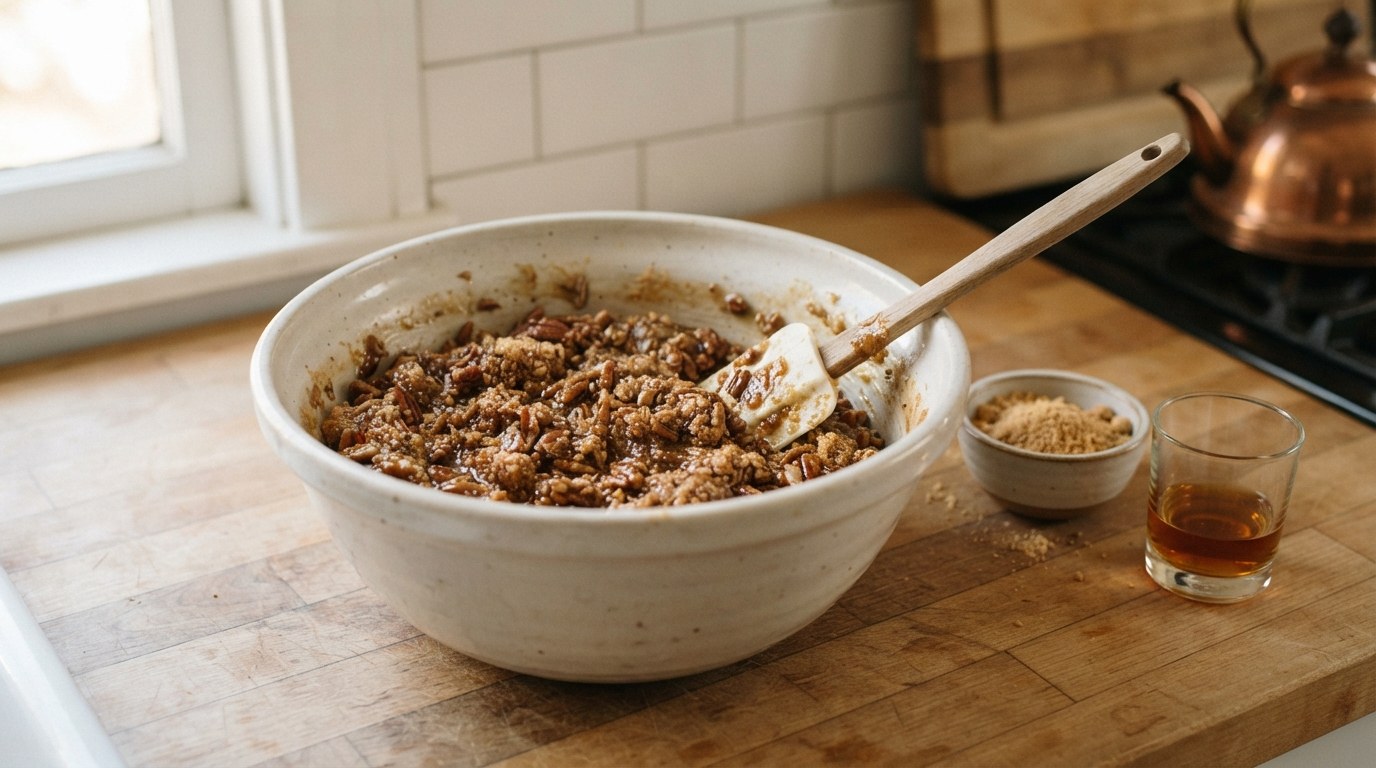
Pulse the cooled pecans in a food processor until they are finely chopped, the texture of coarse sand with a few larger bits, then add the graham crumbs, brown sugar, syrup, melted butter, vanilla, bourbon and salt and pulse until the mixture clumps and holds together when squeezed. Do not run it to a smooth paste; the bits of pecan are the texture of the pie. The three sweeteners each do a job. Brown sugar carries molasses for the pie flavor, and because sugar is hygroscopic it holds onto moisture and keeps the center chewy for a week. The syrup, maple or corn, is made of sugars that resist forming crystals, which is the same reason it was in the original pie: it keeps the filling soft and glossy rather than grainy and hard. And the melted butter is the part that firms cold, which is why the next step is the refrigerator.
Chill the filling 30 minutes, until it is firm enough to hold a shape. At room temperature the butter and pecan oil are soft and the mixture smears; cold, they solidify and the mixture rolls into a clean ball between your palms. Scoop level tablespoons, roll them, and set them on a parchment-lined pan, then refrigerate the rolled balls another 20 minutes so they are cold and firm going into the chocolate. Cold is right; frozen is wrong, and the reason is in the next section. The bourbon, incidentally, is never heated in this recipe, so all of its alcohol stays; leave it out for a children's table and add a teaspoon of extra vanilla.
Dipping: Chocolate That Sets Hard and Shiny
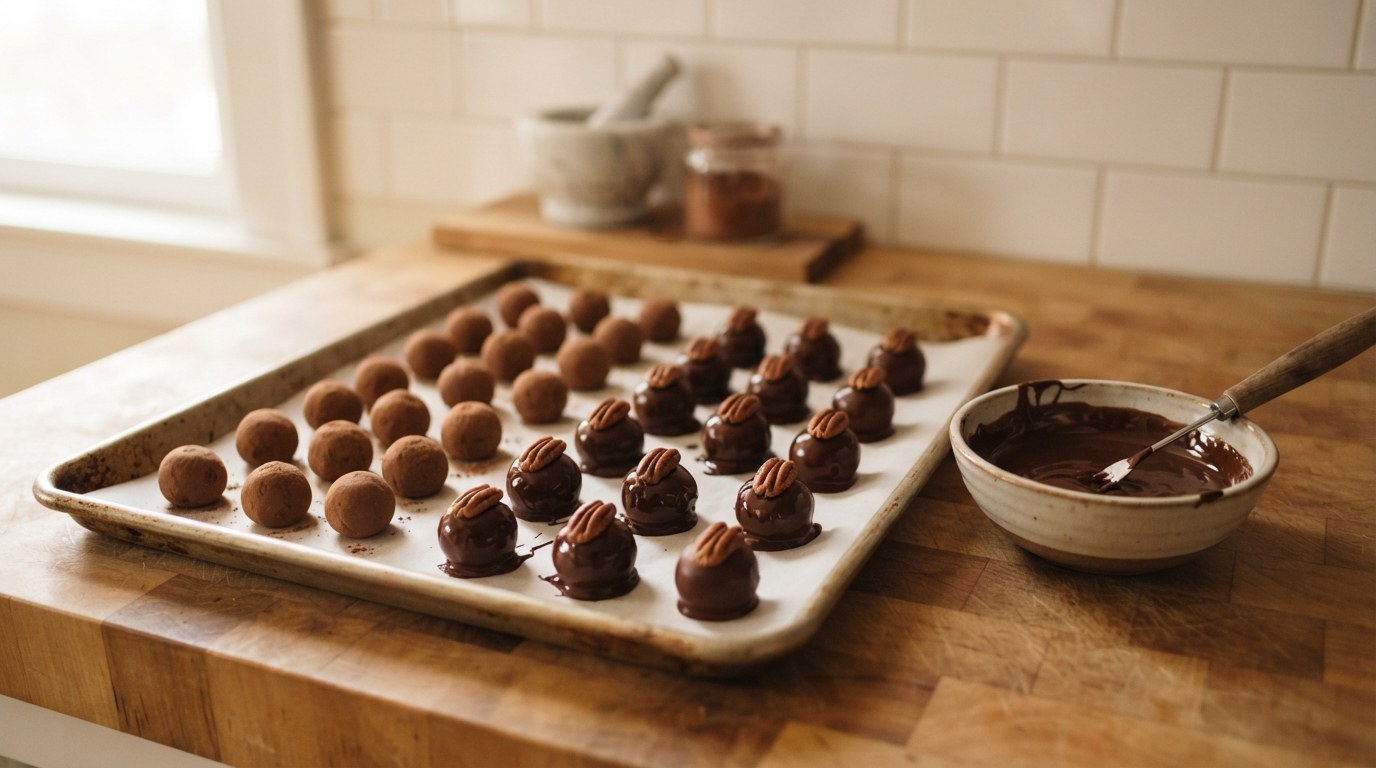
Chocolate sets on cocoa butter crystals, and only one crystal form gives the hard, glossy, snappy shell you want; getting there is tempering, and the seeding method is easy at home. Guittard gives the numbers: melt dark chocolate to 120°F, then bring it down and work it at 88 to 90°F, stirring in pieces of unmelted chocolate whose stable crystals seed the melt. Chop an 8-ounce bar of semisweet or dark chocolate, which under the federal standard for sweet chocolate means at least 35 percent chocolate liquor; melt two-thirds of it in a dry bowl in 20-second bursts to about 115°F, add the rest, and stir until it reads 88 to 90°F. Keep water away; Guittard warns that exposure to water or steam makes chocolate seize.
Advertisement
Drop a cold truffle into the chocolate, roll it with a fork to coat, lift it out on the fork, tap the excess off against the rim, and slide it back onto the parchment. Press a toasted pecan half on top and a flake or two of salt while the chocolate is wet. The filling should be refrigerator-cold, not frozen: a cold center sets the shell in a minute or two, but a frozen one draws condensation onto its surface as it warms, which is water, and water under a chocolate shell makes it crack and bloom within hours. Let the truffles set at room temperature, about 20 minutes, then refrigerate. A seized or overheated batch of chocolate can be loosened with a teaspoon of coconut oil at the cost of a softer set. The same tempering runs the strawberry turkeys and the drizzle on the hot cocoa cookies.
| Stage | Number | What you see |
|---|---|---|
| Toast the pecans | 325°F, 10 to 12 minutes | A shade darker, glossy, fragrant; cool fully |
| Pulse the filling | Until it clumps when squeezed | Coarse, sticky, with visible pecan bits |
| Chill, roll, chill | 30 minutes; roll; 20 minutes more | Firm, clean balls, refrigerator-cold, not frozen |
| Melt and seed the chocolate | Two-thirds to ~115°F, then seed to 88 to 90°F | Glossy; a test dab sets in 2 minutes |
| Dip and set | About 20 minutes at room temperature | Hard, shiny shell; pecan half stuck on top |
Storage, Make-Ahead and Variations
Truffles keep a week in an airtight container in the refrigerator, and they freeze for 2 months; thaw them in the refrigerator, still covered, so condensation forms on the container and not the chocolate. Serve them cool or at room temperature, when the shell snaps and the center is chewy; straight from the freezer the filling is hard. They are a make-ahead dessert by design, and a box of them is a better hostess gift than a pie. For variations: swap the bourbon for a tablespoon of orange juice and add zest; roll the dipped truffles in finely chopped pecans instead of topping with a half; or use white chocolate for the shell, worked at Guittard's lower 86 to 88°F. For a pecan pie in a pie, the site's pumpkin crème brûlée is the Thanksgiving custard, and the pistachio brownies round out the tray.

Pecan Pie Truffles (No-Bake, Chocolate-Dipped)
Ingredients
- 2 cups pecan halves
- 1 cup graham cracker crumbs (about 8 sheets)
- ½ cup packed dark brown sugar
- 2 Tbsp maple syrup or light corn syrup
- 2 Tbsp unsalted butter, melted
- 1 Tbsp bourbon (optional)
- 1 tsp vanilla extract
- ¼ tsp fine sea salt
- 8 oz semisweet or dark chocolate bar, finely chopped
- ½ tsp flaky sea salt, for the tops
Instructions
- Toast the pecans on a sheet pan at 325°F (165°C) for 10 to 12 minutes, flipping halfway, until fragrant and a shade darker. Cool completely. Set aside 24 of the best halves for the tops.
- Pulse the remaining pecans in a food processor until finely chopped. Add the graham crumbs, brown sugar, syrup, melted butter, bourbon, vanilla and fine salt and pulse until the mixture clumps and holds together when squeezed. Refrigerate 30 minutes.
- Scoop level tablespoons and roll into 24 balls. Set on a parchment-lined sheet pan and refrigerate 20 minutes, until cold and firm (not frozen).
- Melt two-thirds of the chocolate in a dry bowl in 20-second microwave bursts, stirring, to about 115°F. Add the remaining chocolate and stir until melted and the chocolate reads 88 to 90°F.
- Drop a cold truffle into the chocolate, roll it with a fork to coat, lift it out, tap off the excess on the rim, and return it to the parchment. Immediately press a pecan half on top and add a pinch of flaky salt. Repeat. Let set at room temperature about 20 minutes, then refrigerate in an airtight container up to a week.
Notes
Advertisement
Pecan Pie Truffles FAQs
The questions that come up most: how far ahead they can be made, why the filling would not hold together, whether they can be made without bourbon, why the chocolate cracked or went dull, whether raw pecans work, whether they can be frozen, what to use instead of graham crackers, and whether they are gluten-free.
How far ahead can I make pecan pie truffles?
A week, in an airtight container in the refrigerator, or 2 months frozen. They are built for make-ahead: the filling is a no-bake paste of pecans, graham crumbs, brown sugar and syrup that stays chewy in the cold, and the chocolate shell protects it. Bring them to cool room temperature to serve.
Why won't my truffle filling hold together?
It was rolled warm, or it is too dry. The filling firms in the refrigerator because the melted butter and the pecans' own oil solidify cold, so chill it 30 minutes before rolling. If it still crumbles, pulse in another teaspoon of syrup or melted butter; if it is greasy and soft, add a tablespoon of graham crumbs.
Can I make them without bourbon?
Yes. Replace it with a teaspoon of vanilla and a tablespoon of orange juice or maple syrup. The bourbon is never heated, so its alcohol stays in the truffle; leave it out for a children's table.
Why did my chocolate coating crack or turn dull?
The truffles were frozen when dipped, or the chocolate was not tempered. A frozen center sweats as it warms and that condensation under the shell cracks it; dip refrigerator-cold balls instead. Untempered chocolate sets soft, streaky and dull and blooms within a day; melt it to about 115°F, seed with unmelted chocolate, and dip at 88 to 90°F.
Do I have to toast the pecans?
You should. Raw pecans are soft and faintly bitter, and the filling tastes flat; toasting at 325°F for 10 to 12 minutes browns them and draws out their oil, which is where the pecan-pie flavor comes from and what helps the ground nuts bind. Cool them fully before grinding.
Can pecan pie truffles be frozen?
Yes, for 2 months in an airtight container. Thaw them in the refrigerator without opening the container, so the moisture condenses on the box rather than on the chocolate, then serve at cool room temperature.
What can I use instead of graham crackers?
Crushed vanilla wafers, digestive biscuits, or shortbread crumbs, in the same amount. For gluten-free, use gluten-free graham-style crackers or an extra half cup of finely ground pecans plus 2 tablespoons of oat flour.
Are pecan pie truffles gluten-free?
Not as written, because of the graham crackers. Swap in gluten-free graham-style crackers or ground pecans and oat flour, and check the chocolate label; the pecans, brown sugar, syrup, butter and bourbon are naturally gluten-free.

About the Author
John Siracusa is the founder of Hell’s Kitchen Recipes. He focuses on technique-first, reproducible home cooking and researches recipes & kitchen equipment from published food science and professional chef methods since 2016.