Hell's Kitchen pan-seared scallops are large dry-packed sea scallops, patted dry, seasoned on one side, laid into a smoking-hot pan in clockwise order like the numbers on a clock, left alone until the first face is deep golden, then flipped in the same order and finished in about 90 seconds with butter and a squeeze of lemon. On the plate they sit on a smooth apple purée with tarragon mayonnaise, candied walnuts and a sharp celery-apple salad, the pairing Gordon Ramsay uses in his own scallop-and-apple starter. The whole cook is under four minutes, which is why the prep, the pan and the order matter more than anything you do once the scallops are in it.
This guide covers what makes the Hell's Kitchen version different, how to buy scallops that will actually brown, why drying them is the whole game, Ramsay's clock-face sear and the flip, how to know when a scallop is done, and how to make the purée, mayo and walnuts a day ahead so the only thing left on the night is the sear.
What Makes Hell's Kitchen Scallops Different
Four things separate a Hell's Kitchen scallop from the pale, rubbery ones most home cooks turn out: the scallops are dry-packed and dried again on paper towels, so the pan's heat goes into browning rather than boiling off water; they are seasoned on one face only and go in seasoned side down; they are placed around the pan in a set order and flipped in that same order, so every scallop gets the same time on each side; and they come out onto paper towel the moment they are done, which stops the cooking at once. Gordon Ramsay lays this out in the pan-fried scallops with crunchy apple salad recipe on his own site: a smoking-hot pan, one tablespoon of oil, scallops added one by one in clockwise order, 1 to 2 minutes a side, lemon, then straight onto kitchen paper.
The plate is the restaurant part. A scallop is sweet, so it wants something sharp and something crunchy next to it. Apple gives both: cooked down with cider vinegar into a purée under the scallops, and raw in matchsticks with celery on top. Tarragon mayonnaise adds an anise note that suits shellfish, and candied walnuts give a bite the scallop itself does not have. Every one of those elements holds in the refrigerator, which is the point of an appetizer you serve to guests.
Buying Scallops That Will Brown: Dry-Packed U-10s
Buy dry-packed sea scallops in the U-10 size, meaning under ten to the pound, so each one is about 1½ ounces and an inch or more thick. The scallop you eat is the adductor muscle, the one the animal snaps its shells with; NOAA Fisheries notes that U.S. boats land nearly all of their catch as shucked meats, and the Atlantic sea scallop fishery is the largest wild scallop fishery in the world, so a good fish counter in most of the country can get you dry ones. "Wet" scallops have been soaked in a phosphate solution that holds water in the muscle; they look plump and stand up straight, and they weep that water into the pan the moment they touch it. Dry scallops slouch a little and run pale orange to ivory rather than bright white, and they are the ones that brown.
Ramsay's freshness test is the sheen: a fresh scallop glints and looks plump, firm and bright, and it smells of the ocean, while a dull, torn or broken one is past it. The FDA's seafood buying guidance says the same thing in its own language: scallop flesh should be clear with a pearl-like color and little or no odor. His other rule is never to leave scallops sitting in water, because they absorb it like sponges and then refuse to color in the pan. If yours came frozen, thaw them overnight in the refrigerator on a plate lined with paper towel, never in a bowl of water.
| Ingredient | What it does | Do not substitute with |
|---|---|---|
| Dry-packed U-10 sea scallops | Big enough to build a crust before the center overcooks; no added water to boil off | Wet-packed scallops (they steam gray) or bay scallops (too small to sear) |
| Grapeseed or light olive oil | Takes searing heat without smoking out; Ramsay uses a tablespoon of olive oil in a smoking pan | Whole butter for the sear (its milk solids burn well below browning heat) |
| Sea salt and black pepper | Seasons the face that hits the pan first; the other face is seasoned just before the flip | Salting both sides ahead (the top face weeps and steams) |
| Unsalted butter, at the end | Foams and browns for the last 30 seconds and carries the lemon | Adding it at the start (it scorches before the scallops brown) |
| Lemon juice | Cuts the sweetness of the scallop and the richness of the butter | Bottled juice (flat and slightly bitter) |
| Granny Smith apples | Tart and high in pectin, so the purée is sharp and holds a clean smear | Sweet, soft apples (a watery, sugary purée) |
| Fresh tarragon | The anise note that suits shellfish; folded into mayonnaise | Dried tarragon (hay, not anise) |
| Walnuts, sugar, water | A quick syrup coat that hardens to a glassy crunch in the oven | Store-bought glazed nuts (usually cinnamon-heavy and soft) |
Dry Them Twice, Season One Side, Set Them Fat Side Up
Pull the small, tough side muscle off each scallop if it is still attached; it is a strip of connective tissue that will not soften in a 3-minute cook. Then pat the scallops dry with paper towels, lay them on a fresh dry towel on a plate, and put them back in the refrigerator, uncovered, for 15 to 30 minutes while you set up the rest. Ramsay stores scallops "fat side up," the wide face upward and the narrower bottom down, so they keep their shape and sit upright on the plate later; do the same on the towel. Just before they go in the pan, season the top face only with sea salt and pepper.
The drying is not fussiness. A wet surface cannot get hotter than 212°F, the boiling point of water, because every bit of heat the pan pushes in goes into turning that water to steam. The browning you want, the Maillard reaction between the scallop's amino acids and sugars, does not start until the surface reaches about 284°F and runs fastest near 320°F. So a scallop with a film of water on it sits at 212°F, gray and steaming, until the water is gone, and by then the inside is overcooked. Salt pulls water to the surface, which is why you season one face right before the pan and the other face right before the flip instead of salting the whole scallop ahead of time.
Hot Pan, Oil, Then Clockwise from 12 O'Clock
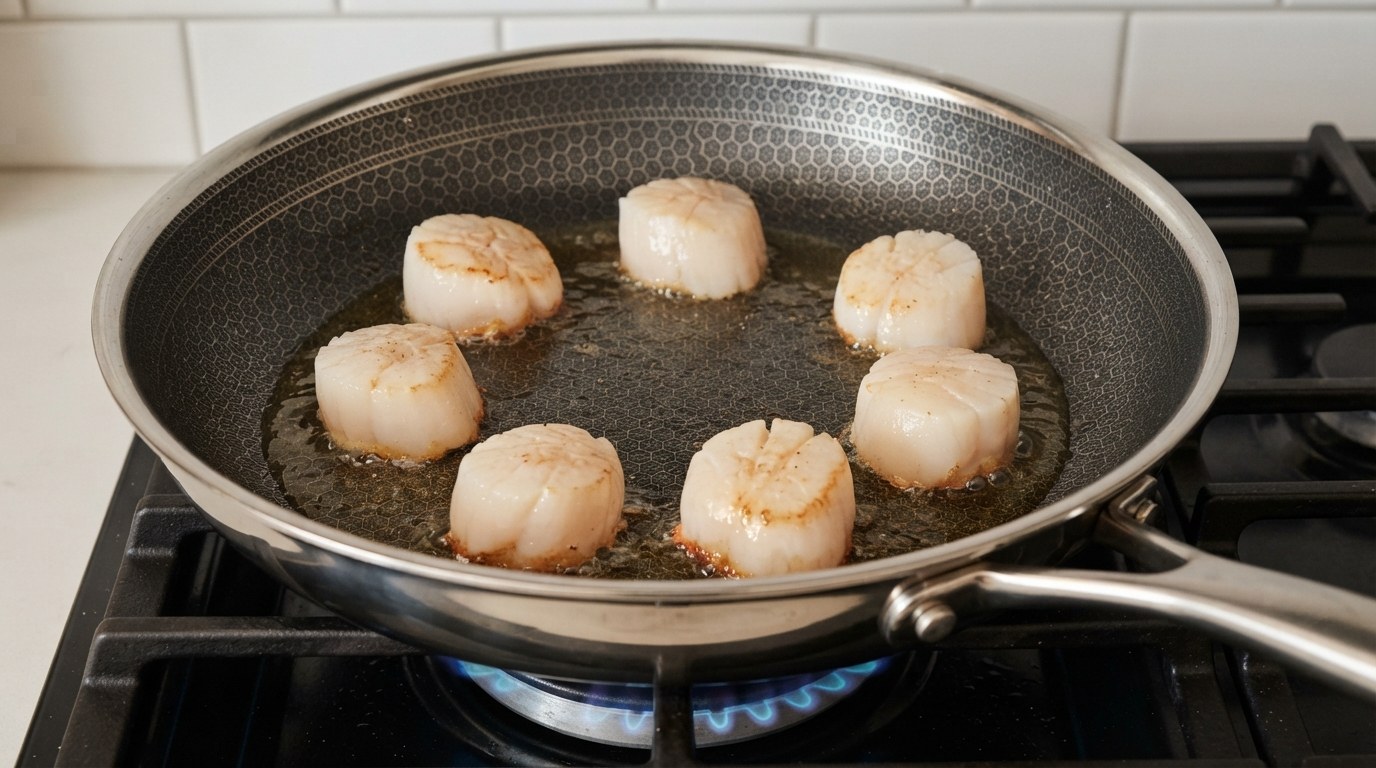
Heat a heavy skillet over high heat with nothing in it until it is properly hot, then add a tablespoon of oil and let it thin out and shimmer; Ramsay takes the pan to smoking before the oil goes in. Now think of the pan as a clock face. Lay the first scallop seasoned side down at 12 o'clock, the next at 1, and keep going around clockwise, leaving a finger of space between them. Then do not touch them. They need 1½ to 2 minutes of uninterrupted contact for the first face to go from pale to deep golden brown, and every nudge breaks that contact and starts the crust over.
The order is a timer. Every scallop gets its 90-odd seconds on the first side because you flip them in the sequence you laid them down, so the one that went in first comes off first. A crowded pan defeats the whole thing: eight cold scallops in a 10-inch skillet pull the pan temperature below the browning threshold and the scallops steam in their own liquid. Sear six at a time in a 12-inch pan, or cook in two batches and wipe the pan between them. Ramsay uses a nonstick pan for this in his recipe; a stainless or hybrid pan such as the HexClad line he cooks on works the same way as long as it has heat to spare, and the site's HexClad guide covers those pans. What matters is thermal mass, a pan heavy enough that a cold scallop does not cool it.
Flip in the Same Order, Then Butter and Lemon
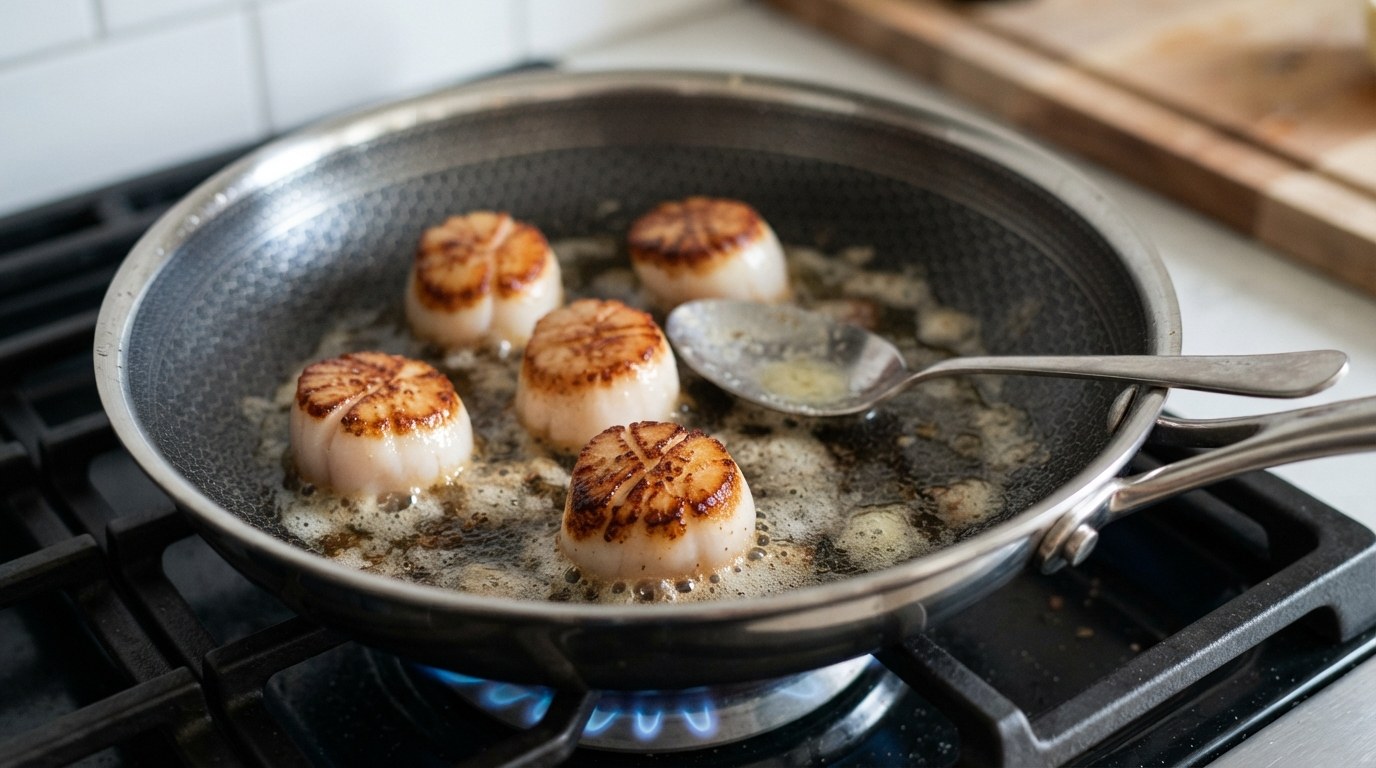
Season the pale top faces, then flip the scallops starting at 12 o'clock and going around. The second side needs far less time, about 30 to 60 seconds. As soon as the last one is turned, add a tablespoon of butter and a squeeze of lemon and shake the pan so the foaming butter runs around the scallops; tilt it and spoon the butter over them for the last 20 seconds if you like. Then tip the whole pan out onto a plate lined with paper towel. Ramsay's reason is that the paper stops the cooking instantly and takes the excess fat with it.
The butter goes in last because its milk solids scorch at searing temperature; oil takes the sear, butter takes the finish. And the spooning is a surface treatment, not a moisturizer. Basting does not make the inside of a scallop juicier; the muscle is already full of water and is being squeezed as it heats. What the butter does is brown the crust a shade deeper, carry the lemon onto every scallop, and leave a spoonful of sauce in the pan to drizzle over the plate.
When a Scallop Is Done: 115°F, Pearly Sides, Still Springy
A sea scallop is done when its center reads 115°F on an instant-read thermometer, the sides have turned from translucent to pearly opaque, and it feels springy rather than firm when you press it. ThermoWorks gives 115°F (46°C) as the pull temperature, checking each scallop by sliding the probe through it and taking the lowest reading. Scallop proteins begin setting from about 104°F, far lower than the 122 to 140°F of beef, which is why the window is so narrow: at 115°F the center is just cooked and tender, and by 140°F the muscle fibers have contracted, squeezed out their water and gone rubbery. The FDA describes cooked scallops as firm, pearly and opaque and recommends 145°F for most seafood; a restaurant pulls earlier, and that is a decision you make for your own table.
| Scallop size | First side | Second side | What you see |
|---|---|---|---|
| U-10 (1 to 1¼ in thick) | 1½ to 2 minutes | 30 to 60 seconds | Deep golden crust, sides opaque, center reads 115°F |
| U-10 halved crosswise | 1 minute | 20 to 30 seconds | Two golden faces on each half; watch them, they go fast |
| 10/20 count (¾ in thick) | 1 to 1½ minutes | 30 seconds | Golden crust, pull as soon as the sides turn opaque |
| Bay scallops | Do not sear singly | Toss 60 to 90 seconds total | Too small for a crust; sauté and use in pasta or risotto |
Color on the outside is a poor guide to doneness in shellfish; a scallop can wear a dark crust and still be raw in the middle if the pan was hot and the scallop was thick, or be dry all the way through with a pale face if the pan was cool and it sat there for four minutes. Cutting a very thick U-10 in half crosswise, which Ramsay has done on Hell's Kitchen, doubles the seared surface and keeps the center from going raw while the crust builds; for scallops around an inch thick it is optional, and whole scallops make the taller plate. Carryover is small on something this size, but the paper-towel plate is there for a reason.
The Hell's Kitchen Plate: Apple Purée, Tarragon Mayo, Candied Walnuts
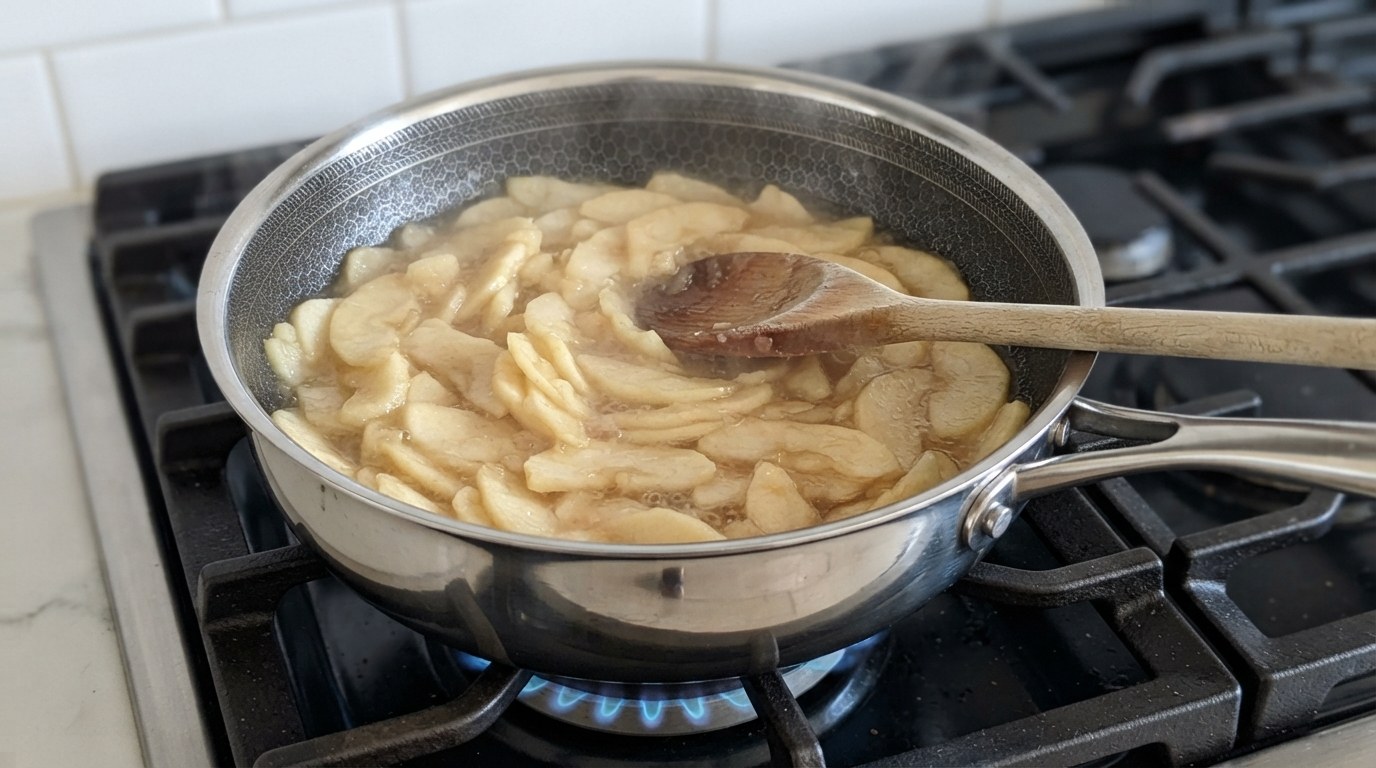
The purée is Granny Smith apples simmered with apple juice, a little sugar and cider vinegar until they collapse, then reduced with the lid off and blended smooth. Apples are high in pectin, the glue between plant cells, and heat dissolves it while the acid in the vinegar and the sugar help what remains set, so the blended purée holds a clean smear on the plate instead of running. Cook it until the liquid has nearly gone before blending; a wet purée is a sauce, and a sauce slides. It keeps three days in the refrigerator and needs only a stir and a few minutes over low heat to loosen it for plating warm.
Tarragon mayonnaise is store-bought or homemade mayonnaise with finely chopped fresh tarragon and a teaspoon of cider vinegar folded through. Mayonnaise is an emulsion, oil held in water by the lecithin in egg yolk, and the vinegar loosens it slightly so it dots cleanly from a spoon or a squeeze bottle. The candied walnuts are boiled briefly in a sugar syrup with a pinch of salt and a piece of cinnamon stick, drained, and baked on a rack at 325°F for about 10 minutes; the syrup coat dries and the sugar in it caramelizes at the edges, which is what gives them a glassy shell rather than a sticky one. Cool them completely on the rack, and store them airtight; sugar pulls moisture from the air and they will soften if left out. The celery-apple salad is made at the last minute so the apple does not brown: thin celery, apple matchsticks, lemon juice and olive oil.
Plating, Make-Ahead and What to Serve Around It
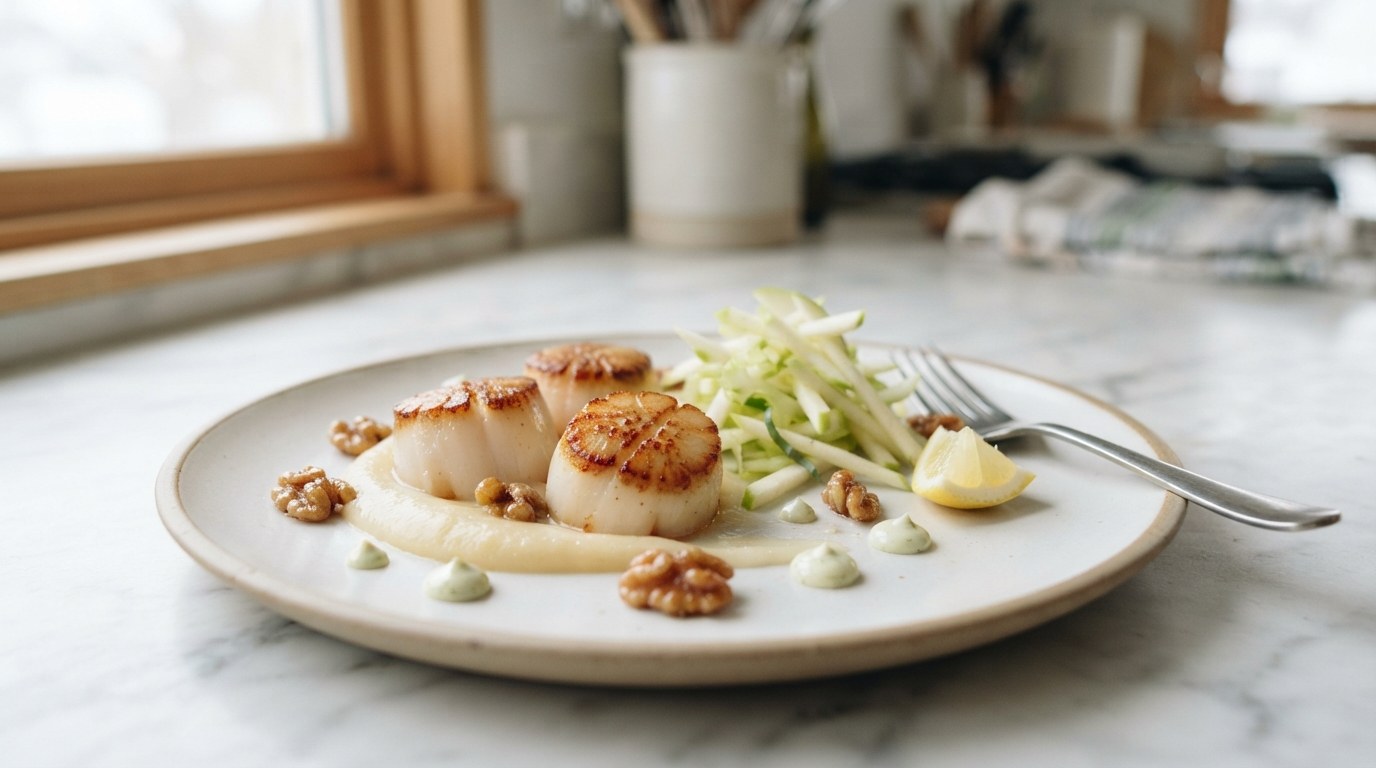
Warm four plates. Spoon a tablespoon of warm apple purée onto each and drag it into a smear with the back of the spoon, set three scallops on the purée seared side up, dot the tarragon mayonnaise around them, scatter the candied walnuts, and finish with a small tangle of the celery-apple salad and any butter left in the pan. Serve at once; a scallop that waits five minutes on a hot plate keeps cooking. The purée, mayonnaise and walnuts are all made the day before, so on the night the only job is the sear, which is what makes this a realistic make-ahead scallop appetizer for a dinner party. For more starters that hold, see the site's Ramsay-style dinner party appetizers.
If you want the scallops as a main course, put the same sear on top of the site's shrimp and scallop risotto or serve them over Gordon Ramsay's cauliflower purée, which is his other classic bed for a seared scallop. The same dry-surface, hot-pan logic runs through the crispy-skin salmon and pan-roasted halibut on this site, and the lobster tail guide covers the other shellfish that punishes an extra minute. The full recipes collection has the rest of the seafood menu. A dry white with acid, a Chablis or a dry Riesling, is the safe pour with the apple and tarragon.
Hell's Kitchen Pan-Seared Scallops (Apple Purée, Tarragon Mayo, Candied Walnuts)
Ingredients
- 12 dry-packed U-10 sea scallops (about 1 lb), side muscle removed
- Sea salt and freshly ground black pepper
- 1 Tbsp grapeseed oil or light olive oil
- 1 Tbsp unsalted butter
- ½ lemon
- For the apple purée
- 3 Granny Smith apples, peeled, cored and thinly sliced
- 1 cup apple juice
- 2 Tbsp sugar
- 2 Tbsp cider vinegar
- ¼ tsp fine sea salt
- For the tarragon mayo
- ½ cup mayonnaise
- 2 Tbsp fresh tarragon, finely chopped
- 1 tsp cider vinegar
- For the candied walnuts
- ¾ cup walnut halves
- ¼ cup sugar
- ½ cup water
- 1 small piece of cinnamon stick and a pinch of salt
- For the celery-apple salad
- 1 celery stalk, sliced paper-thin on the diagonal
- ½ Granny Smith apple, cut into matchsticks
- 1 tsp lemon juice and 1 tsp olive oil
Instructions
- Make the purée (up to 3 days ahead): put the sliced apples, apple juice, sugar, vinegar and salt in a saucepan, cover and simmer over medium-low heat until the apples collapse, about 20 minutes. Uncover and cook until almost no liquid is left, then blend until completely smooth. Cool, cover and refrigerate; rewarm gently before plating.
- Make the walnuts (up to 3 days ahead): heat the oven to 325°F (165°C). Bring the sugar, water, cinnamon and salt to a boil in a small saucepan, add the walnuts and boil 3 minutes until syrupy. Drain, spread on a wire rack set over a baking sheet, and bake 10 to 12 minutes until glossy and dry to the touch. Cool completely on the rack; store airtight.
- Make the tarragon mayo (up to 2 days ahead): stir the mayonnaise, tarragon and vinegar together, season with salt and pepper, and refrigerate.
- Prep the scallops: pull off any tough side muscle. Pat the scallops dry with paper towels, lay them wide side up on a fresh paper towel on a plate, and refrigerate uncovered for 15 to 30 minutes. Toss the celery and apple matchsticks with the lemon juice and olive oil and a pinch of salt just before cooking.
- Warm four plates. Season the top face only of each scallop with sea salt and pepper.
- Set a heavy 12-inch skillet over high heat, empty, until it is very hot and just starting to smoke, 2 to 3 minutes. Add the oil and swirl; it should shimmer at once.
- Lay the scallops in seasoned side down one at a time, starting at 12 o'clock and going clockwise around the pan, with space between them (cook in two batches if the pan is smaller). Do not move them. Sear 1½ to 2 minutes, until the undersides are deep golden brown.
- Season the top faces, then flip the scallops in the same order you put them in. Cook 30 to 60 seconds more. Add the butter and a squeeze of lemon, shake the pan so the foaming butter runs around the scallops, and spoon it over them for the last 20 seconds. The centers should read 115°F and the sides should be pearly and opaque.
- Tip the scallops onto a plate lined with paper towel to stop the cooking, keeping the pan butter.
- Plate: smear a tablespoon of warm apple purée across each plate, set three scallops on it seared side up, dot the tarragon mayo around, scatter the candied walnuts, add a small tangle of celery-apple salad, and spoon over any pan butter. Serve immediately.
Notes
Hell's Kitchen Scallops FAQs
The questions that come up most: how Gordon Ramsay cooks scallops, why he places them in the pan clockwise, why he sometimes cuts them in half, how long to sear them, whether a seared scallop is fully cooked, what he serves with them, whether frozen scallops work, and whether to use a nonstick or stainless pan.
How does Gordon Ramsay cook scallops?
He pats dry-packed sea scallops dry, seasons one side with salt and pepper, heats a pan until it smokes, adds a tablespoon of oil, and lays the scallops in seasoned side down one by one in clockwise order. They sear untouched for 1 to 2 minutes until golden, get seasoned on top, are flipped in the same order for a shorter second side, then get a squeeze of lemon and a shake of the pan before being tipped onto paper towel to stop the cooking.
Why does Gordon Ramsay put scallops in the pan clockwise?
So each scallop gets the same time on each side. Placing them around the pan like a clock face, starting at 12, and flipping them in that same order means the first one in is the first one turned and the first one out. With a cook this short, 90 seconds a side, the order is the only timer that works for a whole pan at once.
Why does Gordon Ramsay cut scallops in half?
A very thick U-10 scallop, well over an inch, can brown hard on the outside while the center stays raw. Cutting it in half crosswise doubles the seared surface and lets each half cook through in about a minute a side. For scallops around an inch thick it is optional; whole scallops give the taller restaurant plate and are what the recipe card uses.
How long do you sear scallops?
For U-10 dry sea scallops about an inch thick: 1½ to 2 minutes on the first side over high heat, untouched, then 30 to 60 seconds on the second side with the butter and lemon. Pull them when the center reads 115°F and the sides have turned pearly and opaque. Smaller 10/20-count scallops take about a minute and 30 seconds.
Are pan-seared scallops fully cooked?
Pulled at 115°F they are cooked through at the center, tender and opaque, which is how restaurants serve them. The FDA's general guidance for seafood is 145°F, at which point a scallop is firm and chewier. The decision is yours; for anyone who wants the FDA number, sear a little longer on the second side and check with a thermometer.
What does Gordon Ramsay serve with scallops?
On his own site it is a crunchy apple and lamb's lettuce salad with lemon; on Hell's Kitchen the scallop appetizer has been plated with apple purée, tarragon mayonnaise, candied walnuts and a celery-apple salad, which is the version on this page. He also serves seared scallops on cauliflower purée and with pea purée. Sweet scallop, sharp apple or lemon, something creamy underneath, something crunchy on top is the pattern.
Can I use frozen scallops?
Yes, if they are dry-packed and thawed overnight in the refrigerator on a paper-towel-lined plate, then patted dry again before searing. Never thaw them in water; scallops absorb it and will not brown. Frozen-at-sea dry scallops are often better than "fresh" wet-packed ones at the counter.
Nonstick or stainless pan for scallops?
Either works if the pan is heavy and properly hot. Ramsay's recipe uses a large nonstick frying pan heated until smoking; cast iron, carbon steel or a heavy stainless or hybrid pan gives the same crust and holds heat better when cold scallops go in. A thin, light pan of any kind is the one to avoid, because the scallops cool it below browning temperature and steam.

About the Author
John Siracusa is the founder of Hell’s Kitchen Recipes. He focuses on technique-first, reproducible home cooking and researches recipes & kitchen equipment from published food science and professional chef methods since 2016.