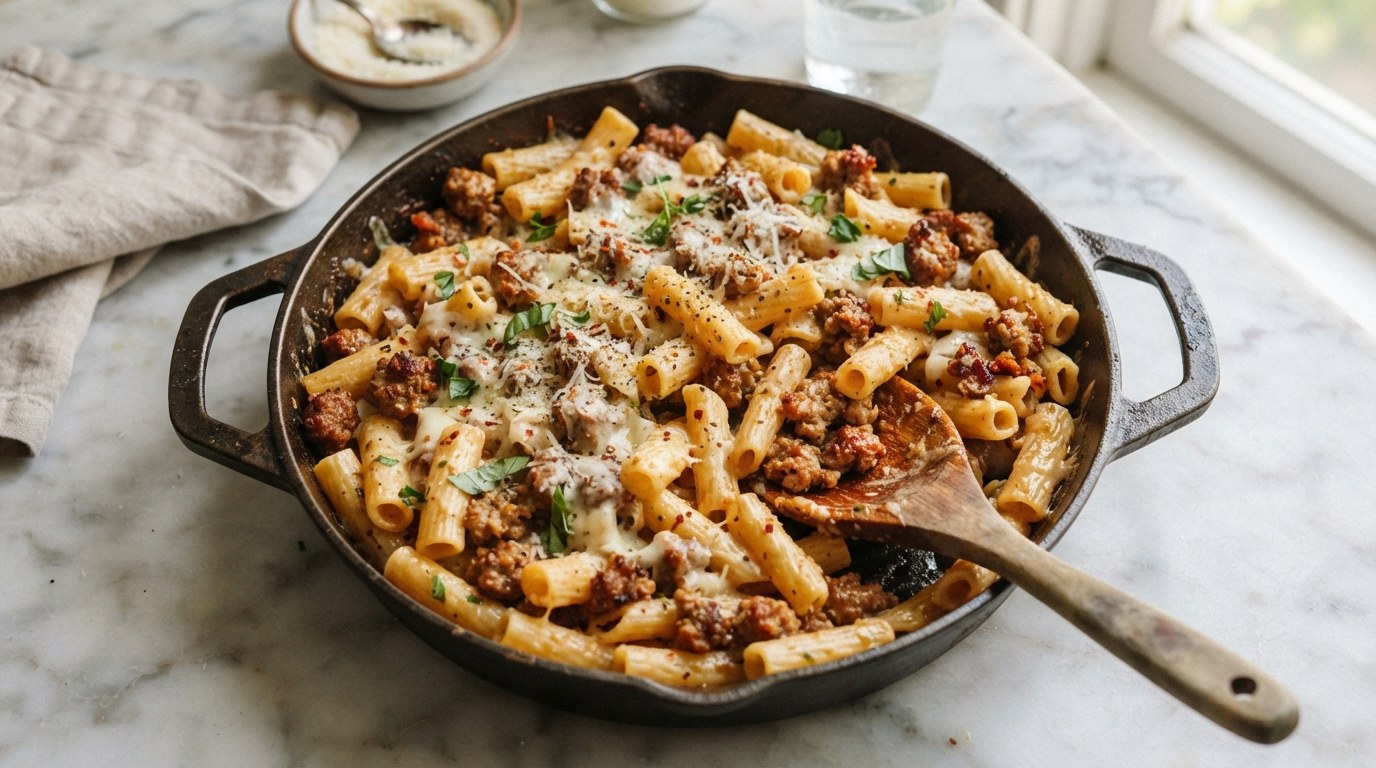
Cheesy sausage pasta is a one-pan weeknight dinner: browned Italian sausage, short pasta, and a glossy melted-cheese sauce, done in about the time it takes the pasta to boil. Five ingredients, one skillet, and one technique that decides whether it comes out silky or grainy.
That technique is the sauce. It is an emulsion, not a pour of melted cheese, and it holds together only if you add the cheese off the heat and use the starchy pasta water. Get that right and the rest is browning meat and boiling noodles. Here is the method, and the food science that keeps it from breaking.
How to Make Cheesy Sausage Pasta
The whole dish runs on one clock: brown the sausage while the pasta boils, then bring them together off the heat with butter, cheese, and a splash of the reserved water. Take the sausage out of its casings and sear it hard in a dry skillet, because it renders its own fat. Cook the pasta in well-salted water to al dente, and reserve a cup of that water before you drain it.
Then pull the pan off the burner, add the pasta and butter to the sausage, and toss in the cheese with a little pasta water until it turns glossy. The residual heat is enough to melt the cheese without breaking it. Ramsay's rule of getting organized applies here more than anywhere: this moves fast, so shred the cheese and measure everything before the water boils.
The Cheese Sauce Is an Emulsion
A cheese sauce this quick is an emulsion, fat suspended in water and held there by the starch from the pasta. Melted cheese on its own is just fat and protein; add it to a hot pan and the casein proteins clump and squeeze the fat out, which is what a greasy, grainy sauce actually is. Adding the cheese off the heat keeps the proteins from seizing, and the starchy water coats the fat and binds it into a smooth coating, the same emulsion principle the science of food describes for any butter-and-water sauce.
So the order matters: pasta and butter and a little water first, then the pan off the heat, then the cheese. Toss constantly and add water a splash at a time. If it looks tight, it wants more water, not more heat.

Why You Brown the Sausage Hard First
The deep flavor in this dish comes from browning the sausage properly, which is the Maillard reaction between the meat's proteins and sugars above about 284°F/140°C, described in the food science of the Maillard reaction. It only happens on a dry, hot surface, so give the crumbles room. Crowd the pan and the meat steams in its own juices, turning grey instead of golden.
Get the skillet hot, add the sausage in a single layer, and leave it alone for a minute before you break it up. You want a real crust and the browned fond stuck to the pan, because that fond dissolves into the sauce later and carries most of the flavor. This is the same pan discipline Ramsay drills on any protein: hot pan, do not crowd, let it sear.

What Cheese to Use
The cheese decides the flavor and the melt. Sharp cheddar brings the most flavor, mozzarella brings the stretch, and Parmesan brings savory depth but will not carry a sauce on its own. An Italian blend covers all three, which is why it is the easy default. Whatever you pick, shred it yourself.
| Cheese | Melt | Flavor | Best for |
|---|---|---|---|
| Sharp cheddar | Good, can go oily if overheated | Strong, tangy | The most flavor; the workhorse |
| Low-moisture mozzarella | Excellent, stretchy | Mild, milky | Stretch and gloss |
| Parmesan | Poor alone; melts into others | Salty, savory, deep | A finishing accent, not the base |
| Italian blend | Very good, balanced | Rounded | The reliable all-in-one |
Skip the pre-shredded bag when you can. It is dusted with anti-caking starch or cellulose that keeps the shreds separate on the shelf but also gets in the way of a smooth melt, a trade-off the dairy industry, including groups like the International Dairy Foods Association, is open about. Freshly grated cheese melts into a silkier sauce.
Salt the Water, Save the Water
Season the pasta water like the sea, because salt is the one thing that actually travels into the pasta as it cooks; it seasons the noodle from the inside in a way no amount of sauce on the outside can match. Salt does not make the water boil faster, despite the old kitchen line, so add it for flavor, not speed.
Reserve a cup of that cloudy, starchy water before you drain, and skip the oil in the pot, which does nothing but coat the noodles and keep sauce from sticking. Do not rinse the pasta either; that rinses off the surface starch you need for the sauce. Everything about this dish points back to that one cup of water.
Why Your Cheese Sauce Broke
A broken sauce, grainy or slick with fat, almost always means the cheese got too hot. Once the casein proteins tighten and wring out their fat, the smooth emulsion splits into curds and grease. The fix is to pull the pan off the heat and whisk in more starchy pasta water a splash at a time, which re-suspends the fat and pulls the sauce back together.
To avoid it in the first place: add the cheese with the pan off the burner, keep the pasta water handy, and toss without stopping. Low and steady beats hot and fast every time with melted cheese.
Make It Ahead and Store It
Cheesy sausage pasta is best straight from the skillet, but it keeps three to four days covered in the fridge. Reheat it gently with a splash of water or milk, stirring as it warms, to loosen the sauce back to glossy; reheated dry, the cheese tightens and turns pasty.
You can brown the sausage a day ahead to shave minutes off a weeknight. For more fast one-pan dinners, see the full recipe collection or our pasta carbonara, which runs on the same off-heat, starchy-water trick.

Cheesy Sausage Pasta
Ingredients
- 12 oz short pasta (penne, rigatoni, or shells)
- 1 lb Italian sausage (mild or hot), casings removed
- 2 cups freshly shredded cheese (sharp cheddar, mozzarella, or Italian blend), about 8 oz
- 2 Tbsp unsalted butter
- 1 cup reserved starchy pasta water
- Salt and black pepper, to taste
- 1/4 tsp red pepper flakes (optional)
To finish
- Grated Parmesan and chopped parsley (optional)
Instructions
- Bring a large pot of well-salted water to a boil and cook the pasta to al dente per the package. Reserve 1 cup of the pasta water, then drain; do not rinse.
- While the pasta cooks, heat a large skillet over medium-high. Add the sausage in a single layer and let it sear for a minute before breaking it into crumbles. Cook 5 to 6 minutes until deep golden and cooked through, leaving the browned fond in the pan.
- Lower the heat and add the drained pasta and butter to the skillet with the sausage. Toss to coat and to loosen the fond, then add half the reserved pasta water.
- Pull the skillet off the heat. Add the shredded cheese and toss constantly until it melts into a glossy sauce, adding more pasta water a splash at a time until every piece is coated.
- Season with salt, pepper, and the red pepper flakes if using. Serve right away, topped with Parmesan and parsley.
Notes
Cheesy Sausage Pasta FAQs
The questions that come up most: which cheese melts best, why a cheese sauce turns grainy, what sausage to use, and how to store and reheat it.
What cheese is best for cheesy sausage pasta?
Sharp cheddar for flavor, low-moisture mozzarella for stretch, and a little Parmesan for savory depth. An Italian blend gives you all three at once. Shred it yourself; freshly grated cheese melts into a smoother sauce than the pre-shredded bag.
Why did my cheese sauce turn grainy or greasy?
The cheese got too hot and its proteins clumped and squeezed out the fat. Add the cheese with the pan off the heat and toss it with starchy pasta water. If it has already broken, pull it off the burner and whisk in a splash of pasta water to bring it back.
Can I use pre-shredded cheese?
You can, but pre-shredded cheese is coated with anti-caking starch or cellulose that gets in the way of a smooth melt. Freshly grated cheese from a block gives a silkier sauce.
What sausage should I use?
Italian sausage, mild or hot, with the casings removed, is the standard. Brown it hard for the flavor base. Chicken or plant-based sausage works too, but it browns faster and drier, so watch it closely.
How long does it keep, and how do I reheat it?
Three to four days covered in the fridge. Reheat gently with a splash of water or milk, stirring as it warms, so the cheese sauce loosens back to glossy instead of tightening into paste.
Can I make cheesy sausage pasta ahead of time?
It is best fresh, but you can brown the sausage a day ahead to save time. The fully assembled pasta freezes passably, though the cheese sauce is grainier after thawing; reheat it with a little liquid.

About the Author
John Siracusa is the founder of Hell’s Kitchen Recipes. He focuses on technique-first, reproducible home cooking and researches recipes & kitchen equipment from published food science and professional chef methods since 2016.