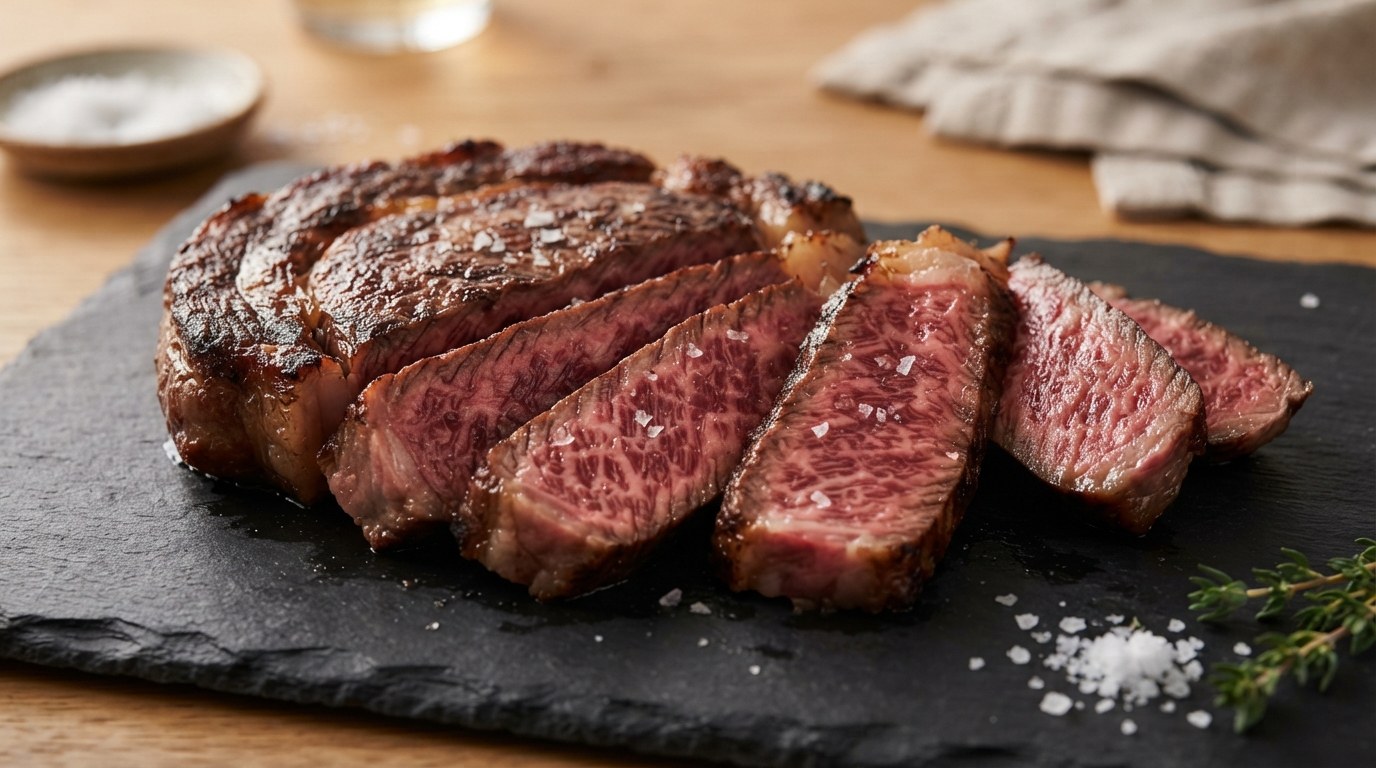
Kobe beef vs Wagyu is almost a trick question, because Kobe is Wagyu. Wagyu is the broad category of Japanese beef cattle; Kobe is one strictly certified brand of it, from Tajima-strain Japanese Black cattle raised in Hyogo Prefecture. So the real comparison is Kobe against every other kind of Wagyu, from Japanese regional brands like Matsusaka and Miyazaki to American and Australian Wagyu. This guide lays out the difference in plain terms: what makes Kobe Kobe, how the A5 grade and marbling work, the price, how to spot a fake, and which is actually the better buy for you.
None of this is about a recipe card, so if you have landed a piece of either one, jump to how to cook it: a lean, hot sear and a light touch, the same method behind our pan-seared ribeye and how to cook filet mignon. The rest of this page is the buyer's guide.
Is Kobe Beef the Same as Wagyu?
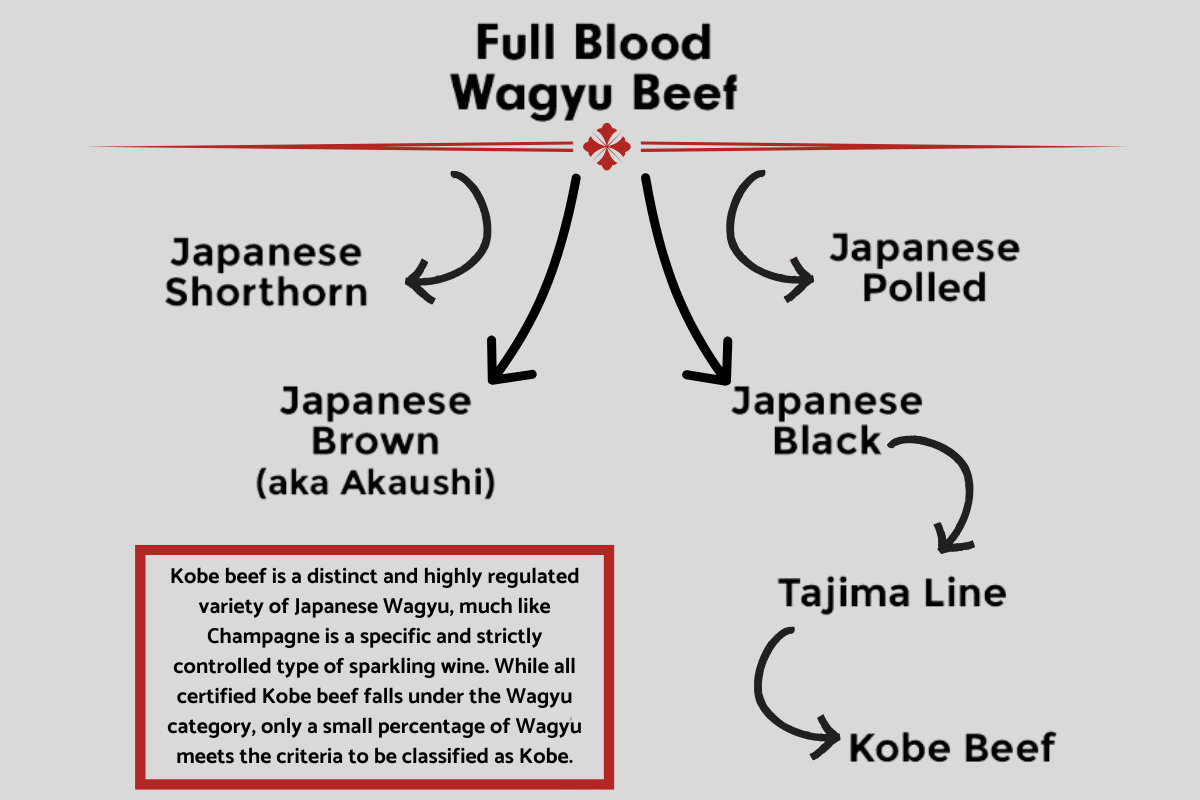
No, but Kobe is a type of Wagyu, not a rival to it. “Wagyu” literally means Japanese cattle, and it covers four native breeds: Japanese Black (Kuroge, about 90 percent of all Wagyu), Japanese Brown (Akaushi), Japanese Shorthorn, and Japanese Polled. Kobe comes only from the Tajima bloodline of Japanese Black. The easiest way to hold it in your head is the Champagne rule: all Champagne is sparkling wine, but only sparkling wine from one strictly controlled region may be called Champagne. All Kobe is Wagyu; only a small, certified slice of Wagyu earns the name Kobe.
What Makes Kobe Beef Different: The Certification
What separates Kobe from the rest of Wagyu is a checklist, not a flavor secret. To be sold as Kobe, a carcass must be Tajima-strain Japanese Black, born, raised, and slaughtered in Hyogo Prefecture, and then pass strict grading: a marbling score (BMS) of 6 or higher, a meat quality score, and a carcass-weight limit. Only then does the Kobe Beef Marketing & Distribution Promotion Association certify it, stamp it with the chrysanthemum seal, and assign a ten-digit ID that follows the meat to the plate. Other Wagyu brands, like Matsusaka or Miyazaki, run their own certifications; American and Australian Wagyu answer to different standards again.
The A5 Grade and Marbling (BMS), Explained
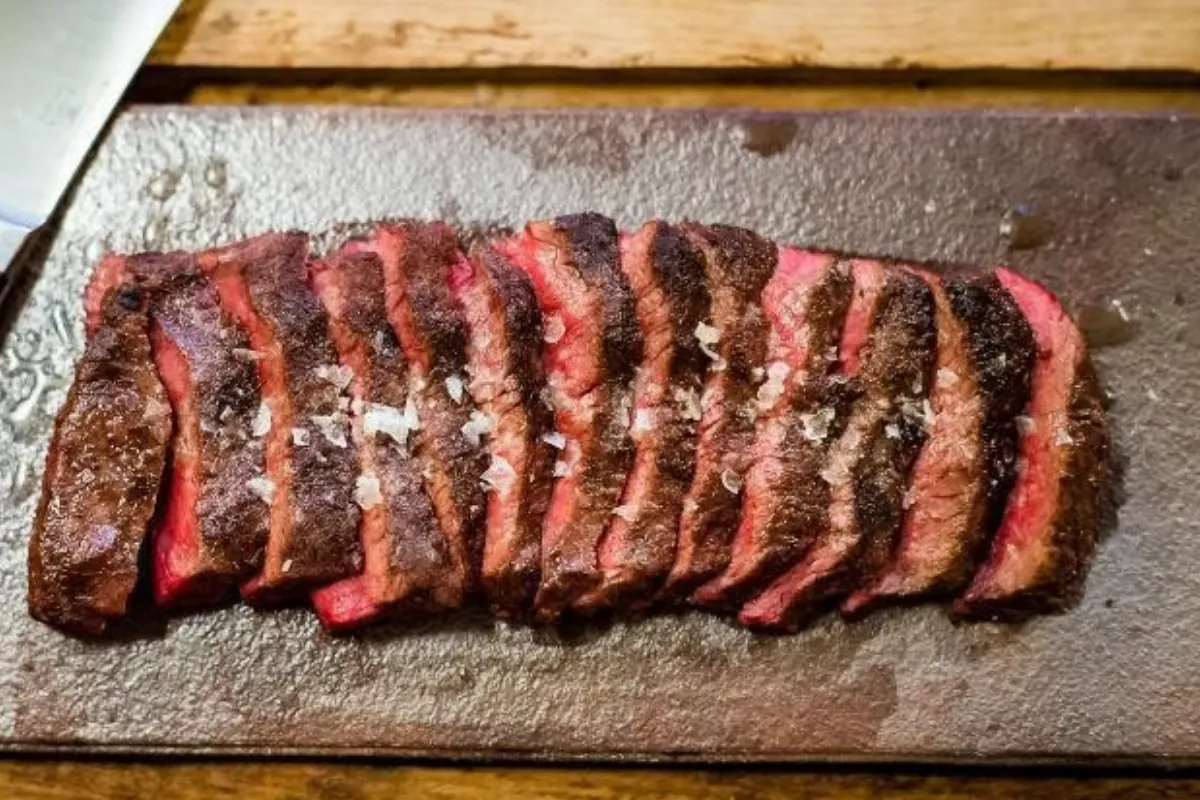
Japanese beef gets two grades at once: a yield grade (A, B, or C, where A is the most usable meat off the carcass) and a quality grade (1 to 5, where 5 is best). A5 is the top of both, which is why it is the number everyone quotes. The quality grade is driven mostly by marbling, scored on the Beef Marbling Standard (BMS) from 1 to 12; BMS 8 through 12 all count as quality grade 5. Kobe requires BMS 6 or higher; the finest Wagyu, like the A5 BMS 12 on a genuine Japanese certificate, is almost lace.
That marbling is why Wagyu eats the way it does. The intramuscular fat is high in oleic acid, a monounsaturated fat with a low melting point of around 77°F, so it starts to melt below body temperature and gives that buttery, dissolving mouthfeel. It also means these steaks want gentle treatment: a fierce, brief sear and a light hand, because that fat renders and runs off fast under long heat. The USDA's own top grade, Prime, tops out well below where Wagyu marbling begins, which is the honest measure of how far ahead Japanese beef sits on fat content.
Kobe Beef vs Wagyu: The Comparison
Here is the head-to-head, with the two Wagyu camps most people are actually choosing between: other Japanese Wagyu, and the American Wagyu that fills most US menus.
| Kobe Beef | Other Japanese Wagyu | American Wagyu | |
|---|---|---|---|
| Origin | Hyogo Prefecture, Japan only | Regions across Japan (Matsusaka, Miyazaki, Ohmi…) | United States |
| Breed | Tajima-strain Japanese Black | Japanese Black, Brown, Shorthorn, Polled | Usually Wagyu crossed with Angus |
| Certification | Kobe seal + 10-digit ID, BMS 6+ | Each brand’s own certification | Breed-association standards; no A5 system |
| Marbling | Very high, ultra-fine | High to very high; A5 rivals Kobe | Higher than Angus, below Japanese |
| Flavor | Delicate, sweet, buttery | Rich and silky to beef-forward | Beefier, firmer chew |
| Price | Highest; scarce | High, with more grades and tiers | More affordable, widely available |
| Best for | A once-in-a-while trophy steak | Range of budgets and flavors | Everyday luxury and bigger portions |
Kobe vs Wagyu Price: Why Kobe Costs So Much
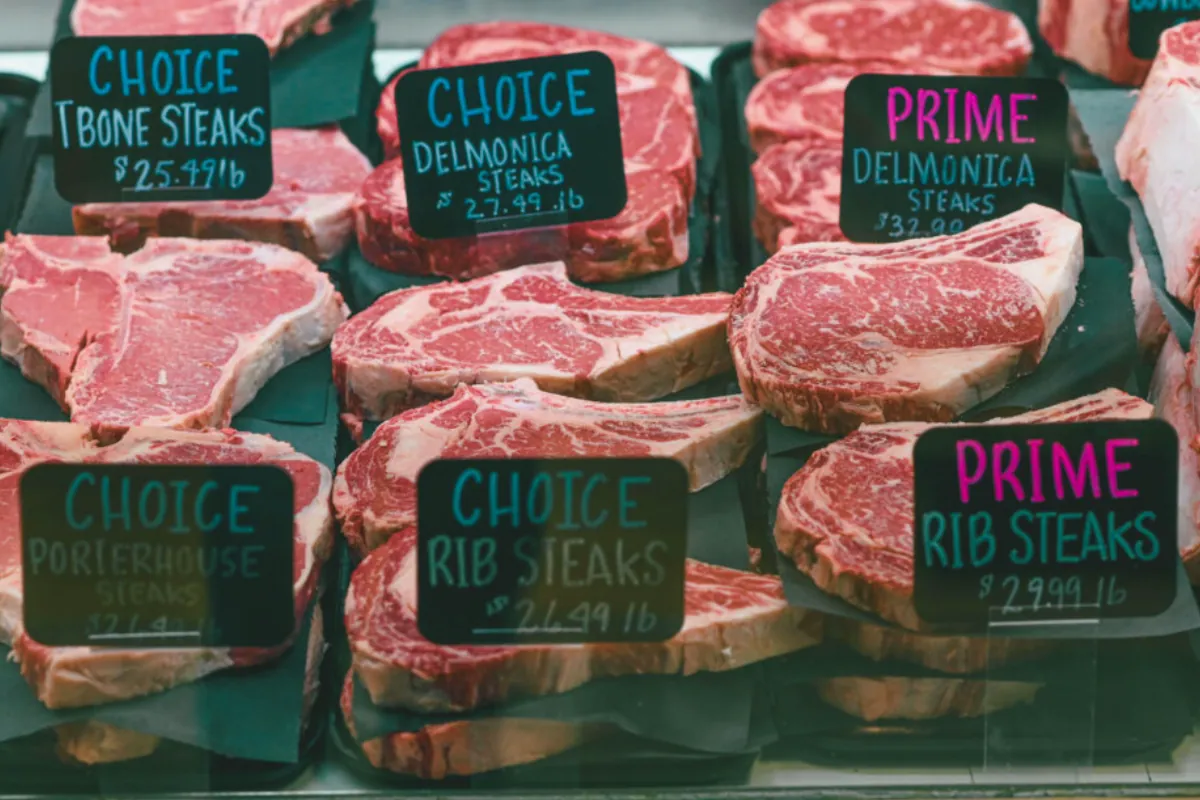
Kobe sits at the very top of the price ladder, and Wagyu spreads out below it, which is the whole practical difference for most buyers. The reasons Kobe costs the most are scarcity and paperwork, not some extra ingredient: only a few thousand cattle qualify as Kobe each year, every one is certified and traced, and almost all of it stays in Japan. Other Japanese Wagyu gives you most of the experience for less, because there is simply more of it and more brands competing. American Wagyu is the value end, more marbled than a Prime steak but a fraction of Japanese prices, which is why it dominates restaurant menus. If you want a trophy, Kobe earns it; if you want to eat like this more than once a year, Wagyu is the smarter spend.
How to Spot Fake Kobe (Authenticity)
Most “Kobe” you see outside Japan is not Kobe. Genuine Kobe reaches only a short list of licensed importers and restaurants, so a “Kobe beef burger” or “Kobe sliders” at a chain is almost always American Wagyu or plain beef borrowing the name. Real Japanese Wagyu carries a certificate of authenticity: the breed, the grade, a carcass and cattle ID, even a nose-print, all verifiable against Japan's national database at the carcass verification bureau. The certificate below is a real one (for Miyazaki Wagyu, graded A5 BMS 12); genuine Kobe uses the same kind of traceable documentation plus its chrysanthemum seal.
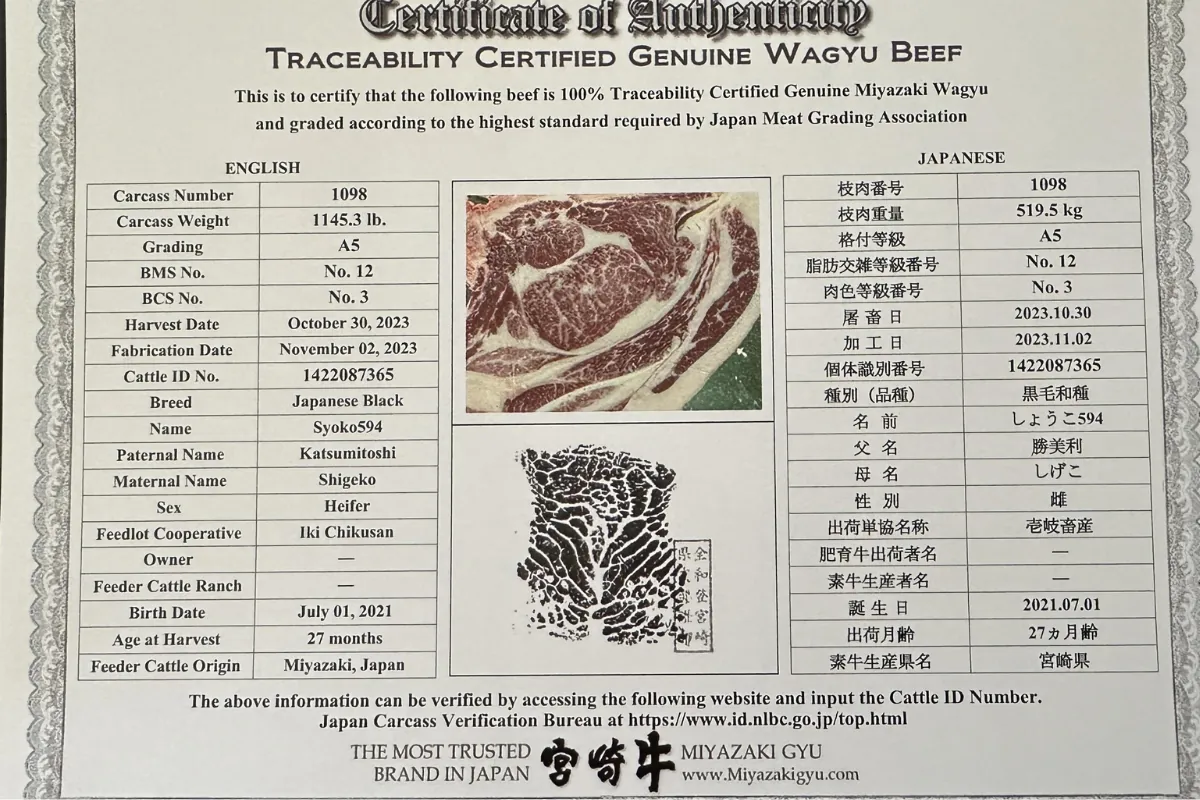
So the buyer's rules are simple. Ask for the breed, origin, and grade on the label or menu; for Kobe specifically, ask to see the certificate and the ID number, and photograph it for your records. Recognizable regional brands (Matsusaka, Miyazaki, Ohmi) and established importers are safer than an unnamed “Kobe-style” claim. The American Wagyu Association registers US breeders, which is the equivalent paper trail on this side of the Pacific.
Which Is Better, Kobe or Wagyu? And How to Cook It
There is no single winner, because they answer different questions. Kobe is the special-occasion pick: the most delicate, buttery, and rare, and the one worth chasing once for the experience. Other Japanese Wagyu, especially top A5, gets you within a hair of Kobe with more brands, grades, and price points to choose from. American Wagyu is the everyday luxury, beefier and firmer, made for a full-size steak rather than a tasting portion. For most people cooking at home, an A5 Japanese Wagyu or a good American Wagyu is the better call; Kobe is the bucket-list bite.
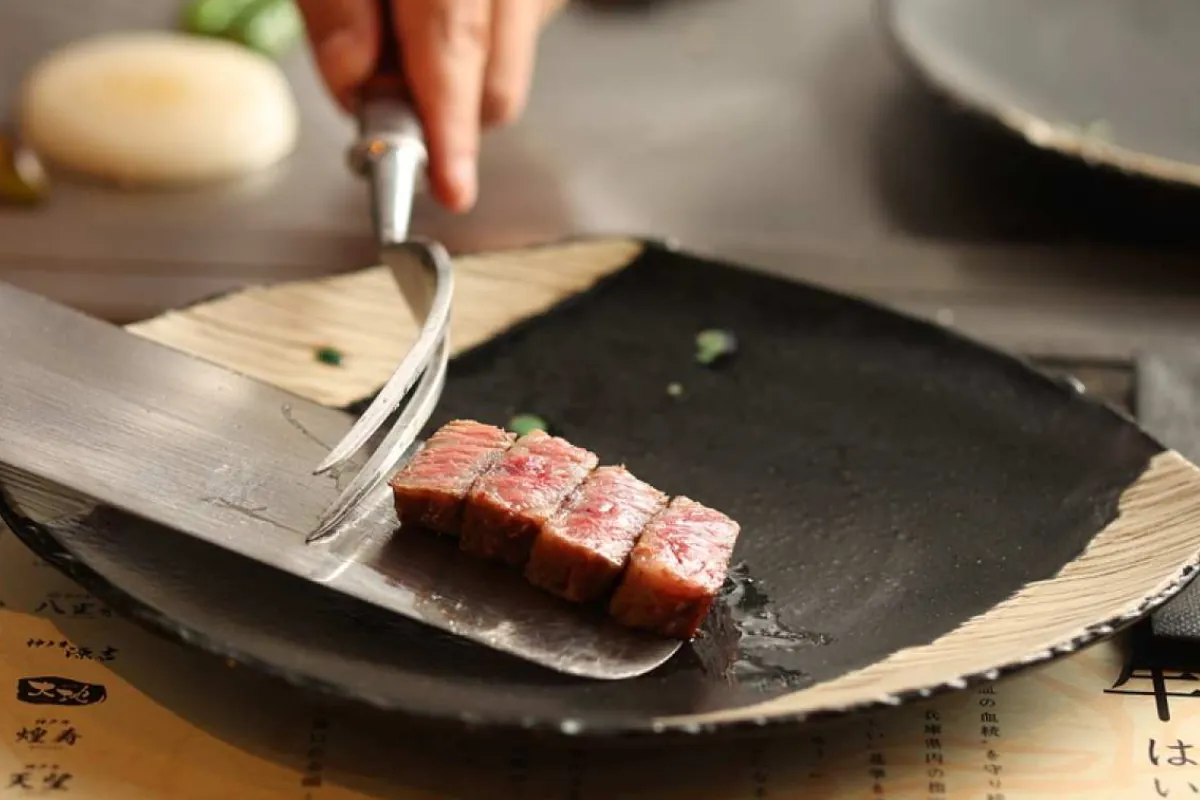
However you buy it, cook it like the fat is the point, because it is. Serve small: a few ounces of A5 is a portion, not a starter. Get a heavy pan screaming hot, dry the surface, and sear hard and fast so the crust forms before the marbling melts away, then pull it at the rare side of medium-rare and rest it. Cast iron is the tool here, because it holds and radiates the fierce heat a quick sear needs; the same method runs under our strip steak and filet mignon. Skip heavy sauces on the good stuff, but a spoon of green peppercorn sauce suits a beefier American Wagyu, and for a full-on celebration a Beef Wellington is the classic move.

Lodge
Lodge Pre-Seasoned Cast Iron Skillet, 12-Inch
- Heavy cast iron holds and radiates high heat, exactly what a hard, fast Wagyu sear needs
- Pre-seasoned and ready to cook out of the box, naturally non-stick with use, PFAS-free
- Oven and stovetop safe, made in the USA, with a silicone handle holder for the hot handle
Kobe Beef vs Wagyu FAQs
The questions that come up most: whether Kobe is a type of Wagyu, the real difference, which is better, why Kobe is so expensive, whether American Wagyu is the same, whether you can buy real Kobe in the US, and what A5 means.
Is Kobe beef a type of Wagyu?
Yes. Wagyu is the broad category of Japanese cattle; Kobe is one certified brand of it, from Tajima-strain Japanese Black cattle raised in Hyogo Prefecture. All Kobe is Wagyu, but only a small, certified share of Wagyu qualifies as Kobe.
What is the difference between Kobe and Wagyu?
Wagyu covers four Japanese breeds and many brands worldwide; Kobe is a strictly certified subset with a fixed origin (Hyogo), breed (Tajima Japanese Black), and a minimum marbling score (BMS 6+), verified with an official seal and ID. Kobe is the narrowest, most regulated slice of the Wagyu world.
Which is better, Kobe or Wagyu?
Neither wins outright. Kobe is the most delicate and rare, best as a once-in-a-while trophy. Top A5 Japanese Wagyu comes very close with more choice, and American Wagyu is a beefier, more affordable everyday option. For most home cooks, an A5 Wagyu or a good American Wagyu is the smarter buy.
Why is Kobe beef so expensive?
Scarcity and certification, not a secret ingredient. Only a few thousand cattle qualify as Kobe each year, every one is traced and graded, and almost all of it stays in Japan, so the little that reaches export markets commands the highest prices of any beef.
Is American Wagyu the same as Japanese Wagyu?
No. American Wagyu is usually a cross of Wagyu with Angus, which gives a beefier flavor and firmer chew with less marbling than purebred Japanese Wagyu, and it is graded by US and breed-association standards rather than the Japanese A5 system. It is excellent and more affordable, just not the same eating experience as A5.
Can you buy authentic Kobe beef in the US?
Yes, but only through a short list of licensed importers and restaurants, and it is rare and expensive. Most “Kobe” on American menus, especially burgers and sliders, is American Wagyu or ordinary beef using the name loosely. Always ask for the certificate and the ten-digit ID.
What does A5 Wagyu mean?
A5 is the top Japanese grade: “A” is the highest yield grade (the most usable meat off the carcass) and “5” is the highest quality grade, driven mainly by marbling. Marbling is scored BMS 1 to 12, and BMS 8 through 12 all fall within grade 5, so A5 is the most heavily marbled Japanese beef you can buy.
Which has more marbling, Kobe or Wagyu?
Kobe is always highly marbled (BMS 6+), but the very top A5 Japanese Wagyu, at BMS 11 or 12, can match or exceed a given Kobe cut. Marbling alone does not make it Kobe; Kobe is defined by its origin and full certification, not just the fat score.

About the Author
John Siracusa is the founder of Hell’s Kitchen Recipes. He focuses on technique-first, reproducible home cooking and researches recipes & kitchen equipment from published food science and professional chef methods since 2016.