Chicken cordon bleu is a lean chicken breast turned rich: pounded thin, wrapped around ham and Swiss cheese, crumbed, and baked until crisp. Gordon Ramsay's version swaps the usual breadcrumbs for crushed cornflakes, which bake up crunchier and hold that crunch longer. The trick to the whole dish is keeping the breast juicy and the cheese from escaping.
This guide covers why each step matters, how to butterfly and roll it with a sharp knife so the cheese stays put, and the internal temperature that keeps the chicken safe without drying it out.
Why Pound the Chicken Thin
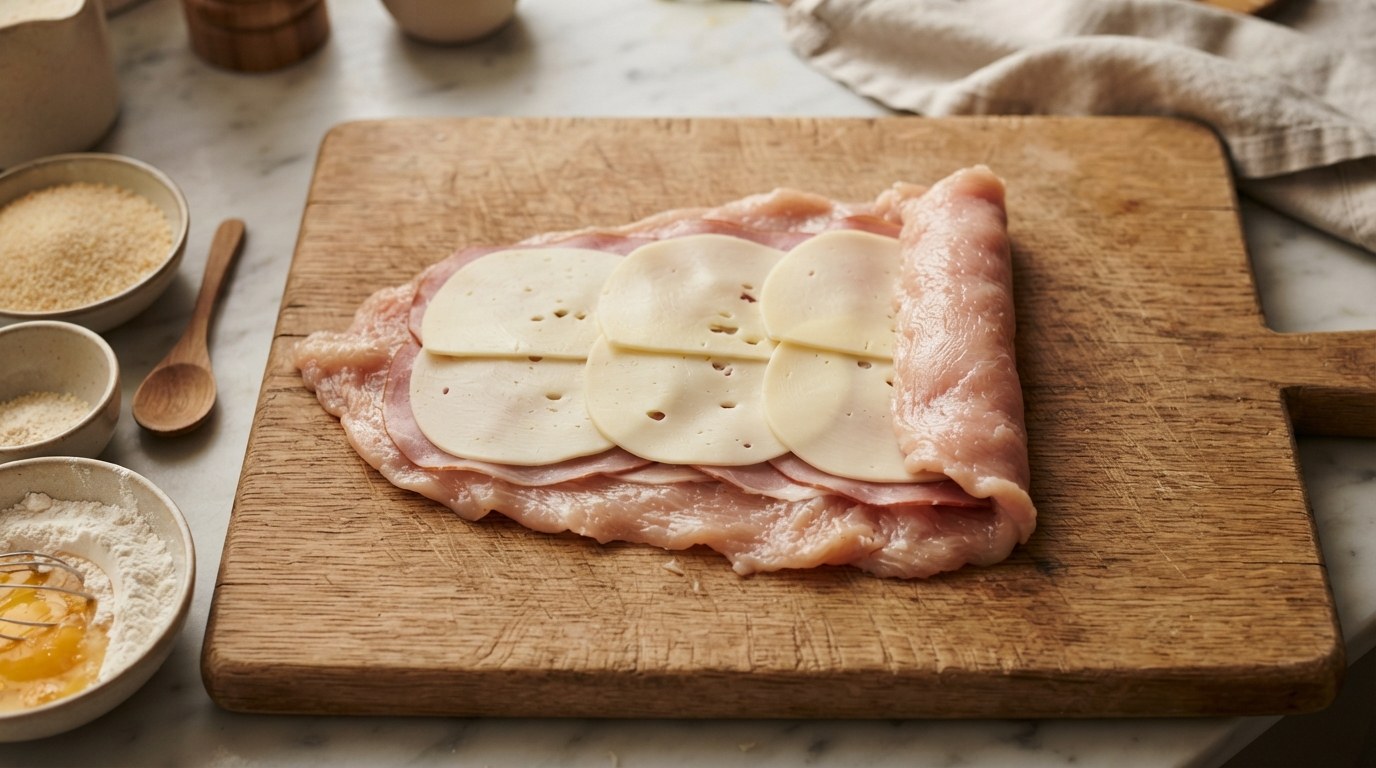
Chicken breast is lean, fast-twitch muscle with almost no fat, which is exactly why it dries out so fast. Pounding it to about a quarter inch does two things: it gives you a thin, even sheet that cooks quickly and evenly (no dry edges around a raw middle), and it makes a wide enough surface to roll neatly around the filling. Thin and fast is how you keep a lean cut juicy.
Season the chicken on both sides before you layer on the ham and cheese. Then roll it up tightly and secure it with kitchen twine or toothpicks so it holds its shape.
Chill It, Then Crumb It
Refrigerate the rolls for at least 30 minutes before coating. Chilling firms the roll and the cheese so it holds together in the oven instead of unrolling and leaking, which is the most common cordon bleu failure. Roll tightly, do not overstuff, and make sure the cheese is tucked inside the ham rather than touching the edges.
For the coating, dip each chilled roll in melted butter, then press it firmly into crushed cornflakes. The butter helps the crumbs stick and brown, and cornflakes stay crisper than breadcrumbs because they hold less moisture. As The Kitchn notes, pressing the coating on firmly is what keeps it from flaking off during baking.
The Crust and the Safe Temperature
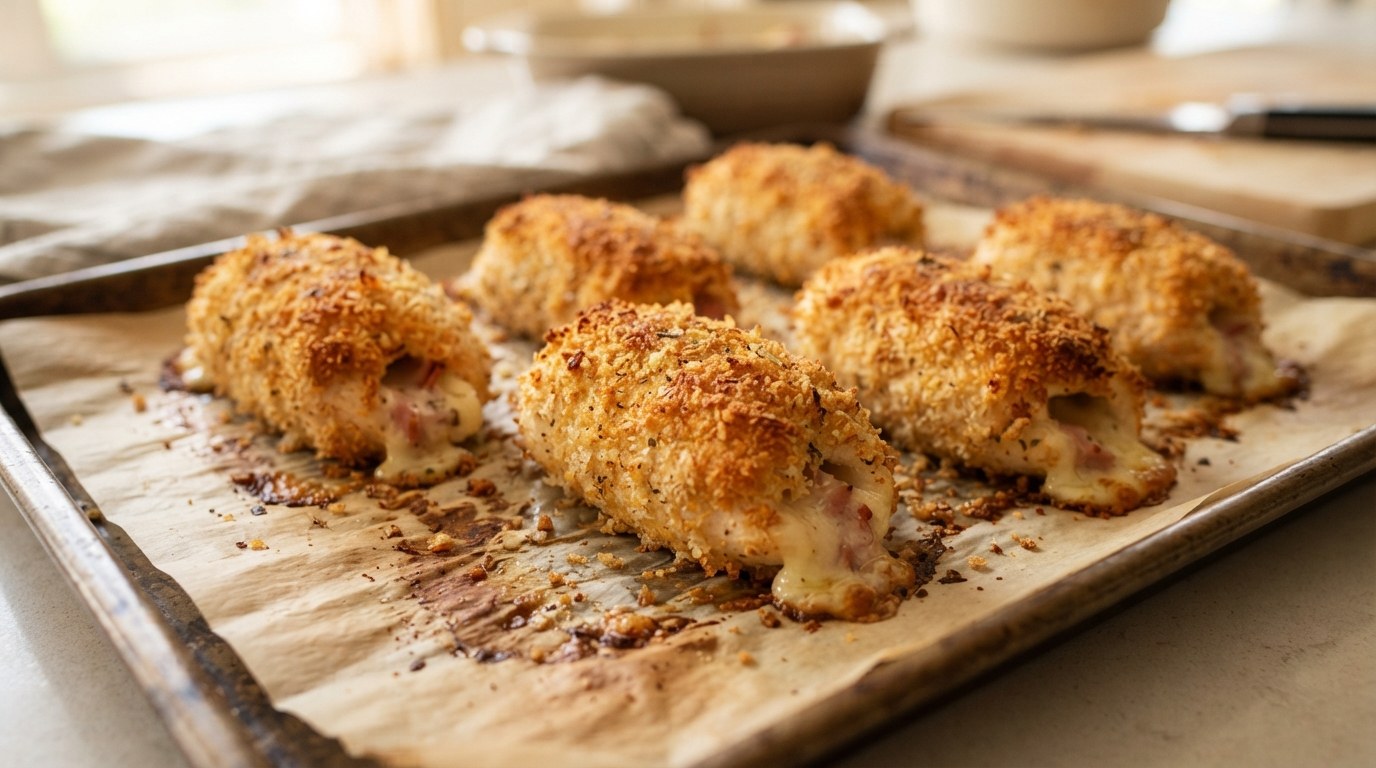
Bake at 400°F. The crust turns deep golden through the Maillard reaction, the browning of the buttered cornflakes, which is where the toasty flavor and crunch come from. If the crust colors before the chicken is done, tent it loosely with foil.
Cook the chicken to an internal temperature of 165°F at the thickest part. That is the USDA safe minimum for poultry, and it is not negotiable; some older recipes say 160°F, but chicken should reach 165°F. Let the rolls rest 5 to 10 minutes before slicing. Resting lets the juices settle and thicken so they stay in the meat instead of running out on the board, and it gives the cheese a moment to stop flowing.
Where Cordon Bleu Comes From
Despite the French name, chicken cordon bleu is most likely an American invention of the mid-20th century, adapted from the European veal cordon bleu, itself a cousin of the breaded, stuffed schnitzel. "Cordon bleu" is French for "blue ribbon," a term long used for culinary excellence, which is how a stuffed, breaded cutlet ended up with such a grand name.
Make-Ahead and Storage
The rolls are a good make-ahead: assemble and crumb them, then refrigerate up to a day before baking, or freeze uncooked for up to 2 months (bake from frozen with extra time). Store cooked leftovers in the fridge for up to 3 days and reheat in a 350°F oven on a wire rack, not the microwave, to bring back the crunch.
For more chicken, try Ramsay's buttermilk fried chicken, and pair the cordon bleu with our creamy mac and cheese or browse the full recipes collection.
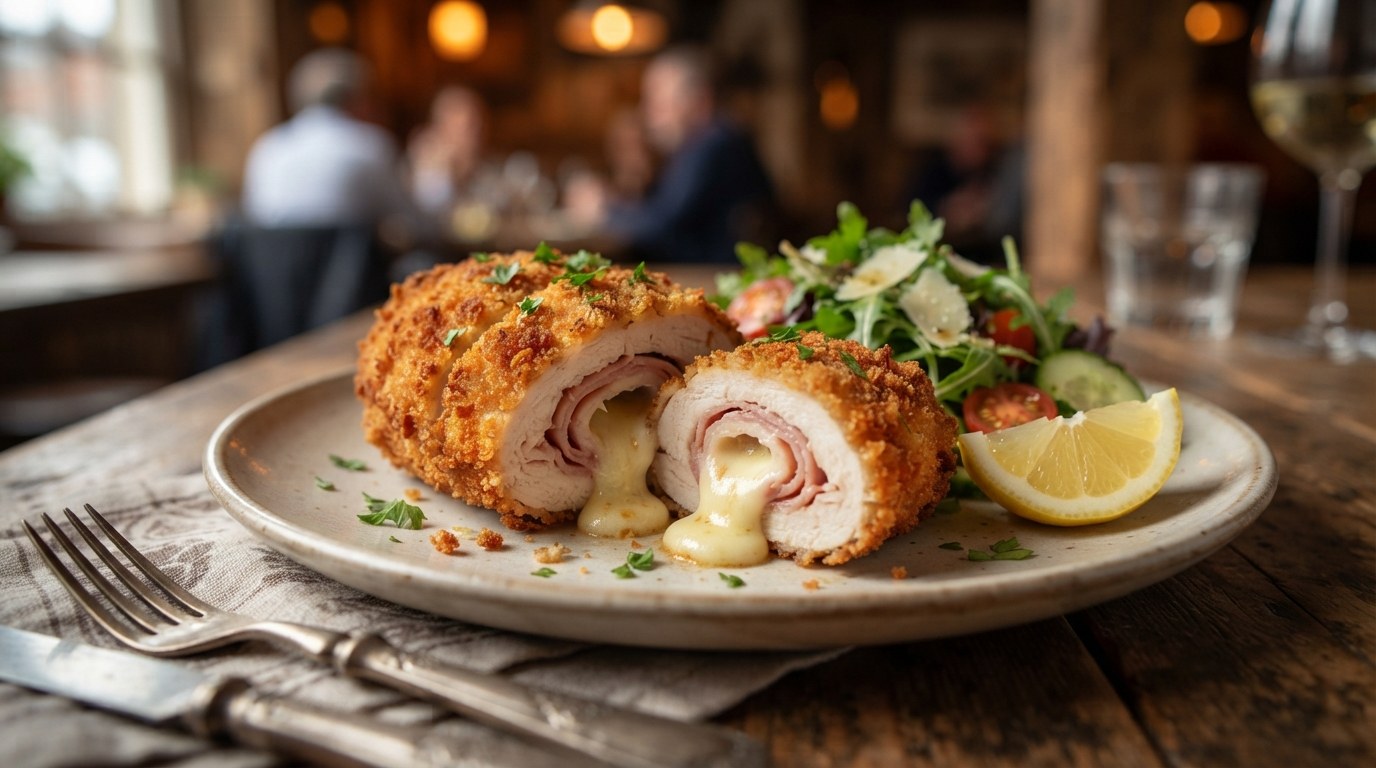
Gordon Ramsay's Chicken Cordon Bleu
Ingredients
- 4 boneless, skinless chicken breasts
- 8 thin slices of ham
- 8 oz Swiss cheese, sliced
- 3 cups cornflake cereal, crushed
- 1/2 cup butter, melted
- 1 tsp salt
- 1/2 tsp black pepper
- Kitchen twine or toothpicks
Instructions
- Pat the chicken dry and cut each breast in half horizontally. Place between plastic wrap and pound to about 1/4-inch thick.
- Season each piece with salt and pepper, then layer with ham and Swiss cheese, keeping the cheese tucked inside the ham.
- Roll each piece up tightly and secure with kitchen twine or toothpicks. Refrigerate for at least 30 minutes.
- Dip each chilled roll in melted butter, then press firmly into the crushed cornflakes to coat all over. Set on a greased baking sheet.
- Bake at 400°F for about 30 minutes, until the crust is deep golden and the internal temperature reaches 165°F. Tent with foil if the crust browns too fast.
- Rest 5 to 10 minutes before removing the twine and slicing.
Notes
Chicken Cordon Bleu FAQs
The questions that come up most: what temperature to cook it to, how to stop the cheese leaking, whether it is Swiss or French, and how to make it ahead.
What temperature should chicken cordon bleu be cooked to?
To an internal temperature of 165°F at the thickest part, the USDA safe minimum for poultry. Use a meat thermometer; do not rely on time alone. Rest it 5 to 10 minutes before slicing.
How do you keep the cheese from leaking out?
Roll the chicken tightly around the filling, keep the cheese tucked inside the ham and away from the edges, secure with twine or toothpicks, and chill the rolls for at least 30 minutes before baking so everything firms up.
Is chicken cordon bleu Swiss or French?
Neither, really. It is most likely an American dish from the mid-20th century, adapted from European veal cordon bleu and schnitzel. The name is French for "blue ribbon," a mark of culinary excellence.
Why use cornflakes instead of breadcrumbs?
Crushed cornflakes bake up crunchier and hold that crunch longer than breadcrumbs, because they absorb less moisture. Dipping the rolls in butter first helps the flakes stick and brown.
Why does my chicken cordon bleu turn out dry?
Chicken breast is very lean and overcooks easily. Pound it thin so it cooks fast and evenly, and pull it the moment it hits 165°F rather than leaving it in longer.
Can you make chicken cordon bleu ahead of time or freeze it?
Yes. Assemble and crumb the rolls and refrigerate up to a day, or freeze them uncooked for up to 2 months and bake from frozen with extra time. Cooked leftovers keep 3 days; reheat in the oven to keep them crisp.
What ham and cheese are best for cordon bleu?
Thin-sliced deli ham and a good melting Swiss cheese like Emmental or Gruyère are classic. Choose a cheese that melts smoothly, and do not overfill, or it will push out as it bakes.

About the Author
John Siracusa is the founder of Hell’s Kitchen Recipes. He focuses on technique-first, reproducible home cooking and researches recipes & kitchen equipment from published food science and professional chef methods since 2016.