Wagyu meatballs are the kind of starter that sounds fancy and cooks like comfort food. This is the dish from the menu at Gordon Ramsay's Hell's Kitchen restaurants, made for a home kitchen: American wagyu and pork rolled into tender meatballs, simmered in a deep slow-roasted tomato sauce, and finished with crisp polenta croutons, Parmesan, and basil. Rich, savory, and a little bit restaurant.
The whole plate is three simple builds that mostly happen ahead: the sauce roasts low and slow, the polenta sets and crisps into croutons, and the meatballs sear and finish in the sauce at dinner. Here is why each step matters and how to get it right.
What Makes These Wagyu Meatballs Work
American wagyu is heavily marbled, so it brings a buttery richness that regular ground beef cannot. On its own that fat can make a meatball greasy and dense, which is why this recipe cuts it with leaner ground pork, which keeps the texture light while the wagyu carries the flavor. A two-to-one blend of wagyu to pork is the sweet spot.
The real secret to a tender meatball is the panade: fresh breadcrumbs soaked in milk and worked into the meat. The starch and moisture physically get between the meat proteins so they cannot link into a tight, springy mass as they cook, which is what keeps the meatball soft instead of rubbery. Salt does the opposite, so season the mix at the end and mix gently, just until it comes together. Overworking ground meat dissolves its myosin and binds it into a bouncy, sausage-like texture.
The Slow-Roasted Tomato Sauce
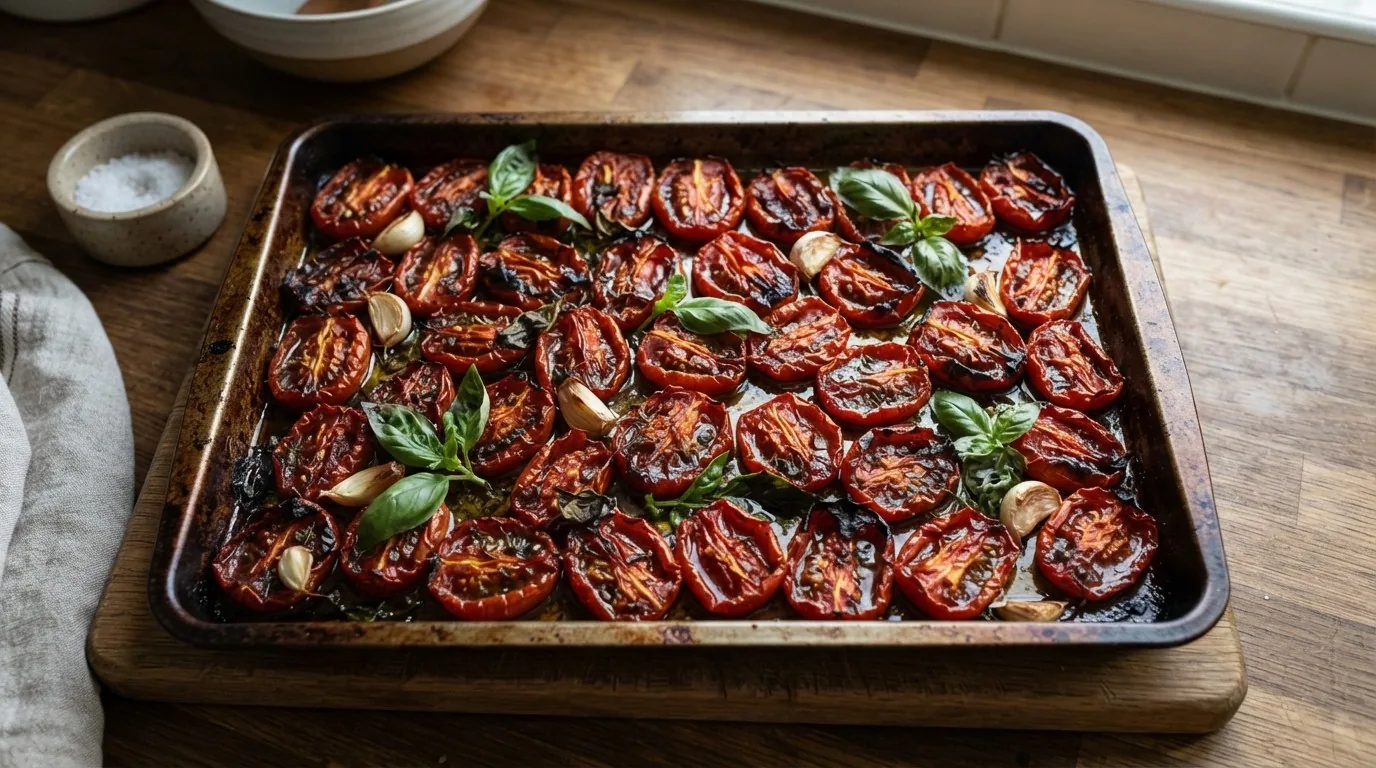
A quick tomato sauce is fine for a weeknight, but this dish leans on a slow-roasted one because it tastes deeper. Roasting halved tomatoes low and slow, around 300°F (150°C) for an hour or more, drives off their water and concentrates the flavor, while the natural sugars caramelize at the cut edges (caramelization runs from about 320°F/160°C). What comes out is sweet, jammy, and intense in a way you cannot rush on the stovetop. Blend it with the roasting oil, a little stock, and fresh basil, and you have a sauce with real backbone.
Crisp Polenta Croutons
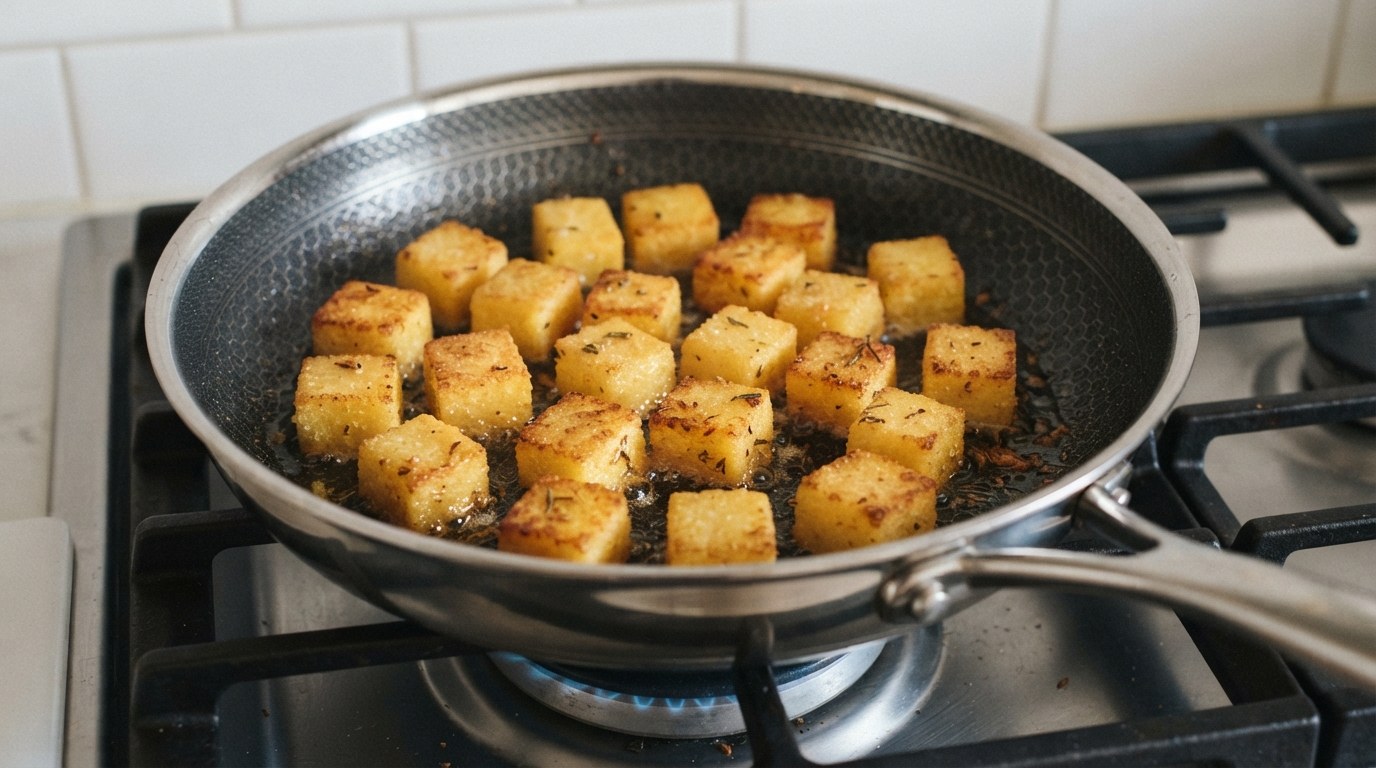
Polenta croutons are the detail that makes the plate feel like a restaurant. Cooked cornmeal is mostly starch, and as it simmers it absorbs the liquid and gelatinizes into a thick, pourable mass; poured out and chilled, it sets firm enough to cut into cubes. Fry those cubes and the outside browns and crisps through the same Maillard reaction that browns the meatballs, leaving the inside soft and creamy. Crisp outside, creamy in, a little cheesy, and easily the best part of the plate.
Searing and Finishing the Meatballs
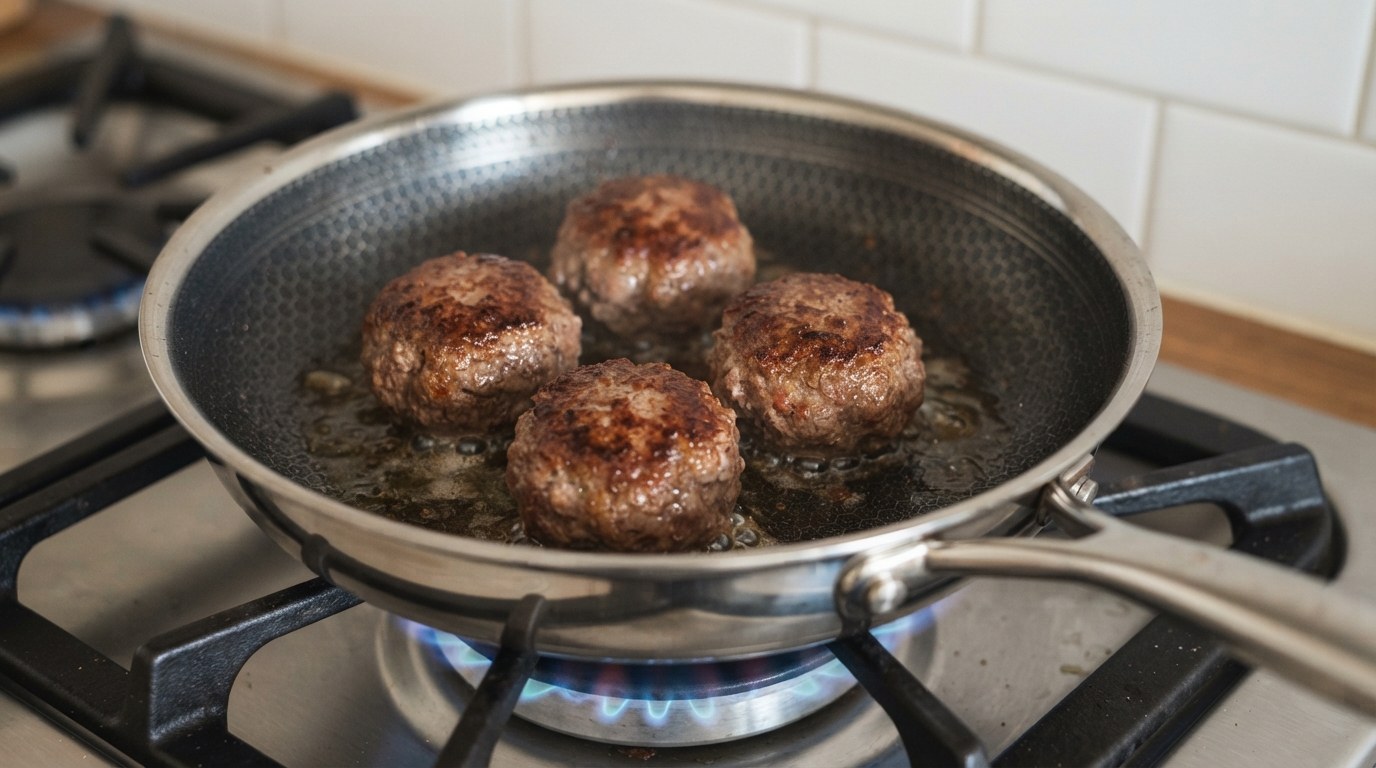
Sear the meatballs before they go anywhere near the sauce. A hot, dry pan browns the surface through the Maillard reaction, which starts around 284°F (140°C) and builds the deep, savory crust that a meatball poached straight in sauce never gets. Get the pan properly hot, give the meatballs room, and leave them alone so the crust can set before you turn them.
Then finish them gently in the tomato sauce. Simmering, not boiling, cooks them through evenly and lets the wagyu fat render into the sauce, enriching it. Ground meat has to reach 160°F (71°C) to be safe, because grinding spreads any surface bacteria all through the meat, so this is the one place to check with a thermometer rather than guess.
That is the one tool worth having for this recipe. An instant-read thermometer takes the guesswork out of pulling the meatballs at exactly 160°F, and you will reach for it on every steak, roast, and chicken breast after this.

Alpha Grillers
Alpha Grillers Instant Read Meat Thermometer
- Ultra-fast 1–2 second instant read, pre-calibrated with a recalibration option and a printed meat temperature chart
- Works for meats, liquids, deep frying and candy, plus the oven, grill, smoker, BBQ and air fryer
- Large dial with a bright blue backlight, and waterproof (IP67) so it rinses clean under running water
Wagyu vs Regular Beef in Meatballs
Wagyu is worth it here for richness, but it changes how you handle the meat. This is how the two compare when you are rolling meatballs.
| Feature | American Wagyu | Regular Ground Beef (80/20) |
|---|---|---|
| Marbling | Very high, fine intramuscular fat | Moderate |
| Texture | Richer, more tender | Classic, a touch firmer |
| Flavor | Buttery, deep beef | Straightforward beef |
| Best handled | Gently; blend with leaner pork so it is not greasy | Forgiving; works on its own |
| In this recipe | 2 parts wagyu to 1 part pork | Fine as a straight swap if wagyu is out of reach |
| Cost | Premium | Budget |
If you cannot get American wagyu, a straight 80/20 chuck makes a very good meatball with the same method; you just lose a little of the buttery richness. The technique, not the label, is what makes them tender.
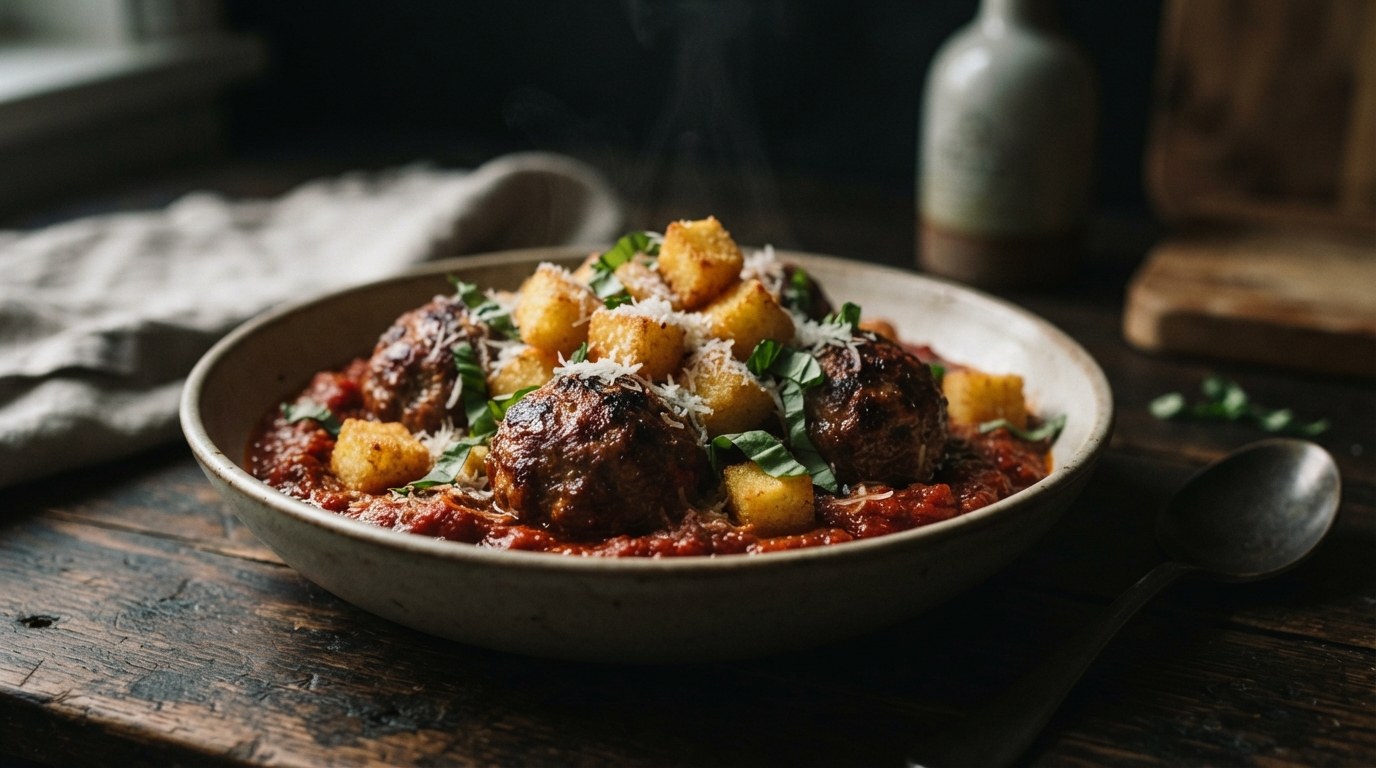
Gordon Ramsay Wagyu Meatballs
Ingredients
- 1 lb ground American wagyu beef
- 1/2 lb ground pork
- 1 cup fresh breadcrumbs
- 1/3 cup whole milk
- 1 large egg
- 1/2 cup grated Parmesan
- 3 cloves garlic, minced
- 1 small onion, grated
- 2 Tbsp chopped basil
- 1 tsp salt
- 1/2 tsp black pepper
- Olive oil, for searing
- 2 lb plum tomatoes, halved (or two 28-oz cans whole San Marzano)
- 4 cloves garlic
- 3 Tbsp olive oil
- 1 tsp salt
- Pinch of sugar and chili flakes
- Handful of fresh basil
- 3 cups stock or water
- 3/4 cup polenta (coarse cornmeal)
- 1/4 cup grated Parmesan
- 2 Tbsp butter
- Salt, and oil for frying
- Grated Parmesan and torn basil
Meatballs
- undefined
Slow-roasted tomato sauce
- undefined
Polenta croutons
- undefined
To serve
- undefined
Instructions
- Slow-roast the tomatoes: Heat the oven to 300°F (150°C). Toss the halved tomatoes with the garlic, olive oil, salt, sugar, and chili flakes, and arrange cut-side up on a tray. Roast 1 to 1.5 hours, until collapsed and caramelized at the edges.
- Make the sauce: Blend or mash the roasted tomatoes and garlic with their oil and a handful of basil. Loosen with a splash of stock, simmer 10 minutes, and season to taste.
- Cook the polenta (make ahead): Bring the stock to a simmer, rain in the polenta while whisking, and cook 20 to 30 minutes, stirring often, until thick and no longer grainy. Beat in the Parmesan, butter, and a little salt. Spread 3/4 inch thick on an oiled tray and chill until firm, at least 1 hour.
- Crisp the croutons: Cut the set polenta into 3/4-inch cubes. Fry in a little oil over medium-high heat until golden and crisp on all sides, then drain.
- Mix the meatballs: Soak the breadcrumbs in the milk for 5 minutes. Combine the wagyu, pork, soaked breadcrumbs, egg, Parmesan, garlic, onion, basil, salt, and pepper. Mix gently, just until combined — do not overwork the meat.
- Shape and sear: Roll into 16 meatballs, about 1.5 inches each. Sear in a hot, oiled pan until browned all over.
- Finish in the sauce: Transfer the seared meatballs to the tomato sauce and simmer gently 15 to 20 minutes, until cooked through to 160°F (71°C) in the center.
- Serve: Spoon the meatballs and sauce into bowls and top with the crisp polenta croutons, grated Parmesan, and torn basil.
Notes
Wagyu Meatball FAQs
The questions that come up most: what wagyu meatballs are, the wagyu-to-pork ratio, whether you can bake them, and how to make them ahead.
What are wagyu meatballs?
Meatballs made with wagyu beef, prized for its heavy marbling, usually blended with a leaner meat like pork so they stay tender rather than greasy. They show up as a starter on steakhouse and restaurant menus, including Gordon Ramsay’s Hell’s Kitchen, often in a rich tomato sauce.
What is the ratio of wagyu to pork?
Two parts wagyu to one part pork is the balance this recipe uses — 1 pound of American wagyu to 1/2 pound of ground pork. The wagyu carries the rich flavor and the pork keeps the texture light. You can go all wagyu, but the meatballs turn out heavier.
Can you bake wagyu meatballs instead of searing them?
Yes. Bake them at 425°F (220°C) for about 15 minutes to brown, then finish in the sauce. You lose a little of the deep crust a hot pan gives, but it is easier for a big batch and less hands-on.
What are polenta croutons?
Cooked polenta that is chilled until firm, cut into cubes, and pan-fried until golden and crisp. They are crunchy outside and creamy inside, and they stand in for bread as the starch on the plate.
What temperature should the meatballs be cooked to?
Cook them to 160°F (71°C) in the center. Ground meat needs to reach a safe temperature all the way through because grinding spreads surface bacteria into the middle, so check with an instant-read thermometer rather than cutting one open.
Can you make wagyu meatballs ahead of time?
Yes, and it makes dinner easy. The slow-roasted tomato sauce and the polenta both keep for a few days in the fridge, and the meatball mix can be rolled and chilled a day ahead. Sear and simmer the meatballs just before serving, and crisp the polenta croutons fresh so they stay crunchy.

About the Author
John Siracusa is the founder of Hell’s Kitchen Recipes. He focuses on technique-first, reproducible home cooking and researches recipes & kitchen equipment from published food science and professional chef methods since 2016.