Chilli con carne gets its depth from three moves, and none of them is a secret ingredient: brown the beef hard in batches until it is deep brown, fry the spices and tomato paste in the fat until they turn brick red, then simmer everything gently for an hour so the sauce reduces and thickens. Done that way, this Gordon Ramsay-style chilli is rich and spoonable in about an hour and a half, with the kidney beans added near the end so they stay whole.
Ramsay's rule for any dish like this is to get organized before the heat goes on, and it matters here because the spices go in fast once the onions are soft. Measure the cumin, smoked paprika and chili powder into one small bowl, open the cans, and have the stock ready. Then the cooking is just paying attention.
Chilli Con Carne Is Texan, Not Mexican
The dish is Tex-Mex, born in Texas rather than Mexico. In nineteenth-century San Antonio, the "Chili Queens" ran nightly open-air stands on Alamo Plaza and Market Square selling chili con carne, tamales and enchiladas, according to the Handbook of Texas. The ready-mixed chili powder most cooks now use came later: William Gebhardt started his San Antonio company in 1896 and went on to commercialize chili powder across the country, as the Handbook's Gebhardt entry records. Texas made chili its official state dish in 1977, under House Concurrent Resolution No. 18, per the Texas State Library.
The spelling tells you which side of the Atlantic a recipe comes from. "Chilli" with two Ls is the British spelling Ramsay uses; American cooks write "chili." A strict Texas "bowl of red" has no beans at all, while the British-style chilli con carne here keeps kidney beans, which is the version most home cooks outside Texas make.
Brown the Beef in Batches, and Why Crowding Ruins It
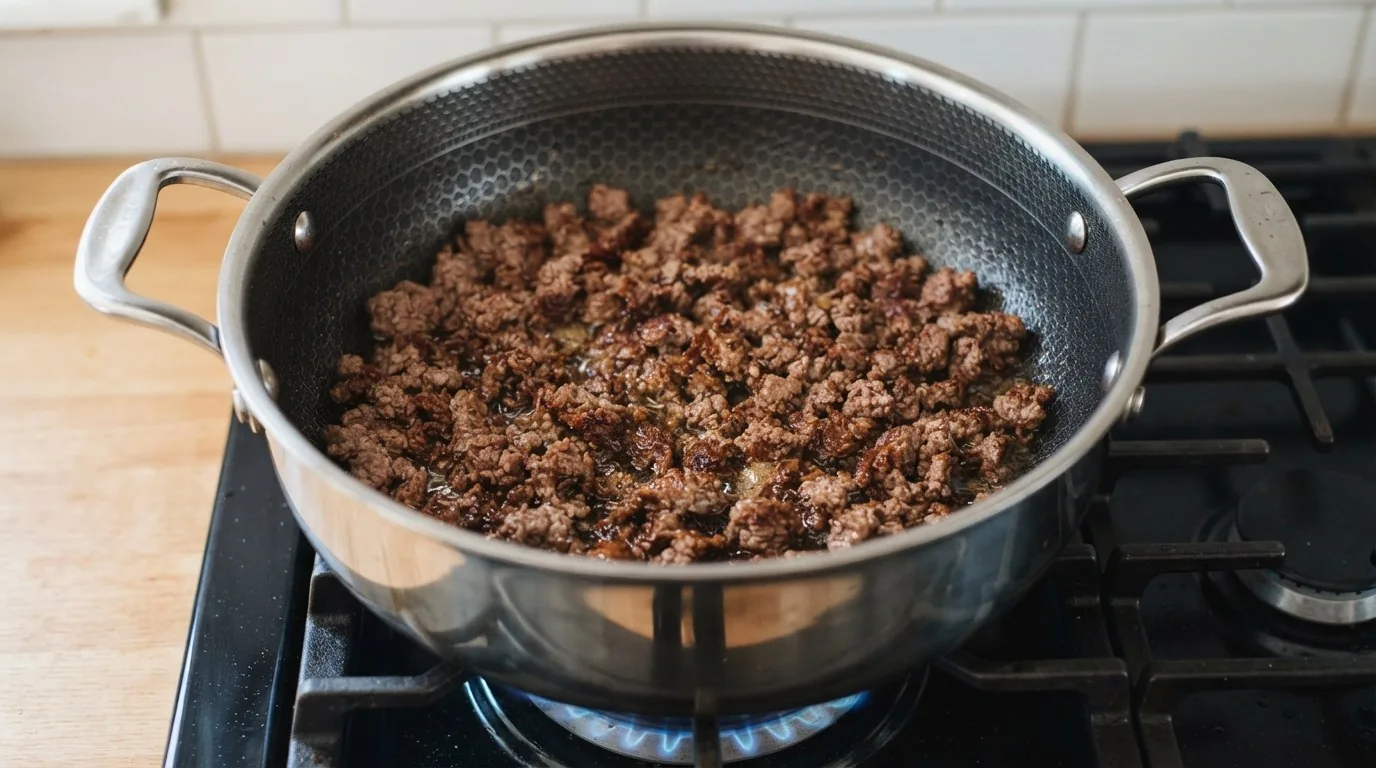
The brown crust on the beef is where most of the flavor in chilli comes from, and it is made by the Maillard reaction, which only starts once the meat's surface climbs past about 284°F. Water caps at 212°F, so anything wet cannot brown: it steams. Pile two pounds of mince into a pot at once and the juices it releases flood the pan, the temperature drops toward 212°F, and you get grey, boiled meat sitting in liquid. Cook it in two or three batches instead, spread thin, and it browns in 6 to 8 minutes a batch.
This is where Ramsay's "hot pan, then oil" habit earns its place. Heat the pot first, add a neutral oil with a high smoke point (he uses grapeseed for meat), and listen: the beef should sizzle the moment it lands, and if it does not, it is not ready. Leave it alone for three or four minutes before breaking it up so a crust can form, and season each batch as it goes in. One myth to drop while you are here: browning does not "seal in" juices. It is purely about flavor, and the brown bits it leaves stuck to the pot, the fond, get scraped up into the onions next.
Bloom the Spices and Tomato Paste in the Fat
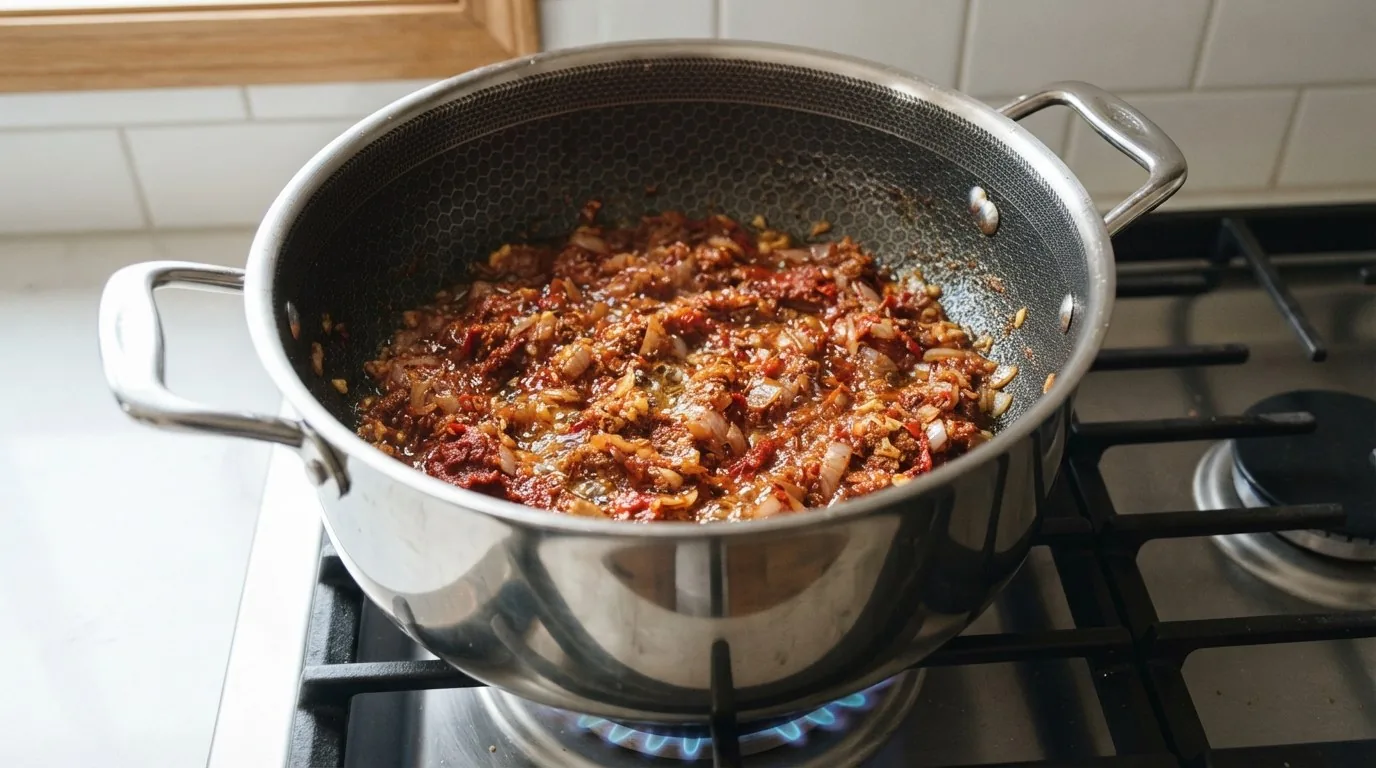
Many of the flavor compounds in cumin, paprika and chilli dissolve in fat rather than water, so stirring the spices straight into the oil and rendered beef fat for a minute or two pulls out far more flavor than tipping them into the liquid later. The tomato paste goes in at the same time: frying it until it darkens from bright red to brick red browns its sugars and knocks out the raw, tinny taste. Watch the heat here. Ground spices scorch quickly, and once the pan passes roughly 356°F they start to burn and turn bitter, so keep it at medium and move on as soon as the kitchen smells of toasted cumin.
What the Hour-Long Simmer Actually Does
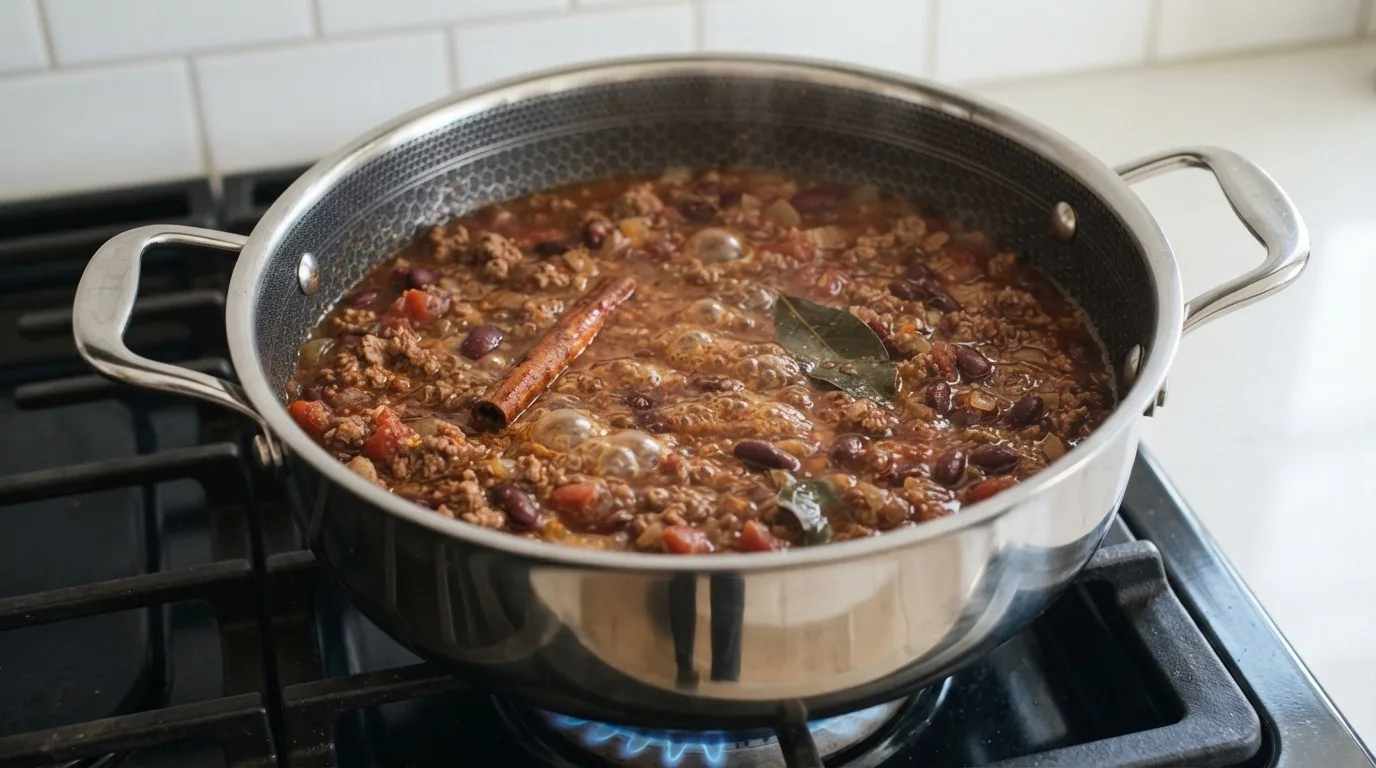
With ground beef, the simmer is not about tenderizing. Mince has already been broken down, so the hour is about evaporation: water cooks off, the tomato, stock and meat juices concentrate, and the sauce thickens until it coats a spoon. Keep it at a lazy bubble, not a rolling boil; hard boiling squeezes the meat proteins tight and leaves the mince pebbly. If you swap in diced chuck for a chunkier chilli, the math changes: chuck is full of collagen that only melts into silky gelatin after a long stretch above about 154°F, so plan on two and a half to three hours.
The cinnamon stick and bay leaves are there for warmth and a savory backnote rather than obvious flavor, and they come out before serving. The kidney beans go in for the last 15 minutes only. Canned beans are already fully cooked; any longer in the pot and they start to split and turn the sauce starchy and grey.
Lodge
Lodge 6-Quart Enameled Cast Iron Dutch Oven, Island Spice Red
- Heavy enameled cast iron holds a steady, gentle simmer for long braises and chilli
- Enamel interior will not rust and needs no seasoning
- Stovetop and oven safe to 500°F
Heat Control, and the Seeds Myth
The fire in a chilli is not in the seeds. Capsaicin is concentrated in the pale pithy ribs inside the pod, the placenta, and the seeds only pick up heat by touching it. To make the chilli milder, scrape out the white ribs, not just the seeds; to make it hotter, leave them in or add a pinch of cayenne with the spices. And when it comes out too hot, reach for sour cream rather than water: capsaicin dissolves in fat, not water, so the fat in the sour cream carries it off your tongue while a glass of water just spreads it around.
Kidney Beans, Leftovers and Food Safety
Canned kidney beans are safe straight from the can. Dried ones are a different story: raw red kidney beans contain a lectin called phytohaemagglutinin that causes severe stomach upset, and the FDA's Bad Bug Book warns that undercooked beans can be more toxic than raw ones. If you start from dried, soak them, then boil them hard for at least 10 minutes before they go into the chilli. A slow cooker never gets hot enough to do that job.
For leftovers, cool the chilli quickly in shallow containers and get it into the fridge within two hours, which is the USDA's leftovers guidance. It keeps three to four days refrigerated and freezes well for about three months. Reheat to 165°F. It tends to taste even better the next day, as the spices keep mingling and the sauce firms up as it cools, so it is a good make-ahead dinner.
What to Serve With Chilli Con Carne
Fluffy white rice is the British classic, and a baked jacket potato is a close second. Cornbread, tortilla chips or warm flour tortillas all work, and so does a pile of leftovers over nachos. Top each bowl with sour cream, thin jalapeño slices and cilantro. A heavy pot that holds its heat makes the browning step far easier; the pans we trust for that are in our Gordon Ramsay cookware guide. For another slow, beefy dinner, try Ramsay's braised short ribs.
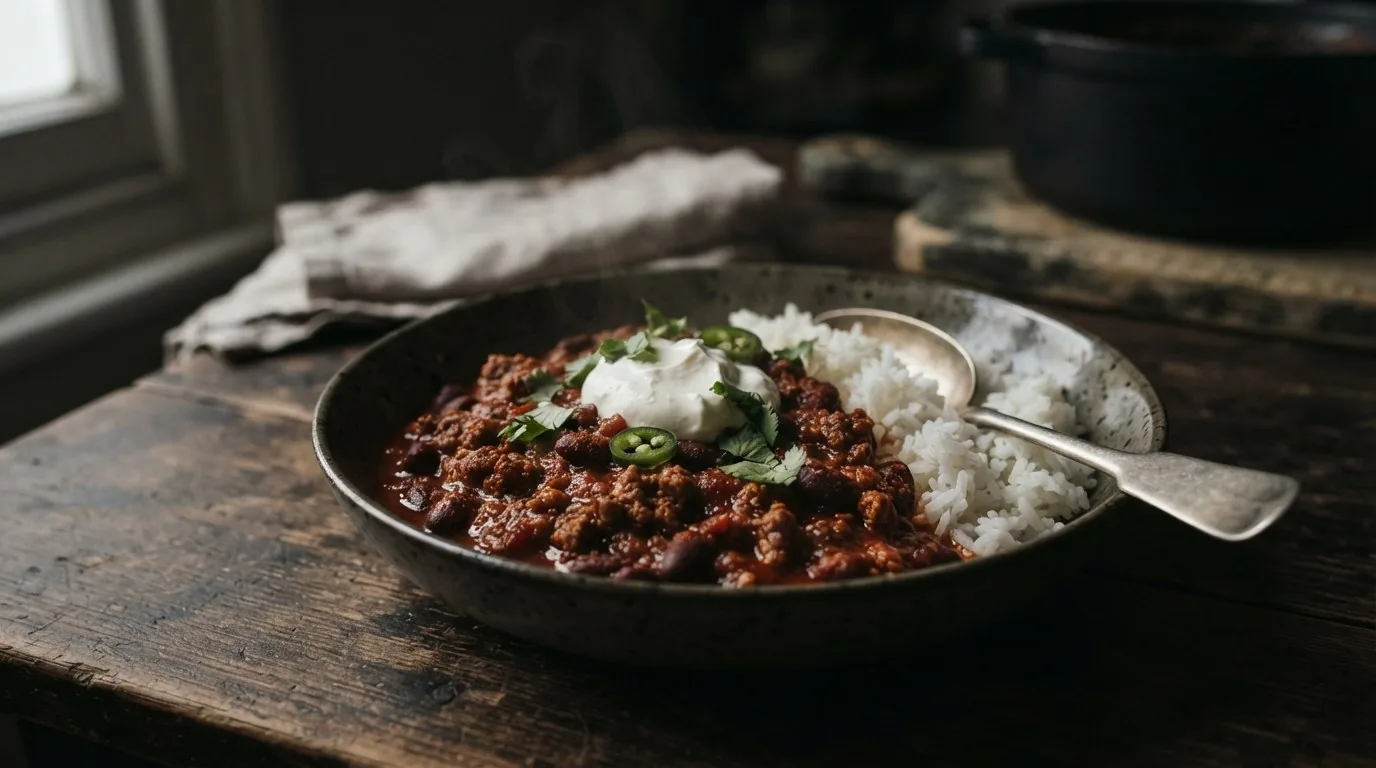
Gordon Ramsay-Style Chilli Con Carne
Ingredients
- 2 lb ground beef (80/20)
- 2 Tbsp grapeseed or vegetable oil, divided
- 2 onions, finely chopped
- 2 red chillies, finely chopped (remove the white ribs for less heat)
- 4 garlic cloves, minced
- 2 Tbsp ground cumin
- 2 Tbsp smoked paprika
- 1 Tbsp chili powder
- 2 Tbsp tomato paste
- 2 14.5-oz cans chopped tomatoes
- 2 cups beef stock
- 1 cinnamon stick
- 2 bay leaves
- 2 15-oz cans kidney beans, drained and rinsed
- Salt and black pepper
To serve
- Cooked white rice, sour cream, sliced jalapeño and cilantro
Instructions
- Get organized: measure the cumin, smoked paprika and chili powder into one small bowl, open the cans, and have the stock ready.
- Heat a large heavy pot over medium-high until very hot, then add 1 tablespoon oil. Add a third to a half of the beef in a thin layer, season with salt, and leave it undisturbed 3 to 4 minutes before breaking it up. Cook until deep brown all over, 6 to 8 minutes, then lift into a bowl. Repeat with the rest.
- Turn the heat to medium, add the remaining oil, the onions and chillies with a pinch of salt, and cook 8 to 10 minutes, scraping up the browned bits, until soft and golden. Add the garlic for 1 minute.
- Add the spice mix and tomato paste and stir them through the fat for 1 to 2 minutes, until brick red and fragrant. Do not let them scorch.
- Return the beef and its juices, then add the tomatoes, stock, cinnamon stick and bay leaves. Bring to a boil, lower to a gentle simmer, and cook partly covered for 45 minutes, stirring now and then.
- Stir in the kidney beans and simmer uncovered 15 minutes more, until the sauce coats a spoon. Add a splash of stock if it gets too thick.
- Remove the cinnamon stick and bay leaves, taste, and adjust the salt and pepper. Rest 10 minutes off the heat, then serve over rice with sour cream, jalapeño and cilantro.
Notes
Chilli Con Carne FAQs
The questions that come up most: whether chilli con carne is Mexican, how long it takes, how to thicken it, how to make it less spicy, and how long it keeps.
Is chilli con carne Mexican?
No, it is Tex-Mex. It grew up in nineteenth-century San Antonio, where the "Chili Queens" sold it from open-air stands, and Texas made chili its official state dish in 1977. The name is Spanish for "chilli with meat," but the dish itself is Texan.
How long does chilli con carne take to cook?
About an hour and a half: 20 minutes or so to brown the beef in batches and soften the onions, then an hour of gentle simmering, with the kidney beans added for the last 15 minutes. Made with diced chuck instead of mince, allow two and a half to three hours so the collagen can melt.
How do you thicken chilli con carne?
Simmer it uncovered for longer so the water evaporates and the sauce reduces. Frying the tomato paste well at the start helps too. If it is still loose, mash a few of the kidney beans against the side of the pot and stir them in; their starch thickens the sauce naturally.
How do I make chilli con carne less spicy?
Scrape the white ribs out of the fresh chillies, since that pith holds most of the capsaicin, and cut back the chili powder. If it is already too hot, serve it with sour cream: capsaicin dissolves in fat, so dairy fat cools it far better than water.
Should chilli con carne have beans?
It depends on the style. A strict Texas "bowl of red" is beef and chiles with no beans, while the British-style chilli con carne most home cooks make, including this one, includes kidney beans. Add them in the last 15 minutes so they stay whole.
Why put cinnamon in chilli con carne?
A single cinnamon stick adds a gentle warmth that rounds out the cumin and chilli without tasting like dessert. It is simmered in the sauce and removed before serving, the same way you would use a bay leaf.
How long does chilli con carne last in the fridge?
Three to four days in the fridge once it has been cooled quickly in shallow containers and refrigerated within two hours, per USDA guidance. It freezes well for about three months. Reheat it until it is piping hot, 165°F.

About the Author
John Siracusa is the founder of Hell’s Kitchen Recipes. He focuses on technique-first, reproducible home cooking and researches recipes & kitchen equipment from published food science and professional chef methods since 2016.