Gordon Ramsay's chicken liver pâté turns a handful of cheap ingredients into something that tastes like a French bistro: chicken livers seared in butter, deglazed with brandy, then blended silky-smooth and sealed under a thin layer of clarified butter. It looks impressive on a board, but it comes together in about 30 minutes, and a food processor does the hard part.
Pâté has a reputation for being fussy, but the whole thing rests on one judgment call: how far to cook the livers. Get that right and the rest is just blending and straining.
The One Thing That Makes or Breaks Pâté
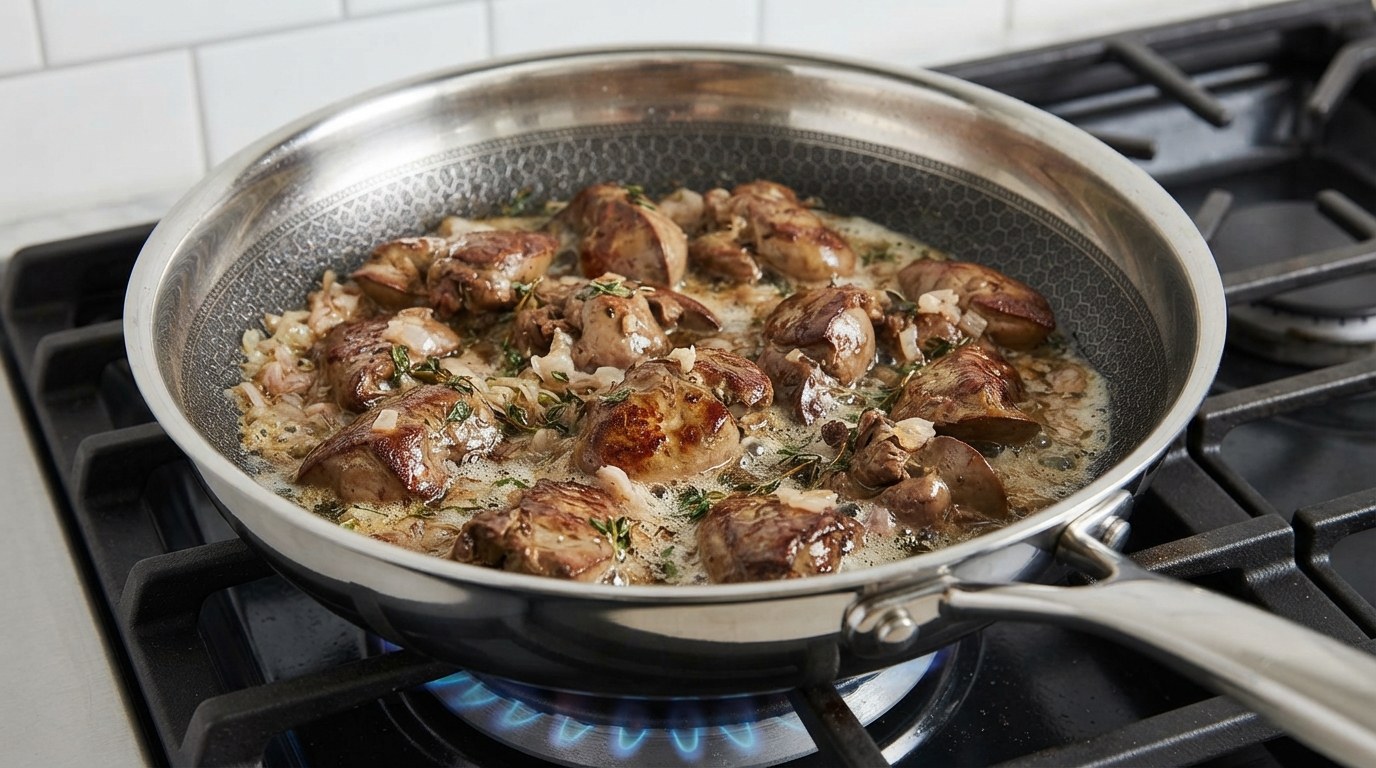
Sear the livers hard for flavor. A brown crust from the Maillard reaction, which starts around 284°F (140°C), gives the pâté its savory depth, so get the butter foaming and do not move the livers until they colour. But do not push them too far. Chicken livers should be cooked through for safety, since poultry livers can carry bacteria and are best brought to a safe 165°F (74°C), yet the moment they go past just-done they turn grainy and bitter as the proteins tighten and squeeze out moisture. The target is cooked through but only just: no longer red and raw inside, still soft and moist.
Add the shallot, garlic, and thyme for the last minute, then pull the pan off the heat and deglaze with the brandy, scraping up the browned bits. The alcohol cooks off and leaves an aromatic backbone that makes the pâté taste like more than the sum of its parts.
Blending It Silky-Smooth
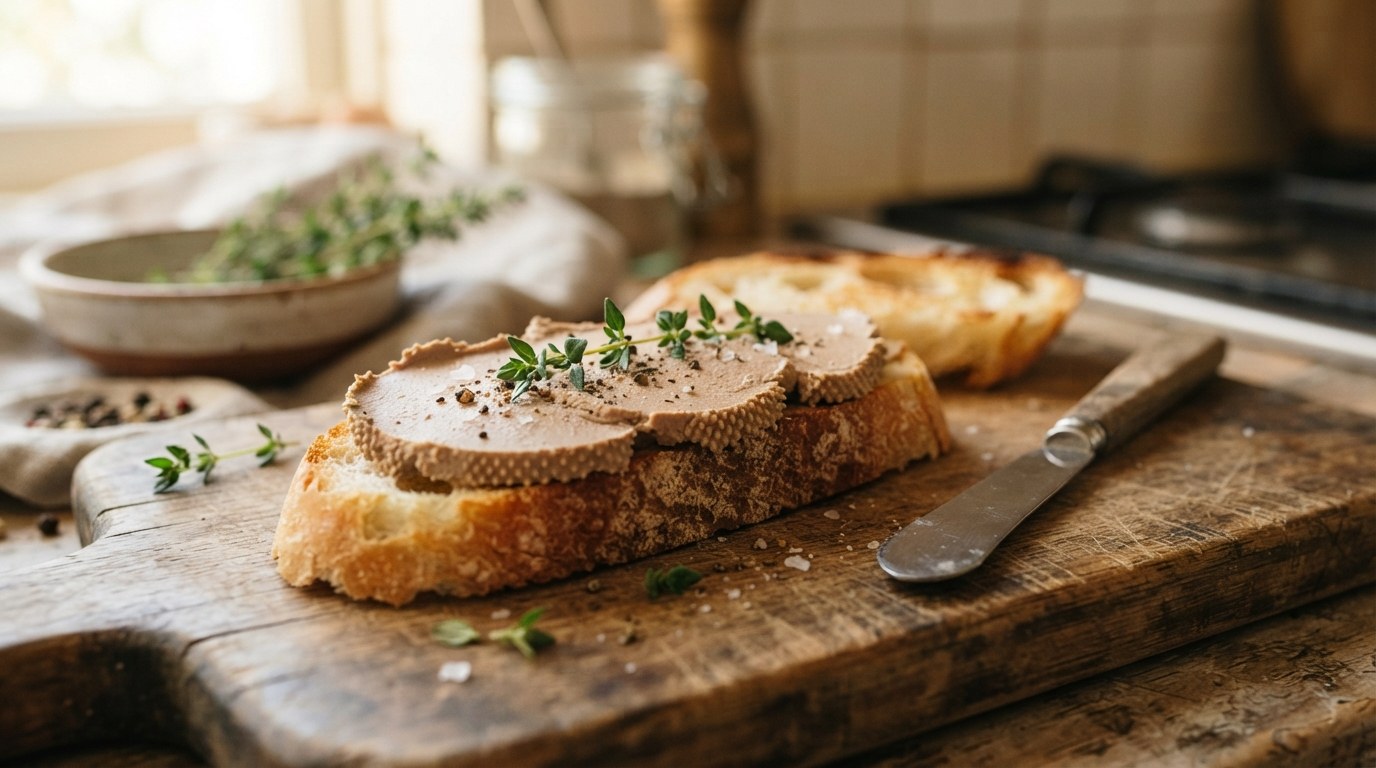
Smoothness is an emulsion. Blend the warm livers and their pan juices with softened butter and a splash of cream, and the fat coats every particle into a rich, spreadable emulsified paste. Let the livers cool for a few minutes first so the butter softens in rather than melting and splitting, and blend it longer than you think, until there is no grain left at all.
For a truly silky, restaurant-grade texture, push the blended pâté through a fine-mesh sieve. It takes two minutes and removes the last little bits of membrane, and it is the single step that separates a good home pâté from a great one.
Why You Need a Food Processor
You cannot get pâté this smooth by hand. A food processor blends the livers, butter, and cream into a uniform paste in under a minute, and its wide bowl handles a whole batch at once. If you make pâté, mousse, hummus, or dips with any regularity, it earns a spot on the counter.
Cuisinart
Cuisinart 8-Cup Food Processor
- 8-cup work bowl with high, low, off and pulse controls and a feed tube to add ingredients as it runs
- 350-watt motor and a stainless chopping blade that blend a batch of pâté silky-smooth
- Dishwasher-safe parts and a BPA-free bowl, backed by a 2-year warranty
Fixing Common Pâté Problems
Almost everything that goes wrong with pâté traces back to the livers or the butter. Here is how to fix each one.
| Problem | Why | Fix |
|---|---|---|
| Grainy | Livers overcooked | Cook them just through; blend longer and strain |
| Bitter | Overcooked, or bile left on the livers | Trim any green spots; do not overcook |
| Too loose | Not enough butter, or blended too warm | Chill it; blend in a little more soft butter |
| Too firm to spread | Too much butter, or served cold | Bring to room temperature before serving |
| Split or oily | Butter added too hot or too fast | Cool the livers first; add the butter gradually |
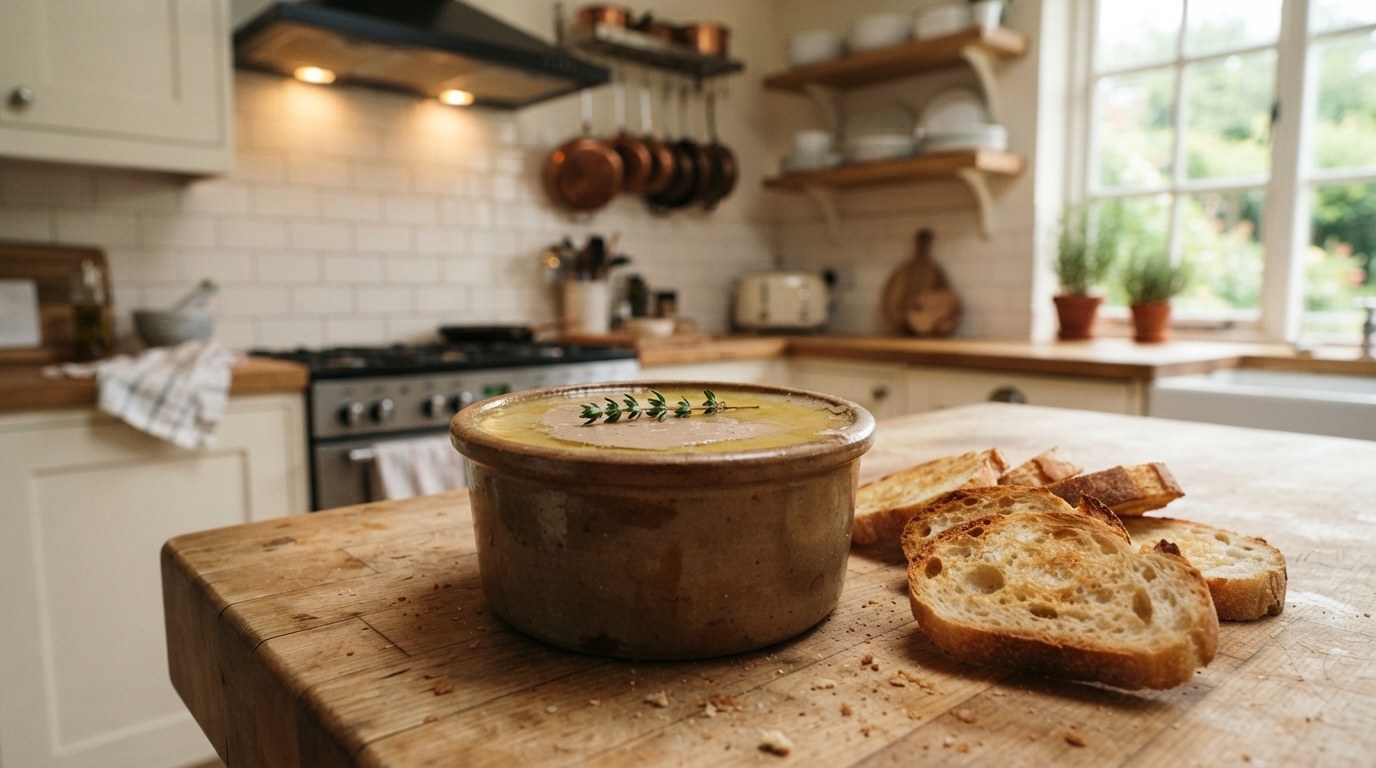
Seal the finished pâté under a thin layer of clarified butter and it keeps in the fridge for up to a week; without the seal, use it within three or four days.
Gordon Ramsay Chicken Liver Pâté
Ingredients
- 8 oz chicken livers, trimmed
- 6 Tbsp unsalted butter, softened (for blending)
- 2 Tbsp unsalted butter (for cooking)
- 1 shallot, minced
- 2 cloves garlic, minced
- 1 Tbsp fresh thyme leaves
- 2 Tbsp brandy (or port or Madeira)
- 2 Tbsp heavy cream
- Sea salt and black pepper
- 3 Tbsp clarified butter, plus a thyme sprig
- Toasted baguette or crackers, to serve
To finish (optional)
- undefined
Instructions
- Trim the livers of any connective tissue and green spots, and pat them dry.
- Melt the 2 tablespoons of cooking butter in a skillet over medium-high heat until foaming. Sear the livers in a single layer, about 2 minutes per side, until browned outside and just cooked through (no longer red inside). Add the shallot, garlic, and thyme for the last minute.
- Off the heat, add the brandy and let it cook off, scraping up the browned bits. Let everything cool for 5 minutes.
- Scrape the livers and pan juices into a food processor. Add the 6 tablespoons of softened butter and the cream and blend until completely smooth, a minute or more.
- Season with salt and pepper, then push the pâté through a fine-mesh sieve for the silkiest texture.
- Pack into a crock or ramekins and smooth the top. For a longer keep, pour a thin layer of clarified butter over the surface and lay a thyme sprig on top. Chill until set.
- Bring to room temperature before serving with toasted baguette or crackers.
Notes
Chicken Liver Pâté FAQs
The questions that come up most: whether to soak the livers first, why pâté turns grainy or bitter, how long it keeps, and what to serve with it.
Do you have to soak chicken livers in milk first?
It is optional. Soaking the livers in milk for 30 minutes to an hour mellows their strong, mineral edge, which is worth doing if you find liver too intense. If you like a bolder flavour, skip it; either way, trim off any connective tissue and green bile spots.
Why is my pâté grainy or bitter?
Both come from overcooking the livers. Past just-done, the proteins tighten and the texture turns grainy while the flavour turns bitter. Cook the livers through but no further, blend them thoroughly, and strain the pâté through a fine sieve. Bitterness can also come from bile, so trim any green patches.
How long does chicken liver pâté keep?
Sealed under a layer of clarified butter, it keeps in the fridge for up to a week. Without the butter seal, use it within three to four days. Always keep it covered and cold.
Can you freeze chicken liver pâté?
Yes. Pack it into an airtight container, press plastic wrap onto the surface, and freeze for up to a month. Thaw it overnight in the fridge; the texture is very slightly softer but still smooth.
What alcohol goes in chicken liver pâté?
Brandy is classic, but port, Madeira, or Cognac all work and each adds its own sweetness or depth. The alcohol cooks off when you deglaze the pan, leaving just the aroma. You can leave it out entirely and the pâté is still good, just a little simpler.
What do you serve with chicken liver pâté?
Toasted baguette or crostini, crackers, or crusty bread, with something sharp alongside: cornichons, pickled onions, a fruit chutney, or a little flaky salt. A crisp white or a light red rounds it out.

About the Author
John Siracusa is the founder of Hell’s Kitchen Recipes. He focuses on technique-first, reproducible home cooking and researches recipes & kitchen equipment from published food science and professional chef methods since 2016.