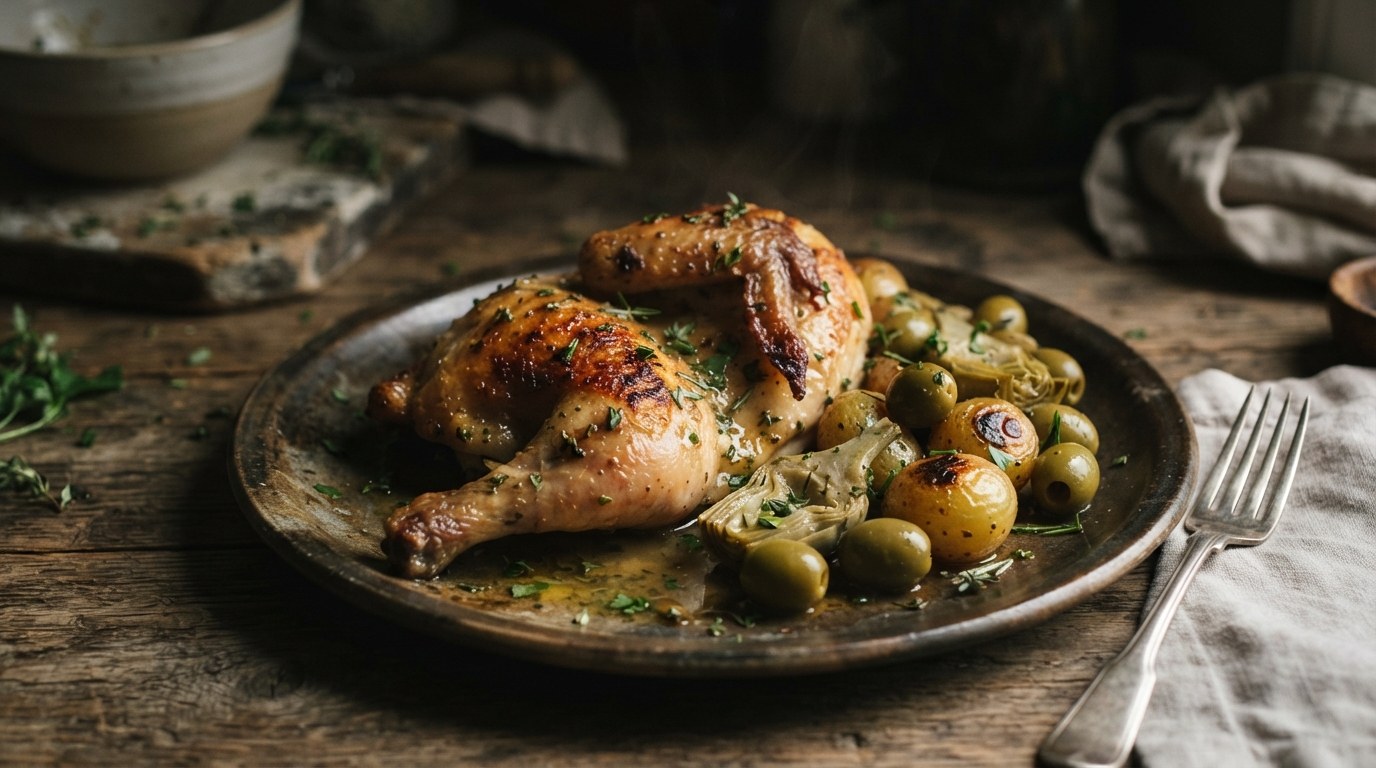
Jidori chicken is the plate that quietly steals the show on the menu at Gordon Ramsay's Hell's Kitchen restaurants: crispy-skinned roasted chicken with baby artichokes, green olives, pee wee potatoes, and a glossy lemon butter sauce. Made for a home kitchen, it is a whole restaurant dinner out of one cast-iron skillet, and it comes down to two things done well: shatteringly crisp skin and a lemon butter sauce that stays glossy.
Neither is hard once you know what is actually happening in the pan.
What Is Jidori Chicken?
Jidori is a premium, free-range chicken, raised slower and given more room than conventional supermarket birds, in the style of Japan's heritage jidori chickens. Most of what you find in the US is raised on the West Coast, and it is prized for firmer, meatier flesh and a deeper, cleaner chicken flavor. It is the kind of bird a kitchen builds a simple roast around, because it does not need much to taste like something. If you cannot find it, a good organic or air-chilled free-range chicken is the right substitute; the technique matters more than the label.
The Secret Is Crispy Skin
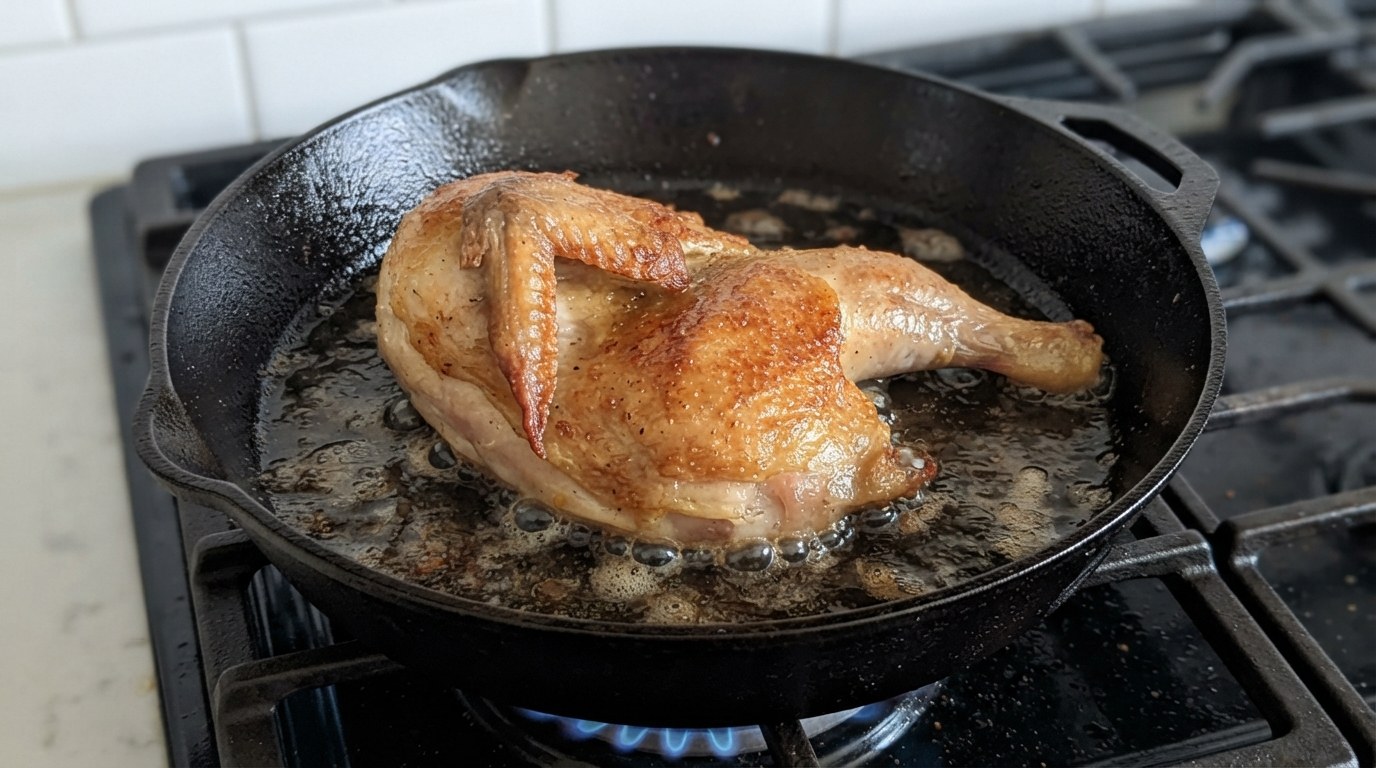
Crispy skin is the whole point, and it comes down to moisture. Skin only crisps once its surface is dry and hot enough to brown through the Maillard reaction, which kicks in around 284°F (140°C). While the skin is wet it cannot climb past 212°F (100°C), where water boils off, so it steams and stays pale and rubbery. Pat the skin bone-dry, and salt it ahead if you have time: the salt pulls moisture out and then reabsorbs it, leaving a drier surface that browns better.
A cast-iron skillet is the right pan for this. Its heavy base holds heat, so when the cold chicken hits it the temperature barely drops and the skin browns instead of steaming. Lay the chicken in skin-side down, press it flat so the whole surface makes contact, and leave it alone until the skin is deep golden and releases on its own. Then finish it in a hot oven.
If you lean on one piece of gear for a dish like this, it is the skillet, and a plain pre-seasoned cast-iron pan is hard to beat for the price.

Lodge
Lodge Pre-Seasoned Cast Iron Skillet, 12 Inch
- Pre-seasoned with natural vegetable oil for a naturally non-stick finish; PFAS-free and ready to cook out of the box
- Heavy cast iron holds and spreads heat evenly for a deep sear; safe on the stovetop and in the oven
- Silicone hot-handle holder plus a teardrop helper handle for safe lifting; made in the USA
Cooking It Through
Roast the chicken until it reaches 165°F (74°C) in the thickest part of the thigh, the safe temperature for poultry. Pull it a couple of degrees early and let carryover heat finish it, then rest it for five minutes so the juices settle back into the meat instead of running out when you cut it. Searing does not seal in juices, whatever you have heard; resting is what keeps the chicken moist.
The Lemon Butter Sauce
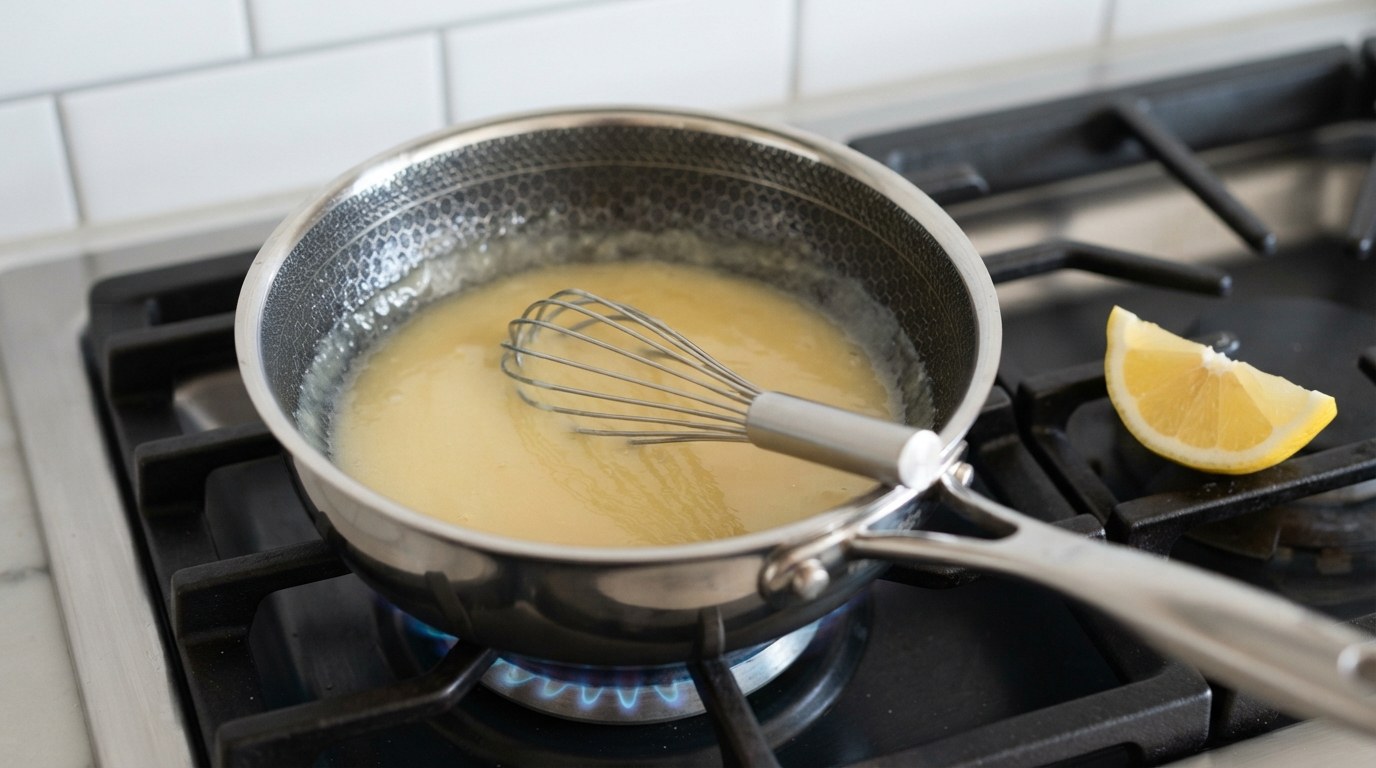
The sauce is a butter emulsion, which sounds fussy but is just cold butter whisked into a warm liquid. Butter is about 80 percent fat and the rest water, and when you whisk cold cubes into a gently warm, reduced stock off the heat, the fat stays suspended in the water as a glossy, emulsified sauce, held together by the butter's own milk proteins. Keep it warm, not hot: let it boil hard and the emulsion breaks and the fat splits out. Finish with lemon juice and zest for brightness, and season.
The Artichokes, Olives, and Potatoes
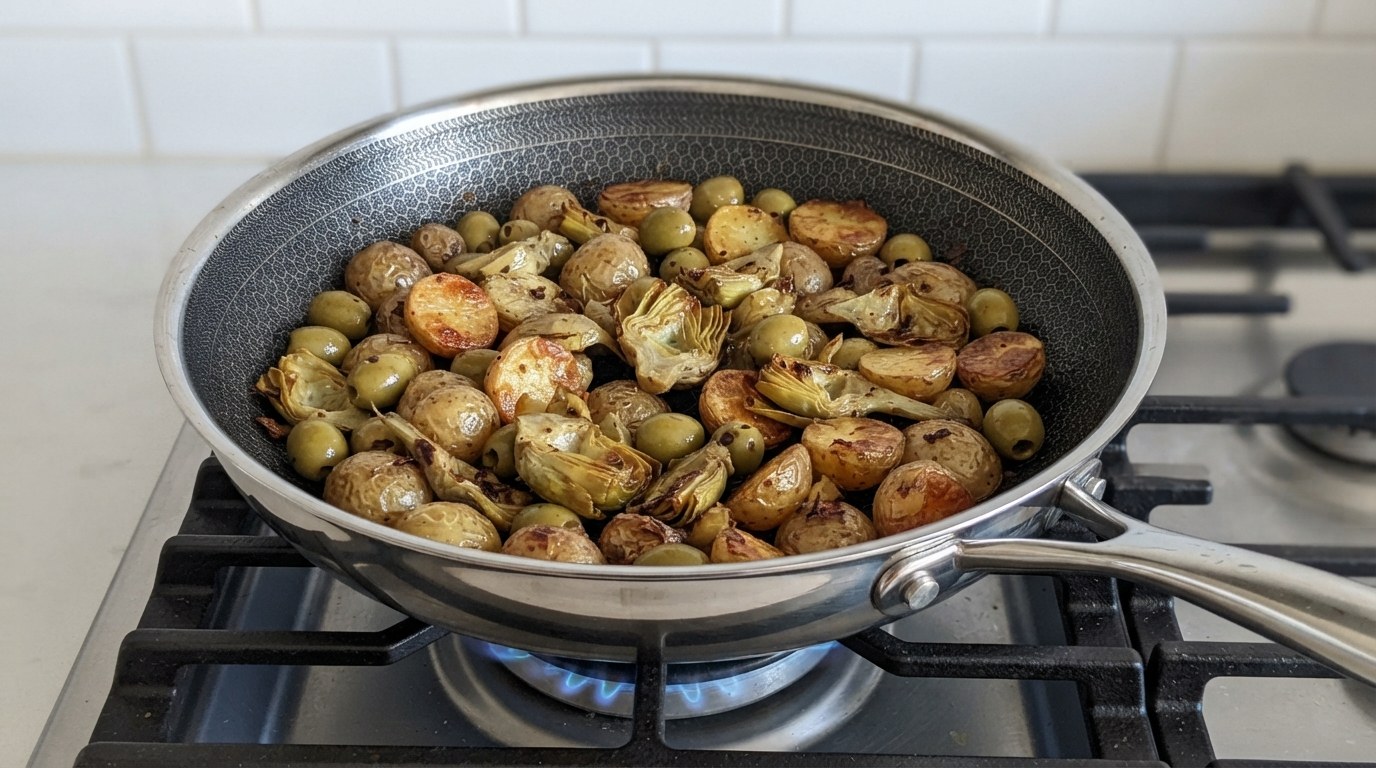
The sides do the Mediterranean heavy lifting. Pee wee potatoes, the tiny waxy ones, roast until golden and crisp at the edges. Baby artichokes, trimmed and halved, go sweet and nutty in the oven; a squeeze of lemon in their soaking water keeps them from browning while you work. Warm briny green olives, like Castelvetrano, through everything at the end. Together they turn a piece of chicken into a plate.
Jidori vs Regular Chicken
Jidori is worth seeking out, but a good regular chicken will still make this dish. Here is how they compare.
| Feature | Jidori / Premium Free-Range | Standard Supermarket Chicken |
|---|---|---|
| Raising | Free-range, slow-grown, Japanese-style husbandry | Conventional, fast-grown |
| Texture | Firmer, meatier bite | Softer, more watery |
| Flavor | Deeper, cleaner chicken flavor | Milder |
| Skin | Crisps beautifully | Crisps well once patted dry |
| Best approach | Keep it simple and let it shine | Works for anything |
| Availability | Premium, mostly West Coast | Everywhere, budget-friendly |
Whichever you use, dry the skin and give it a proper sear. That is what separates a restaurant roast chicken from a pale, sad one.
Gordon Ramsay Jidori Chicken
Ingredients
- 1 whole chicken (about 3.5–4 lb), halved (or 4 bone-in, skin-on pieces), preferably jidori or free-range
- 2 Tbsp olive oil
- Salt and black pepper
- 1 lb pee wee (baby) potatoes
- 8 baby artichokes, trimmed and halved (or one 14-oz can artichoke hearts, halved)
- 1/2 cup green olives (Castelvetrano), pitted
- 2 Tbsp olive oil
- 1 lemon (for the artichokes)
- 1/4 cup chicken stock (or dry white wine)
- 1 clove garlic, minced
- 4 Tbsp cold unsalted butter, cubed
- 1 lemon (juice and zest)
- 1 Tbsp chopped parsley
- Fresh thyme and parsley
Chicken
- undefined
Roasted vegetables
- undefined
Lemon butter sauce
- undefined
To serve
- undefined
Instructions
- Prep the chicken: Pat the chicken very dry and season all over with salt and pepper. For the crispest skin, salt it and leave it uncovered in the fridge for an hour or up to overnight, then bring it to room temperature before cooking.
- Roast the vegetables: Heat the oven to 425°F (220°C). Toss the potatoes with olive oil and salt and roast 20 minutes. Add the halved artichokes (drop cut artichokes into lemon water first to stop browning) and roast 15 to 20 minutes more, until the potatoes are golden and crisp at the edges. Stir in the olives for the last few minutes.
- Sear the chicken: Heat a cast-iron skillet over medium-high with a little oil. Lay the chicken skin-side down and press it flat. Sear undisturbed 6 to 8 minutes, until the skin is deep golden and crisp and releases from the pan, then flip.
- Roast the chicken: Transfer the skillet to the oven and roast until the chicken reaches 165°F (74°C) in the thickest part of the thigh, 20 to 30 minutes depending on size. Rest 5 minutes.
- Make the sauce: Pour off most of the fat from the skillet. Soften the garlic in the pan over low heat, add the stock, and reduce by half, scraping up the browned bits. Off the heat, whisk in the cold butter a cube at a time until glossy and emulsified, then whisk in the lemon juice, zest, and parsley and season. Do not let it boil.
- Serve: Plate the chicken with the roasted potatoes, artichokes, and olives, spoon the lemon butter sauce over, and finish with fresh herbs.
Notes
Jidori Chicken FAQs
The questions that come up most: what jidori chicken is, whether you can swap in a regular chicken, how to get crispy skin, and what temperature to cook it to.
What is jidori chicken?
Jidori is a premium, free-range chicken raised slower and with more space than conventional birds, in the style of Japan’s heritage jidori chickens. Most US jidori is raised on the West Coast, and it is prized for firmer, meatier flesh and a deeper chicken flavor. A good organic or air-chilled free-range chicken is a fine substitute.
Can I use a regular chicken instead of jidori?
Yes. Jidori has a firmer texture and fuller flavor, but the recipe works with any good bone-in, skin-on chicken, and organic or air-chilled birds crisp up especially well. The technique, not the brand, is what makes it.
How do you get really crispy chicken skin?
Dry the skin thoroughly, and salt it ahead if you can, then start it skin-side down in a hot, heavy pan and press it flat so the whole surface makes contact. Leave it undisturbed until it is deep golden and releases on its own, then finish in a hot oven. Wet skin steams instead of crisping.
What temperature should the chicken be cooked to?
Cook it to 165°F (74°C) in the thickest part of the thigh, the safe temperature for poultry. Pull it a couple of degrees early, let carryover heat finish it, and rest it five minutes before serving.
Can I use jarred artichokes instead of fresh?
Yes. Good-quality jarred or canned artichoke hearts, drained, patted dry, and halved, work well and save the trimming. Warm them through with the potatoes and olives so they pick up a little color.
What do you serve with jidori chicken?
The potatoes, artichokes, and olives make it a complete plate, but it is also good with a simple green salad, crusty bread for the lemon butter sauce, or a side of sautéed greens.

About the Author
John Siracusa is the founder of Hell’s Kitchen Recipes. He focuses on technique-first, reproducible home cooking and researches recipes & kitchen equipment from published food science and professional chef methods since 2016.