Béarnaise sauce has a fearsome reputation, but it is really one thing you can control: a warm emulsion. Melted butter is suspended in a tarragon-and-vinegar reduction, held there by the lecithin in egg yolks, the same trick that keeps mayonnaise or hollandaise smooth. Get the temperature gentle and add the butter slowly, and it comes together glossy and thick every time.
This is Gordon Ramsay's approach: a sharp tarragon reduction for backbone, yolks whisked to a ribbon over gentle heat, then warm butter streamed in off a low flame. The guide covers why it works, why it sometimes breaks, and exactly how to bring a split sauce back.
What Is Béarnaise Sauce?
Béarnaise is a child of hollandaise, one of the classic French mother sauces, flavored with a reduction of tarragon, shallot, and vinegar instead of hollandaise's lemon. Where hollandaise is bright and lemony, béarnaise is savory and herbal, with an aniseed lift from the tarragon that makes it the classic partner for steak.
It is a newer sauce than its reputation suggests. It was created in the 1830s at Le Pavillon Henri IV, a restaurant in Saint-Germain-en-Laye near Paris, and named for Béarn, the southwestern region where King Henri IV was born. The technique, though, is the timeless part, and it is the same one professional kitchens teach today, including on MasterClass.
Béarnaise vs Hollandaise: What’s the Difference?
Béarnaise and hollandaise are built the exact same way: egg yolks whisked with warm butter into a gentle emulsion. The only real difference is the flavor base. Hollandaise leans on fresh lemon juice, while béarnaise swaps in a reduction of tarragon, shallot, and vinegar. That single change is what turns a bright brunch sauce into the savory, herbal one that belongs on steak.
| Feature | Béarnaise | Hollandaise |
|---|---|---|
| Emulsion base | Egg yolks + warm butter | Egg yolks + warm butter (same technique) |
| Acid & flavor base | Reduction of tarragon, shallot, vinegar, and cracked pepper | Fresh lemon juice |
| Signature note | Aniseed lift from tarragon; savory and peppery | Bright, buttery, citrusy |
| Classic pairing | Steak — filet mignon, ribeye, grilled meats | Eggs Benedict, asparagus, poached fish |
| Serving temperature | Warm, never hot (above ~140°F/60°C the yolks scramble) | Warm, same ceiling |
Put simply, béarnaise is hollandaise with a tarragon-vinegar reduction standing in for the lemon. The technique is identical, so once you can make one, the other is the same move with a different flavoring.
How the Emulsion Works
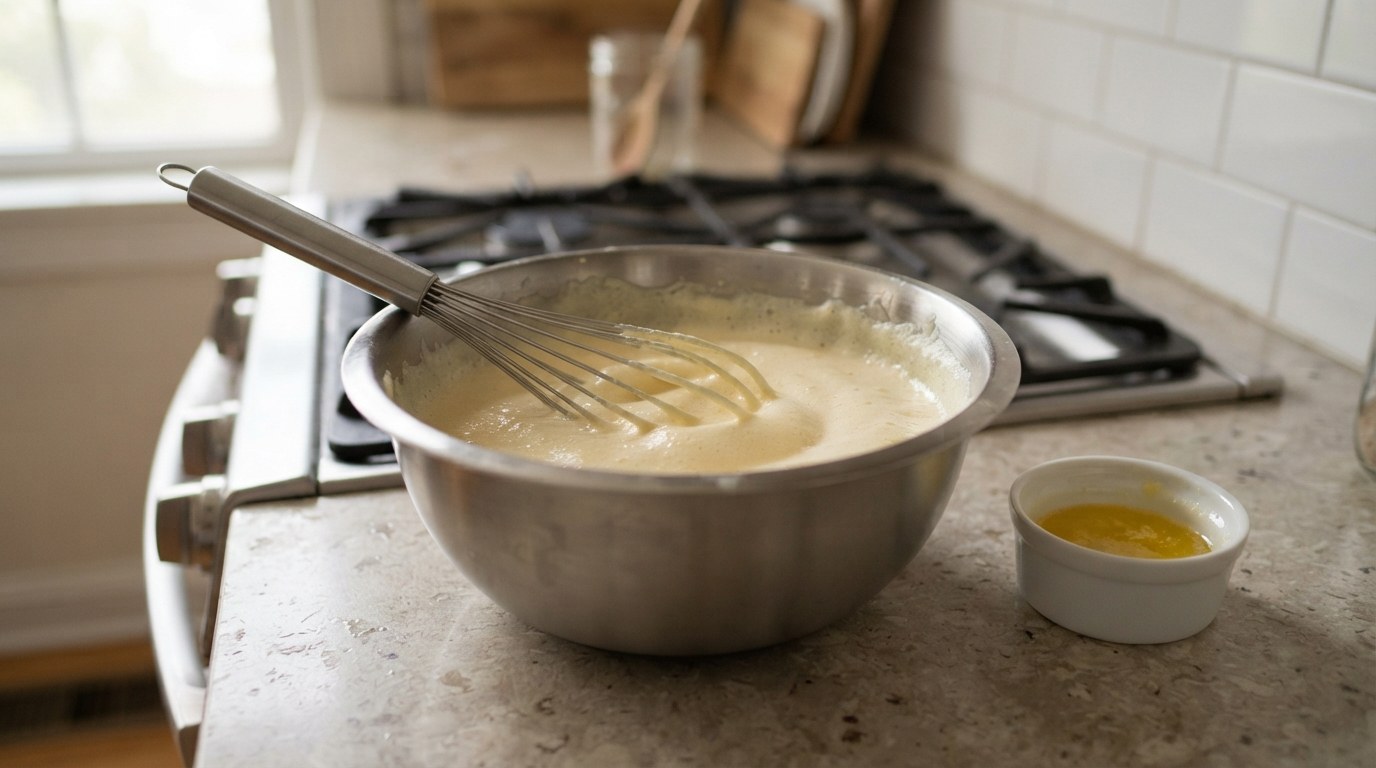
An emulsion is oil and water forced to coexist, and they only stay mixed because something coats the fat droplets and keeps them from merging back together. In béarnaise that something is lecithin, an emulsifier in the egg yolks. Each yolk can hold a lot of butter in suspension, which is why three yolks can carry most of a stick of it into a smooth, thick sauce.
Two things break that suspension, and both are avoidable. The first is heat: egg proteins start to set around 140°F (60°C) and scramble not far above it, so the bowl must sit over barely simmering water, never a hard boil. The second is speed: add the butter faster than the lecithin can coat it and the fat pools out. Stream it in slowly, whisking the whole time, and the sauce stays glossy.
If it does break, do not throw it out. Whisk in a teaspoon or two of warm water first; that is often enough to pull it back. If it has split badly, put a fresh egg yolk in a clean warm bowl and whisk the broken sauce into it a spoonful at a time, rebuilding the emulsion from a new base.
Temperature Control
Temperature is the whole game, so keep a few numbers in mind. The water under the bowl should sit at a gentle simmer, roughly 160 to 180°F (71 to 82°C), never a rolling boil. The melted butter should be warm, not hot, around 145°F (63°C), so it does not shock the yolks. And the sauce itself should never climb past about 180°F (82°C), the point where the yolks tip from thickening into scrambling.
The moment the sauce looks like it is heating too fast, lift the bowl off the water and keep whisking; the residual heat will carry it. A splash of cold water drops the temperature quickly if you need it. Because raw yolk is involved, note that the USDA guidance on eggs recommends pasteurized yolks for anyone serving very young, elderly, or immunocompromised guests.
What to Serve With Béarnaise
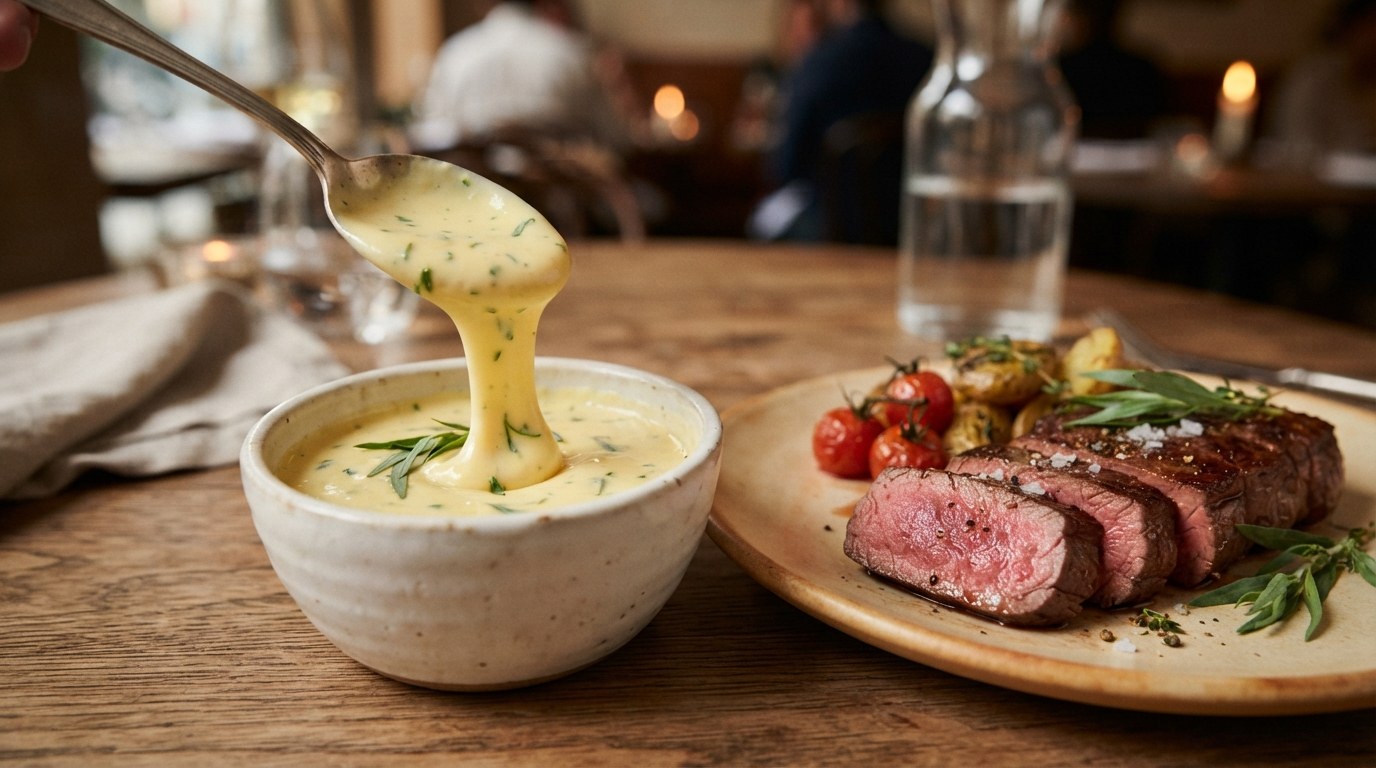
Béarnaise was born to sit next to steak, and it is unbeatable spooned over a pan-seared filet mignon or the fillet inside a beef Wellington. It suits any cut cooked to a proper medium-rare, a target the Certified Angus Beef doneness chart puts at 130 to 135°F.
It is not only for beef. The sauce is superb over roasted asparagus, grilled fish, or poached eggs for a tarragon twist on eggs Benedict. For more sauce method, see our Alfredo sauce and the full food and drink collection.
Gordon Ramsay's Béarnaise Sauce
Ingredients
- 1/4 cup white wine vinegar
- 1/4 cup dry white wine
- 1 small shallot, finely minced
- 1/2 tsp black peppercorns, crushed
- 3 Tbsp fresh tarragon, chopped (divided)
- 3 large egg yolks
- 3/4 cup unsalted butter, melted and kept warm
- Salt, to taste; a squeeze of lemon (optional)
Instructions
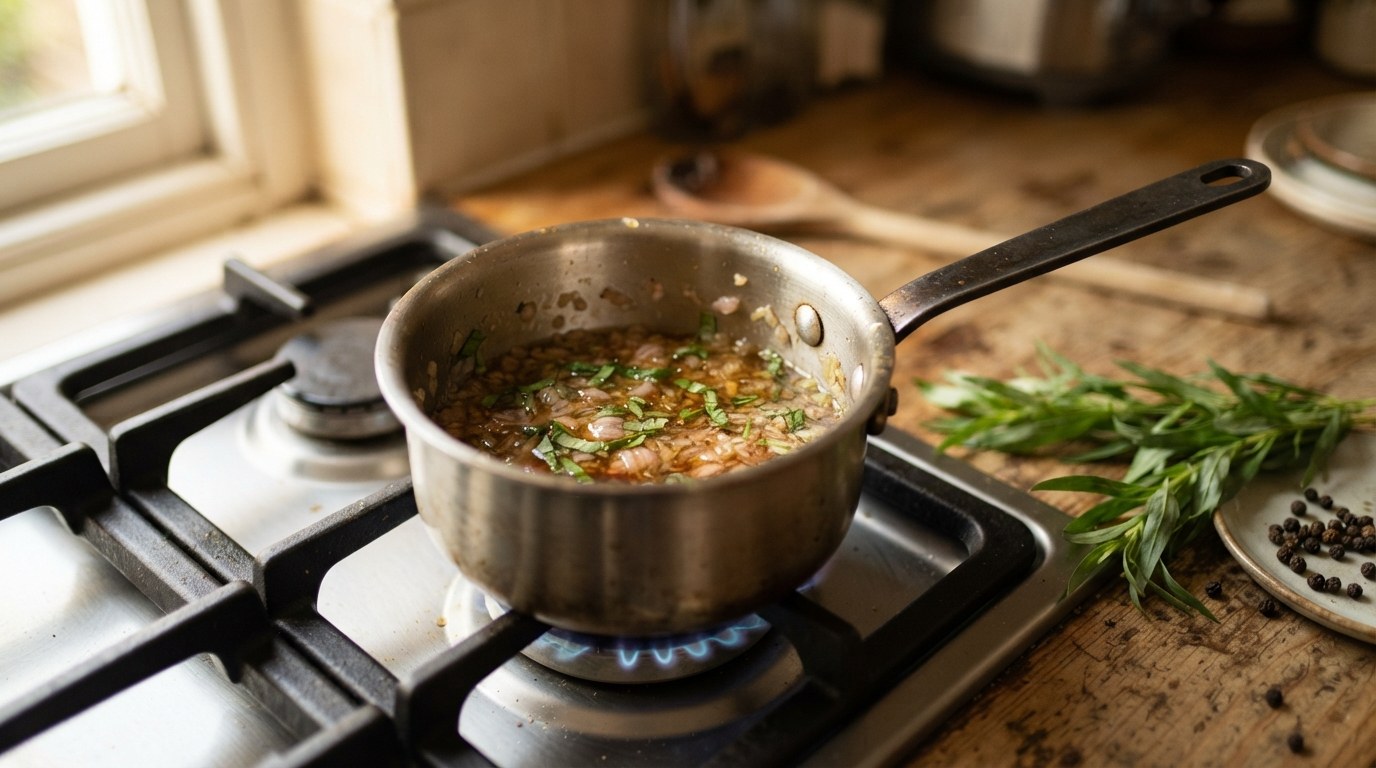
- Make the reduction: combine the vinegar, wine, shallot, crushed peppercorns, and 2 tablespoons of the tarragon in a small saucepan. Simmer over medium heat until only about 2 tablespoons of liquid remain, then strain and let it cool slightly.
- Set a heatproof bowl over a pan of barely simmering water (the water should not touch the bowl). Add the egg yolks and the cooled reduction and whisk constantly until pale, thickened, and ribbony.
- Take the bowl off the heat if it feels too warm. Slowly stream in the warm melted butter, whisking constantly, until the sauce is thick and glossy. If it stiffens too much, whisk in a few drops of warm water.
- Stir in the remaining tarragon and season with salt and a squeeze of lemon if you like. Serve immediately, or hold warm (not hot) for up to an hour.
Notes
Béarnaise Sauce FAQs
The questions that come up most: what béarnaise tastes like, how it differs from hollandaise, why it breaks and how to fix it, and whether you can make it ahead.
What is the difference between béarnaise and hollandaise?
Both are warm egg-yolk-and-butter emulsions. Hollandaise is flavored with lemon and is bright and citrusy; béarnaise uses a reduction of tarragon, shallot, and vinegar, making it savory and herbal. Béarnaise is technically a derivative of hollandaise.
Why did my béarnaise sauce break?
Almost always heat or speed. If the sauce got too hot the yolks scrambled; if the butter went in too fast the emulsion could not hold it. Keep the bowl over barely simmering water and stream the warm butter in slowly while whisking.
How do you fix a broken béarnaise sauce?
First whisk in a teaspoon or two of warm water, which often brings it back. If it is badly split, whisk a fresh egg yolk in a clean warm bowl and add the broken sauce to it a spoonful at a time to rebuild the emulsion.
What does béarnaise sauce taste like?
Rich and buttery with a savory, herbal, slightly aniseed flavor from the tarragon and a gentle tang from the vinegar reduction. It is less sharp than hollandaise and pairs naturally with beef.
What do you eat béarnaise sauce with?
Classically steak, especially filet mignon, but also roast beef, grilled fish, roasted asparagus, and poached eggs. Anywhere you want a rich, tarragon-scented sauce.
Can you make béarnaise sauce ahead of time?
It is best served fresh, but you can hold it warm (not hot) for up to an hour, or refrigerate it up to a day and gently rewarm it over a water bath while whisking. Reheat slowly, or it will break.
What can I use instead of fresh tarragon?
Fresh tarragon is the signature flavor, but in a pinch use about a third as much dried tarragon in the reduction, or a small amount of chervil. The sauce will be milder without the fresh herb stirred in at the end.

About the Author
John Siracusa is the founder of Hell’s Kitchen Recipes. He focuses on technique-first, reproducible home cooking and researches recipes & kitchen equipment from published food science and professional chef methods since 2016.