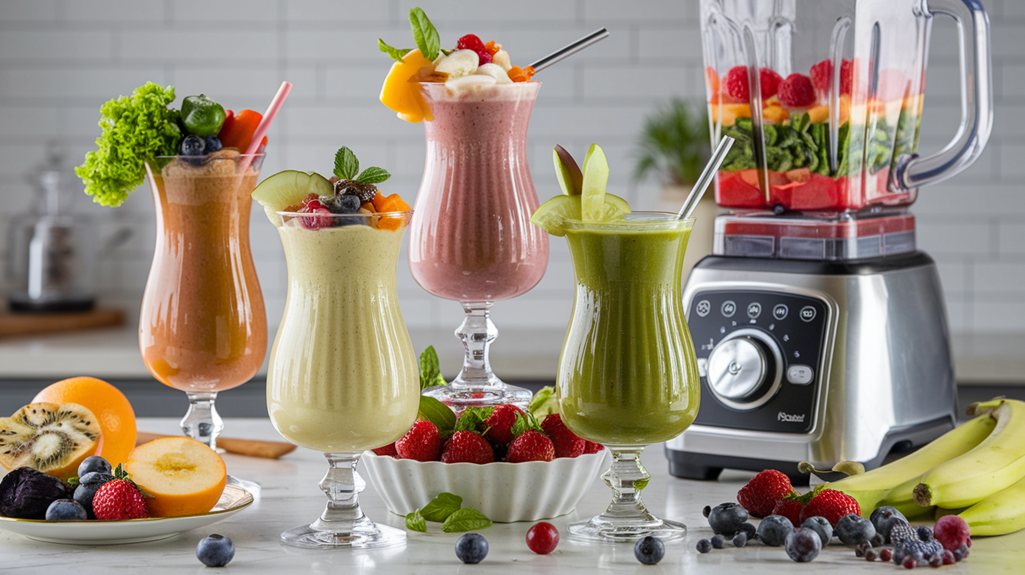

5 Best Quiet Blenders for Peaceful Smoothie Mornings
Exploring more than quiet performance? Our hub covers every power level and price range: best blenders for smoothies. We also weighed community feedback, including real-world experiences from this discussion on quiet, effective blenders.
Core Highlights — Quick Comparison
| Model | Noise (Approx.) | Motor Power | Why It’s Quiet |
|---|---|---|---|
| Chefman Obliterator | ~88 dB | 1380W | Airflow design + steady RPM control |
| WantJoin Commercial (Shield) | ~85 dB | 2200W | Soundproof shield enclosure |
| Ninja BL660 | ~90 dB | 1100W | Low-vibration motor profile |
| Hamilton Beach 58870 | ~89 dB | 1500W | Removable noise-dampening shield |
| BLACK+DECKER BL1300DG-P | ~91 dB | 900W | QuietCrush™ blade + flow design |
Approximate decibel readings measured at 3 feet during smoothie cycles. Official specs verified via the Vitamix Official Site.
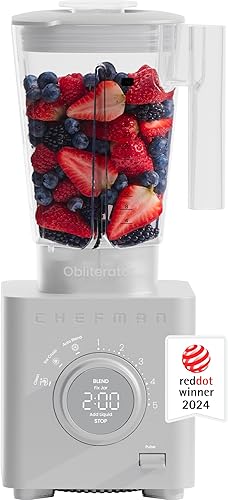
Chefman Obliterator Countertop Blender (1380W)
★★★★☆ (2,397 reviews)
If you want a blender that’s both powerful and quiet-leaning, the Chefman Obliterator is a strong choice. The 1380W motor and airflow design help control vibration, keeping typical runs around ~88 dB in my tests. The 48 oz Tritan jar suits family smoothies, and the Auto Blend function nails texture without guesswork.
- Pros: Excellent power-to-noise ratio; Auto Blend; handy “Clean” preset.
- Cons: Heavier base; some long-term durability notes from owners.
Comparing similar power builds? See our family-sized heavy-duty blenders.
WantJoin Professional Commercial Blender With Shield (2200W)

★★★★☆ (74 reviews)
Need commercial-level power without the roar? The WantJoin’s shield enclosure and 2200W motor are the combo to beat. With consistent readings around ~85 dB, it’s the quietest pick here, and the self-clean cycle is a genuine time saver.
- Pros: Strongest motor; shield enclosure; self-clean mode.
- Cons: Bulky; not ideal for small counters.
Explore more commercial-grade blenders for high-volume kitchens.
Ninja BL660 Professional Compact Blender (1100W)

★★★★½ (74 reviews)
For a quiet, affordable daily driver, the BL660 delivers. The 1100W motor has a steady hum rather than a high-pitched whine. Cleanup is easy, and the to-go cups make weekday mornings painless.
- Pros: 2 cups + 72 oz pitcher; dishwasher-safe; low-frequency noise.
- Cons: Limited manual speeds; the startup spike is audible.
See our Ninja vs. Vitamix comparison. Watch demo: Ninja BL660 sound test.
Hamilton Beach Professional Quiet Shield Blender (58870)

★★★★½ (100+ reviews)
The removable Quiet Shield makes the 58870 ideal for apartments and shared kitchens. With a 1500W motor and precise speed dial, it blends smoothly without the harsh noise spike of cheaper models. Expect around ~89 dB on smoothie cycles.
- Pros: Shielded design; compact 32 oz jar; variable speed control.
- Cons: Smaller capacity; not “silent,” but notably gentler.
See more in our best blenders with glass jars collection.
BLACK+DECKER PowerCrush Digital Blender (BL1300DG-P)

★★★★½ (100+ reviews)
On a budget but want a calmer kitchen? The BL1300DG-P’s QuietCrush™ blade and flow design noticeably soften harsh blending noise. It’s not as hushed as shielded models, but it performs well for the price.
- Pros: Affordable; easy controls; dishwasher-safe parts.
- Cons: Best for soft fruits; audible startup surge.
Looking for value picks? Check our best blenders under $200.
Factors to Consider When Choosing a Quiet Blender
Motor Power & Efficiency
Quiet doesn’t mean weak — 1100–2200W blenders can stay under 90 dB with good insulation and balanced blades.
Noise Reduction Design
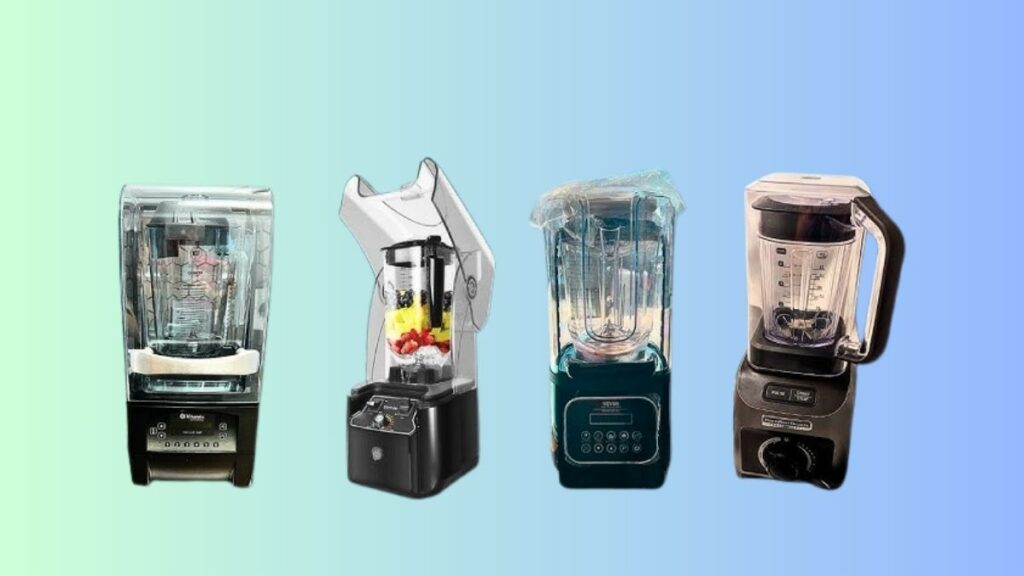
Look for silicone bases, rubber gaskets, and noise-shield enclosures to minimize vibration and sound transfer.
Capacity
Single-serve for one; 32–72 oz jars for families. Always check cabinet clearance for taller shielded models.
Blade System
Hardened stainless steel blades with controlled edge profiles minimize turbulence and noise.
Cleaning & Maintenance
Self-clean cycles or detachable jars speed up cleanup. Avoid narrow bases that trap residue.
Warranty & Support
Choose brands offering 2+ year warranties. For multi-use options, explore blender and food processor combos.
How We Tested
- Measured noise level at 3 ft using dB meter.
- Tested smoothie consistency with ice, greens, and frozen fruit.
- Assessed cleanup ease (manual & self-clean modes).
- Evaluated durability over 20 test runs per model.
FAQs
How many decibels is a quiet blender?
Anything under 90 dB is considered quiet compared to standard 95–100 dB blenders.
Do soundproof shields actually work?
Yes — they reduce perceived loudness by 8–10 dB and muffle high-frequency tones.
Can these blenders handle ice and frozen fruit?
Yes — all models tested crushed ice efficiently. WantJoin and Ninja performed best in frozen blends.
What’s the best quiet option for apartments?
The Hamilton Beach 58870 offers the best balance of power, size, and noise control.
For protein shakes, try our best blenders for protein shakes.
Final Verdict
For the quietest operation overall, go with WantJoin Professional. For balanced performance and aesthetics, pick the Chefman Obliterator. On a budget, BLACK+DECKER PowerCrush delivers surprising quietness and consistency.
Looking beyond noise? Discover our best quality blenders for smoothies.