Beef liver is organ meat, not a steak, and that one fact decides how you cook it. A steak can go rare because its muscle is safe to eat pink; liver is dense with iron and blood, so it is cooked through to medium, to an internal temperature of about 155 to 160°F, where the center is a light pink to set brown rather than raw red. Cooked to that point it is tender and mild; taken further it turns grainy and metallic, and left rare it is unpleasant and unsafe.
The method is simple: soak the sliced liver in buttermilk, get a hard sear on a hot pan, and pull it the moment the inside loses its raw red. Thin, even half-inch slices are the trick, because they cook fast enough to brown outside before they overcook inside.
Why Liver Is Cooked Through, Never Rare
The instinct to serve liver pink comes from treating it like beef, and it is the most common way people ruin it. Muscle proteins in a steak set gradually and stay juicy pink; liver is packed with iron-rich blood and fine protein, and those proteins coagulate and firm up over a narrow window between about 140 and 160°F. Below that the texture is soft and raw-tasting; hold it right at the top of the window and it is just set and tender. The USDA safe minimum for organ meats is an internal 160°F, and at that point the center still shows only a faint blush of pink, not the red of a rare steak.
Overshooting is the other failure. Push liver past 160°F and the proteins clench and squeeze out moisture, which is what makes overcooked liver grainy and dry, and the iron and sulfur compounds concentrate into the harsh metallic taste people blame the liver itself for. There is no low-and-slow rescue here the way there is with a tough braising cut, because liver has almost no collagen to melt; it is done in minutes and punished by another one.
The Buttermilk Soak: What It Actually Does
Soaking the slices in buttermilk for thirty minutes to an hour is not just tradition. Liver holds a lot of blood, and blood carries the strong, bitter, metallic notes. The mild acid in buttermilk draws some of that blood and its compounds out into the liquid and gently loosens the surface proteins, so the liver cooks up milder and more tender. Milk works too; buttermilk is a touch more acidic and does a little more. Drain it, then pat the slices very dry, because a wet surface cannot brown.
Getting a Hard Sear Without Overcooking
The browned crust is flavor, and it comes from the Maillard reaction, which needs a dry surface and a pan surface above about 284°F. That is why you dry the liver and why the pan has to be properly hot before the meat goes in: a heavy skillet, a film of oil shimmering, and the slices laid down without crowding. Crowd the pan and the released moisture drops it below 212°F, so the liver steams grey instead of searing. Give each slice about 1½ to 2 minutes a side, just long enough for a deep brown crust, and it will be cooked through by the time both sides are browned. A good heavy skillet holds that heat when the cold slices hit it.
How to Tell When It Is Done
Half-inch slices are done in roughly four to five minutes total, and the surest check is an instant-read thermometer pulled at 155 to 160°F, followed by a two to three minute rest. Without a thermometer, go by feel and color: properly cooked liver is firm but still gives slightly when pressed, and a slice cut open shows a light greyish-brown interior with at most a whisper of pink at the very center. Any red juice on the plate or a wobbly, wet-looking center means it needs another minute; a stiff, dry slice means it went too far.

ThermoPro
ThermoPro TempSwift Instant-Read Digital Thermometer
- Reads in about 1 second, accurate to ±0.9°F, with a 4.3-inch food-grade stainless probe
- Hold and calibration functions, so you can lock a reading away from the heat
- NSF certified and IP65 waterproof, rinse it clean under the tap
Fixing the Usual Liver Problems
Grainy and tough means overcooked, full stop: the proteins seized past 160°F and pushed the moisture out, so next time pull it earlier. Bitter and metallic usually means it was not soaked, or it was overcooked, since both concentrate the iron notes; soak it and stop at medium. Grey with no crust means the pan was not hot enough or the slices went in wet or crowded, so dry them, heat the pan to a shimmer, and work in batches. Serve it the classic way, over soft caramelized onions with a little pan gravy, alongside mashed potatoes.
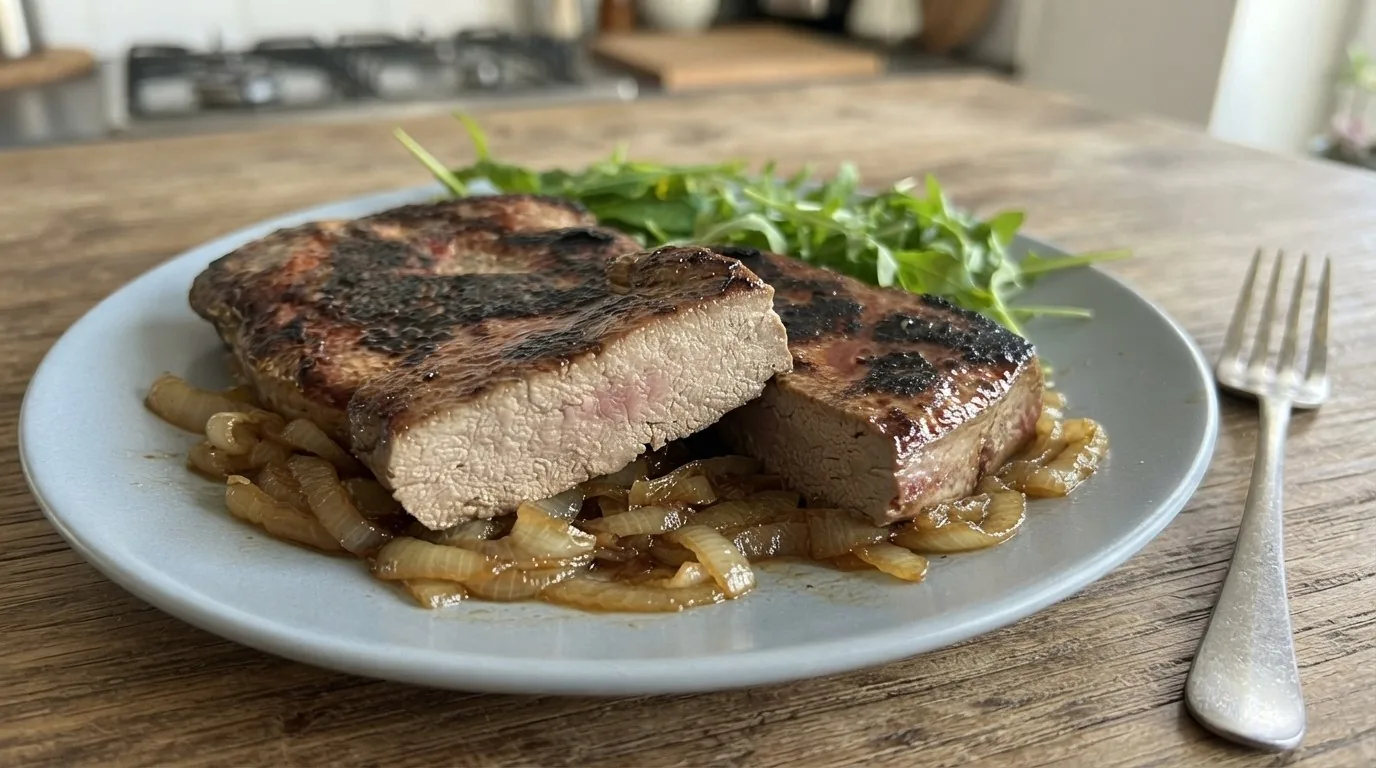
Gordon Ramsay Beef Liver and Onions
Ingredients
- 12 oz beef liver, sliced 1/2 inch thick
- 1 cup buttermilk, for soaking
- 1 large yellow onion, thinly sliced
- 2 Tbsp olive oil, divided
- 1 Tbsp butter
- 1/2 tsp garlic powder
- 2 Tbsp all-purpose flour, for dredging (optional)
To taste
- Sea salt and black pepper
Instructions
- Soak the sliced liver in the buttermilk, covered, in the fridge for 30 minutes to 1 hour. This draws out blood and softens the strong flavor. Drain and pat the slices very dry.
- Heat 1 tablespoon olive oil in a heavy skillet over medium. Add the onions with a pinch of salt and cook, stirring now and then, 10 to 12 minutes until soft and golden. Scrape onto a plate.
- Season the liver with salt, pepper, and garlic powder. If using flour, dredge each slice lightly and shake off the excess for a crisper crust.
- Raise the heat to medium-high and add the remaining oil to the skillet. When it shimmers, lay the slices in without crowding and sear 1 1/2 to 2 minutes per side, until a deep brown crust forms and the center is just cooked through (an internal 155 to 160°F, light pink to set). Do not cook past that or it turns grainy.
- Add the butter and return the onions to the pan for the last 30 seconds, spooning the buttery onions over the liver. Rest 2 to 3 minutes and serve.
Notes
Beef Liver FAQs
The questions that come up most: what temperature liver should reach, whether it should be pink, why you soak it in milk, and how to keep it from turning tough or bitter.
What temperature should beef liver be cooked to?
An internal 155 to 160°F, cooked through to medium. At that point the center is a light pink to set brown and the texture is tender. Liver is organ meat, so unlike a steak it is not served rare, and going much past 160°F makes it grainy and dry.
Should beef liver be pink inside?
Only a faint blush of pink at the very center is fine; a red, bloody, rare interior is not. Liver is dense with iron-rich blood and cooks through to medium, so the inside should read light greyish-brown with at most a hint of pink, never the red of a rare steak.
Why do you soak liver in milk or buttermilk?
The mild acid draws out some of the blood that carries liver's strong, bitter, metallic taste, and it loosens the surface proteins so the meat cooks up milder and more tender. Thirty minutes to an hour is enough; buttermilk is slightly more acidic than milk and does a little more.
Why is my liver tough and grainy?
It was overcooked. Liver has almost no collagen to break down, so once its proteins pass about 160°F they clench and squeeze out moisture, leaving a grainy, dry texture. Sear it hard and pull it at medium, around 155 to 160°F, then rest it briefly.
Why does beef liver taste bitter or metallic?
That flavor is the iron and blood, and it gets stronger when the liver is not soaked or is overcooked. A buttermilk soak removes a lot of it, and stopping at medium keeps the rest from concentrating. Fresh liver and thin slices help too.
Can you eat beef liver rare?
No. It is organ meat rich in blood, so it is cooked through to a safe medium (about 160°F internal), not served rare like a steak. Rare liver is both unpleasantly metallic and a food-safety risk.
How long does it take to cook beef liver?
Thin half-inch slices take about 1½ to 2 minutes per side over medium-high heat, roughly four to five minutes total, plus a short rest. Thicker slices take longer and are harder to cook evenly, which is why thin, even slices are best.

About the Author
John Siracusa is the founder of Hell’s Kitchen Recipes. He focuses on technique-first, reproducible home cooking and researches recipes & kitchen equipment from published food science and professional chef methods since 2016.