Pan seared halibut is the fish that punishes hesitation: it is lean, it cooks in minutes, and the gap between a moist, pearly fillet and a dry, chalky one is about ten degrees. This is the method Gordon Ramsay teaches for any firm fillet, applied to halibut and pinned to a thermometer. The fish is salted early and patted dry, it goes into a hot pan with olive oil and is not touched until the crust is deep gold, it is flipped and basted with foaming butter, garlic and thyme, and it comes out at 120°F so that carryover finishes it at 130°F on the plate. A lemon beurre blanc, the classic butter emulsion, takes five minutes in a small saucepan while the fish rests. Four servings, 35 minutes including the salting time.
The guide covers what to buy and how thick, why the surface has to be dry before it meets the pan, the butter baste and the exact pull temperature with the sources for it, why the beurre blanc holds together or breaks, and what to serve. It sits in the site's recipes with the other fish and shellfish: Ramsay's crispy-skin salmon, the pan-seared scallops, the tuna tataki and the full collection of his fish recipes.
The Halibut: What to Buy, Skin On or Off, and How Thick
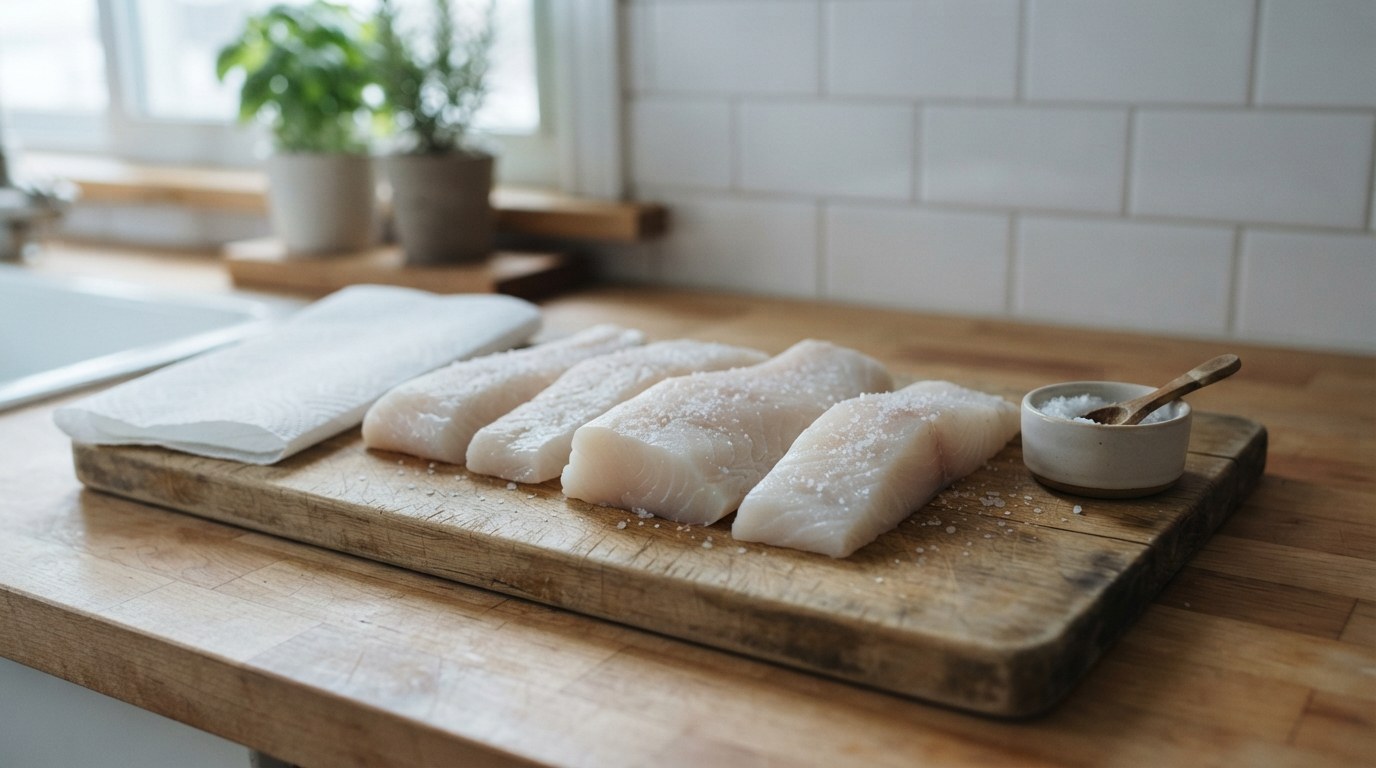
Buy skinless halibut fillets cut from the thick loin, about 6 ounces each and at least an inch thick, and buy them from a counter that will tell you when the fish came in. Nearly all of what American markets sell is Pacific halibut, Hippoglossus stenolepis, a flatfish from Alaska and the West Coast that can reach 8 feet and 500 pounds and live 55 years, per NOAA Fisheries, which describes the cooked flesh as flaky, tender and firm and the fishery as sustainably managed under U.S. regulations. Most of it is frozen at sea within hours of the catch, and a fillet thawed overnight in the refrigerator, still in its vacuum pack, will be in better condition than "fresh" fish that spent four days in transit. Ramsay's test for any fish holds here: the flesh should be firm and spring back when pressed, it should be translucent white rather than chalky or yellowed, and it should smell of the sea, not of fish.
Skin off is the right call for halibut, and most halibut is sold that way. Salmon skin turns into a crisp sheet because a fat layer sits under it and renders; halibut skin is thick, tough and lean, and it tightens and curls as it cooks without ever crisping the way salmon does, so the sear goes on the flesh instead. Thickness matters more than weight: a 1-inch fillet cooks through on the stovetop in the time it takes to build a crust and baste, while a piece over 1½ inches needs the crust first and then four to six minutes in a 400°F oven, which is what "pan roasted" means and where this page's address comes from. Whatever the thickness, the fish comes out of the refrigerator 15 minutes before cooking so the center is not ice-cold when the outside is done.
| Ingredient | What it does | Do not substitute with |
|---|---|---|
| Skinless halibut fillets, 4 × 6 oz, 1 to 1½ in thick | Lean, firm flesh that holds a crust and flakes in big pieces | Thin tail pieces (they overcook before they brown) |
| Kosher salt, 15 minutes ahead | Seasons through and pulls surface water so the fish can brown | Salting at the pan (the surface stays wet) |
| Olive oil, 2 tbsp | Ramsay's oil for fish; carries the heat into the flesh | Butter alone (its milk solids burn before the crust forms) |
| Unsalted butter, 3 tbsp, plus 2 smashed garlic cloves and 3 thyme sprigs | The baste: browns the top, perfumes the fish | Garlic added at the start (it burns bitter) |
| For the beurre blanc: 1 shallot, ¼ cup dry white wine, 2 tbsp lemon juice, 1 tbsp heavy cream, 8 tbsp cold butter, chives | A warm, sharp butter emulsion for a lean fish | Melted butter with lemon (that is a broken sauce) |
Dry Surface, Hot Pan, Then Oil: Why the Crust Forms
A halibut fillet browns only when its surface is dry, and that is the reason for the salt 15 minutes ahead and the paper towel after it. Browning is the Maillard reaction, and it needs a surface above 284°F; a wet surface cannot get past 212°F, water's boiling point, no matter how hot the pan under it, because the heat goes into turning water to steam. Salt pulls moisture out of the top layer of the flesh, the towel takes that moisture away, and the fillet that goes into the pan dry starts browning within seconds instead of steaming in its own liquid for a minute first. Ramsay's order in the pan is the other half of it: heat the pan first, then add the oil, and add the fish only when the oil shimmers, because a fillet laid in a cold pan sticks, weeps and turns grey. Olive oil is his choice for fish, and the fillet goes in away from you, presentation side down, and is then left completely alone.
Leave it for three to four minutes. The fish will grip the pan at first and release on its own once the crust has formed, and a fillet that is pushed early tears and leaves its crust behind. When the edge shows a deep gold band climbing a third of the way up the side, slide a fish spatula under it and turn it once. Searing does not seal in juices, on halibut or anything else; a seared fillet loses moisture at the same rate as an unseared one. The crust is there for flavor, the several hundred aroma compounds that Maillard browning makes from the fish's own proteins and sugars, and for the contrast between a crisp top and a soft, flaking interior.
The Butter Baste and the Pull Temperature: 120°F Out, 130°F on the Plate
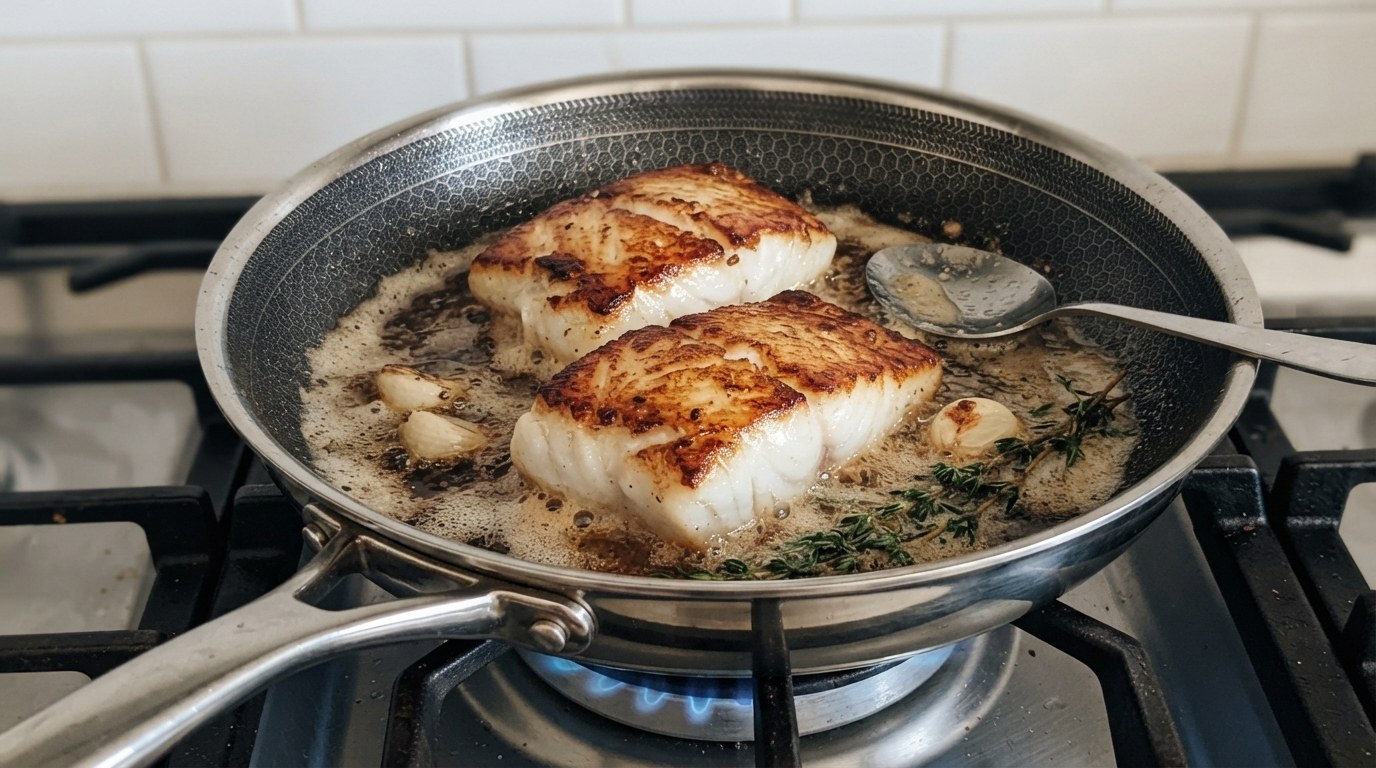
Once the fish is turned, the butter goes in with the smashed garlic and the thyme, the pan tilts toward you, and the foaming butter is spooned over the crust for two to three minutes. This is the same baste Ramsay uses on a chicken supreme and a steak, and it does two jobs on fish: the butter's milk solids brown in the pan and glaze the crust with nutty beurre noisette, and the garlic and thyme leave their aroma in the fat without ever touching high heat long enough to turn bitter. Basting does not moisten the fish; the flesh is already saturated and the heat is squeezing water out, so what the spoon adds is browning and flavor on the surface, and a gentler heat on the second side than the pan alone would give.
The pull temperature is the whole recipe. Fish proteins begin to set between 104°F and 122°F, far lower than the 122°F to 140°F of beef or pork, and once they contract they squeeze moisture out of the flesh; halibut is especially unforgiving because it is lean, with roughly one-fifth the fat of king salmon according to Wild Alaskan Company's halibut temperature guide, which puts the ideal finished temperature at 130°F to 135°F, where the flesh is opaque, moist and holds together in firm flakes. ThermoWorks works the same window from the other end: pull the fillet at 120°F, because the outside of a seared piece is far hotter than the center and carries it on to a finished 130°F as it rests. The FDA lists 145°F as the safe internal temperature for fish, the number to use for anyone pregnant, elderly or immunocompromised; for everyone else, halibut from a reputable source pulled at 120°F and rested is how every restaurant serves it, and at 145°F the same fillet is dry and fibrous. Read the temperature with an instant-read probe pushed sideways into the thickest part, and give the fish three minutes on a warm plate before saucing.
| Stage | Number | What you see |
|---|---|---|
| Salt and rest | 15 minutes, then pat dry | Beads of water on the surface, wiped away |
| Hot pan, then oil | Medium-high; oil shimmers | Fish sizzles hard on contact, does not stick |
| First side, untouched | 3 to 4 minutes | Gold band climbing the side; releases on its own |
| Turn, butter, baste | 2 to 3 minutes | Butter foams then browns; garlic and thyme fragrant |
| Pull | 120°F at the center | Center just turning opaque; edges flake |
| Rest | 3 minutes | Carryover to 130°F; moist, firm flakes |
| Over 1½ in thick | 400°F oven, 4 to 6 minutes after the sear | Same 120°F pull, same rest |
Lemon Beurre Blanc: A Butter Emulsion That Holds
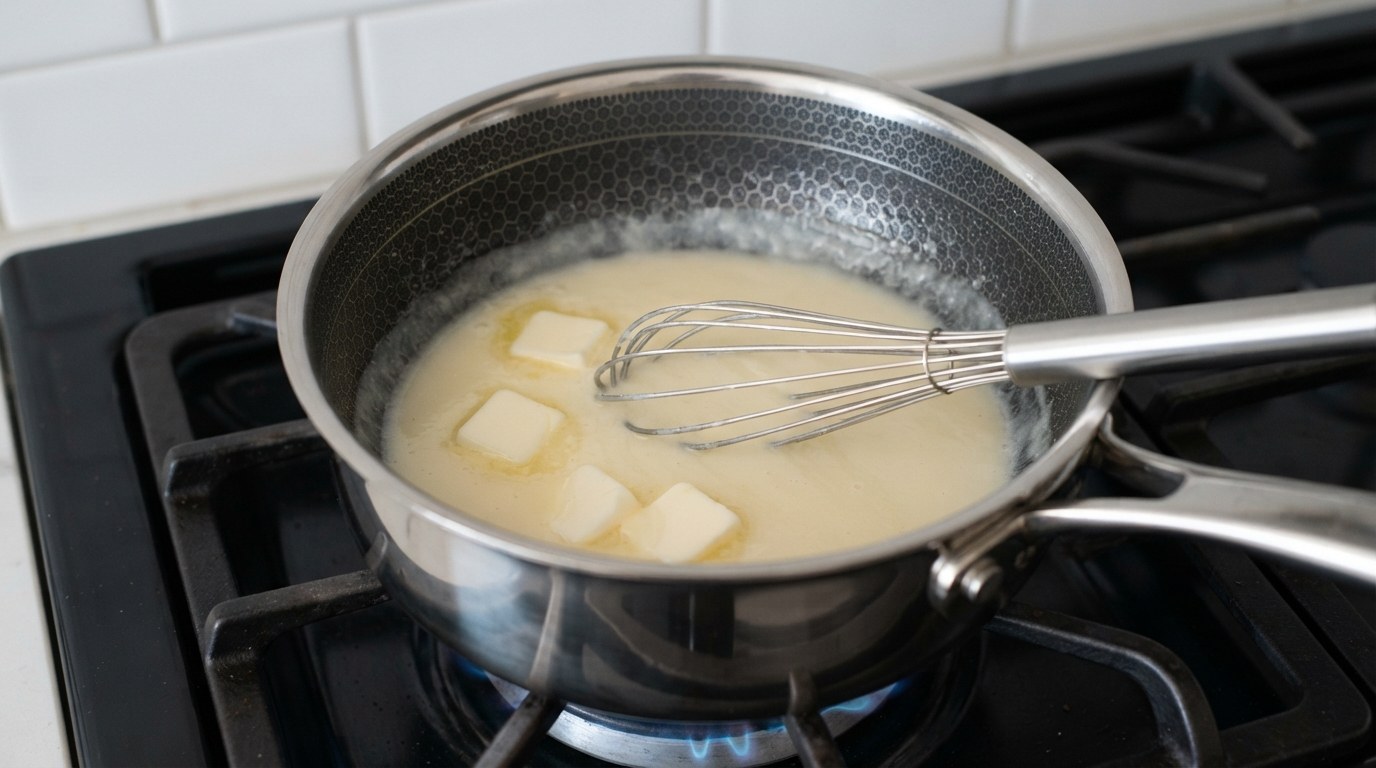
Beurre blanc is butter held in suspension in a spoonful of sharp liquid, and it holds because of the order and the temperature, not because of any trick. The shallot, wine and lemon juice reduce in a small saucepan to about a tablespoon of syrupy, acidic liquid; the cream, one spoon of it, goes in as insurance; then cold butter is whisked in a cube at a time over low heat. Butter is itself an emulsion, about 80 percent fat with water and milk proteins dispersed through it, and adding it cold to a warm reduction lets the fat melt into fine droplets that the water phase and the milk proteins keep apart, so the sauce turns pale, glossy and thick enough to coat a spoon instead of pooling as oil. The cream is there because its casein is a stronger emulsifier than butter's own; a beurre blanc without it is the classic and it works, but it breaks the moment it is neglected.
Temperature is the discipline. If the sauce goes above a bare simmer the emulsion collapses and the butter separates into clear fat; if it cools below about 90°F the fat solidifies and the sauce turns grainy. Keep the pan on the lowest heat, pull it off between additions, and never let it bubble. Season with salt and white pepper, add the chives and a few drops more lemon at the end, and hold it in a warm spot, not on the burner, until the fish has rested. A sauce that starts to split can usually be saved by whisking a tablespoon of cold water or cream into it off the heat, then whisking the broken sauce back in slowly. This is the same emulsion logic behind the site's lemon butter caper sauce, made in one pan after the fish comes out.
Serving Pan Seared Halibut, Sides and Leftovers
Spoon the beurre blanc onto a warm plate and set the fillet on it crust side up, so the sauce never softens the top. Halibut's mild, sweet flesh takes the same partners as any white fish: Ramsay's pomme purée, asparagus in spring when the fish is at its March peak in the market, a lemony risotto, or crushed new potatoes with the pan's garlic butter over them. A wedge of lemon on the plate lets each person adjust the acidity. Wine is a dry white with some weight: Chablis, a dry Riesling or an unoaked Chardonnay.
Cook halibut to eat the same day. Leftovers keep two days in the refrigerator and are best cold, flaked into a salad or fish tacos, because reheating pushes the flesh past the temperature that dried it in the first place; if it must be warm, cover it and use a 275°F oven for eight to ten minutes and stop as soon as it is warm through. The beurre blanc does not reheat; it splits when chilled and warmed, so make it fresh in the five minutes the fish rests. Frozen fillets work as well as fresh for this recipe provided they are thawed fully in the refrigerator overnight, never in warm water, and patted very dry, since thawed fish carries extra surface water that has to go before the pan.
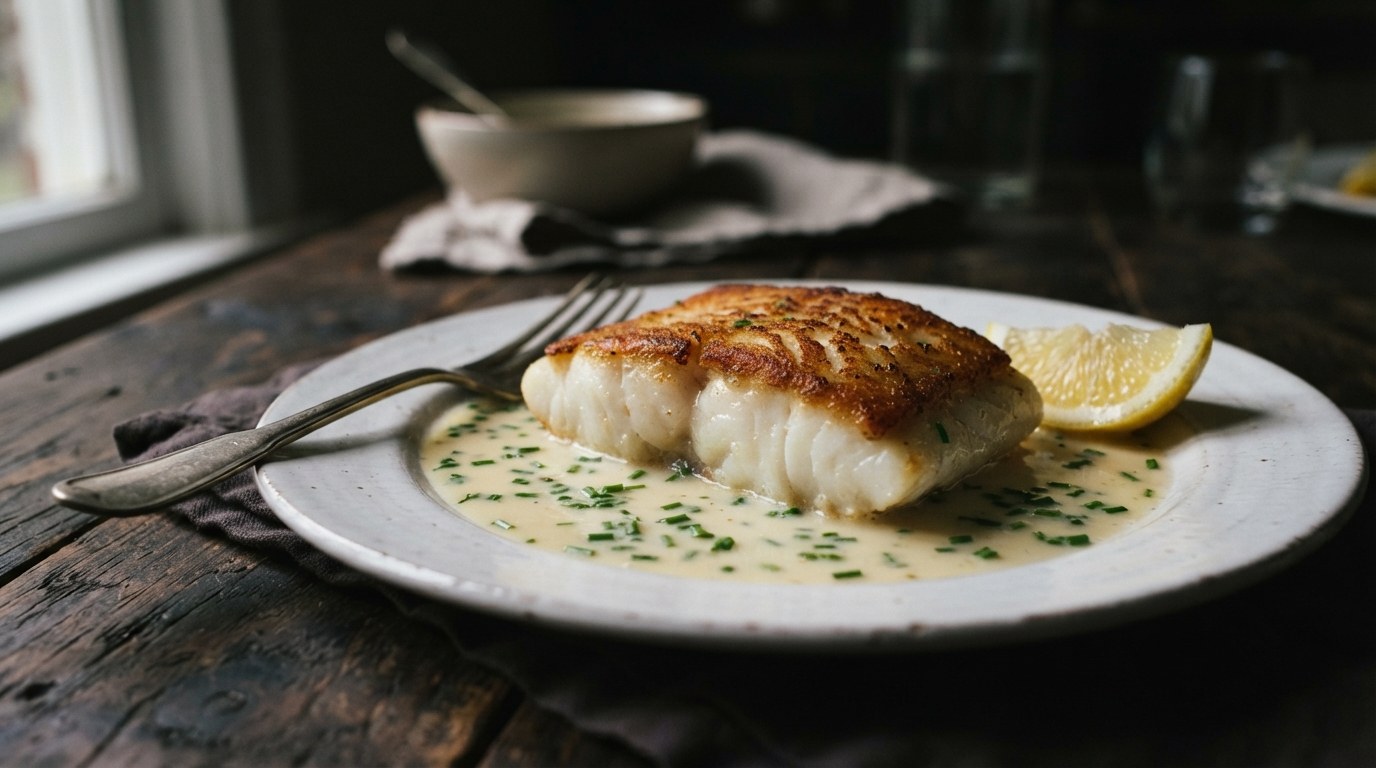
Pan Seared Halibut with Lemon Beurre Blanc (Gordon Ramsay's Method)
Ingredients
- 4 skinless halibut fillets, 6 oz each, 1 to 1½ inches thick
- 1½ tsp kosher salt, plus more for the sauce
- 2 tbsp olive oil
- 3 tbsp unsalted butter
- 2 garlic cloves, smashed
- 3 sprigs fresh thyme
- freshly ground black pepper
- lemon wedges, to serve
- For the lemon beurre blanc
- 1 small shallot, minced
- ¼ cup dry white wine
- 2 tbsp fresh lemon juice, plus a few drops to finish
- 1 tbsp heavy cream
- 8 tbsp cold unsalted butter (1 stick), cut into cubes
- 1 tbsp chives, finely chopped
- salt and ground white pepper
Instructions
- Season the halibut on both sides with the kosher salt and leave it on a plate at room temperature for 15 minutes. Pat every surface completely dry with paper towels and grind over a little pepper.
- Start the beurre blanc: put the shallot, wine and 2 tablespoons of lemon juice in a small saucepan and simmer until reduced to about 1 tablespoon of syrupy liquid, 4 to 5 minutes. Stir in the cream and set the pan aside off the heat.
- Heat a large skillet over medium-high until hot, then add the olive oil. When it shimmers, lay the fillets in away from you, presentation side down, and do not move them. Sear until a deep gold band climbs a third of the way up the sides and the fish releases on its own, 3 to 4 minutes.
- Turn the fillets with a fish spatula. Add the 3 tablespoons of butter, the smashed garlic and the thyme; when the butter foams, tilt the pan and spoon it over the fish continuously for 2 to 3 minutes. Pull the fillets when an instant-read thermometer pushed sideways into the thickest part reads 120°F. (For fillets over 1½ inches thick, transfer the pan to a 400°F oven after turning and check after 4 to 6 minutes.) Move the fish to a warm plate to rest.
- Finish the sauce while the fish rests: set the reduction over the lowest heat and whisk in the cold butter one or two cubes at a time, adding the next only when the last has nearly melted, lifting the pan off the heat if it threatens to bubble. The sauce should be pale, glossy and thick enough to coat a spoon. Season with salt and white pepper, add the chives and a few drops of lemon juice.
- Spoon the beurre blanc onto warm plates, set a fillet on each, crust side up, and serve at once with lemon wedges.
Notes
Pan Seared Halibut FAQs
The questions that come up most: the internal temperature halibut is done at, how long to sear it per side, whether to cook it skin on or off, whether it is better baked or pan seared, why it comes out dry or tough, whether frozen halibut works, whether it needs a milk soak, and what to serve with it.
What internal temperature is pan seared halibut done at?
Pull it at 120°F in the thickest part and rest it three minutes; carryover brings it to 130°F, where the flesh is opaque, moist and flakes in firm pieces. The FDA's safe figure for fish is 145°F, which is the number to use for anyone pregnant or immunocompromised, but halibut cooked to 145°F is dry and fibrous.
How long do you sear halibut on each side?
Three to four minutes on the first side, untouched, until a gold band climbs a third of the way up and the fillet releases on its own; then two to three minutes on the second side while basting with butter. That is for a 1-inch fillet. Over 1½ inches, sear the first side, turn, and finish in a 400°F oven for four to six minutes to the same 120°F pull.
Should halibut be cooked skin on or skin off?
Skin off. Halibut skin is thick, tough and lean and does not crisp the way salmon skin does, since there is no fat layer under it to render; it tightens and curls instead. Most halibut is sold skinless, and the crust goes on the flesh.
Is halibut better baked or pan seared?
Pan seared, for flavor: the crust from Maillard browning is something a 400°F oven cannot produce on a moist fillet in the time halibut takes to cook. Baking is gentler and more forgiving on a very thick piece; the best of both is the pan-roast, a stovetop sear followed by a few minutes in the oven.
Why is my halibut dry and tough?
It went past about 135°F. Halibut has roughly a fifth of the fat of king salmon, and fish proteins set and start squeezing out moisture from about 120°F, so there is no margin. Use a thermometer, pull at 120°F, rest three minutes, and never cook by the clock alone.
Can I pan sear frozen halibut?
Yes, once it is fully thawed. Thaw it overnight in the refrigerator in its packaging, never in warm water, then pat it very dry, since thawed fish carries extra surface water that stops it browning. Most halibut sold in the U.S. was frozen at sea and is in better condition than fish that traveled for days unfrozen.
Do you need to soak halibut in milk before cooking?
Not fresh halibut. The milk soak is a fix for fish that smells fishy, because the casein in milk binds the compounds responsible; a fillet that smells of the sea rather than of fish does not need it, and soaking adds surface moisture you then have to dry off. Do not rinse it either; just pat it dry.
What do you serve with pan seared halibut?
A lemon beurre blanc or a lemon butter caper sauce, and a soft or green side: pomme purée, crushed new potatoes with the pan's garlic butter, asparagus, sautéed spinach or a lemony risotto. Halibut is a lean fish, so the sauce should carry the fat.

About the Author
John Siracusa is the founder of Hell’s Kitchen Recipes. He focuses on technique-first, reproducible home cooking and researches recipes & kitchen equipment from published food science and professional chef methods since 2016.