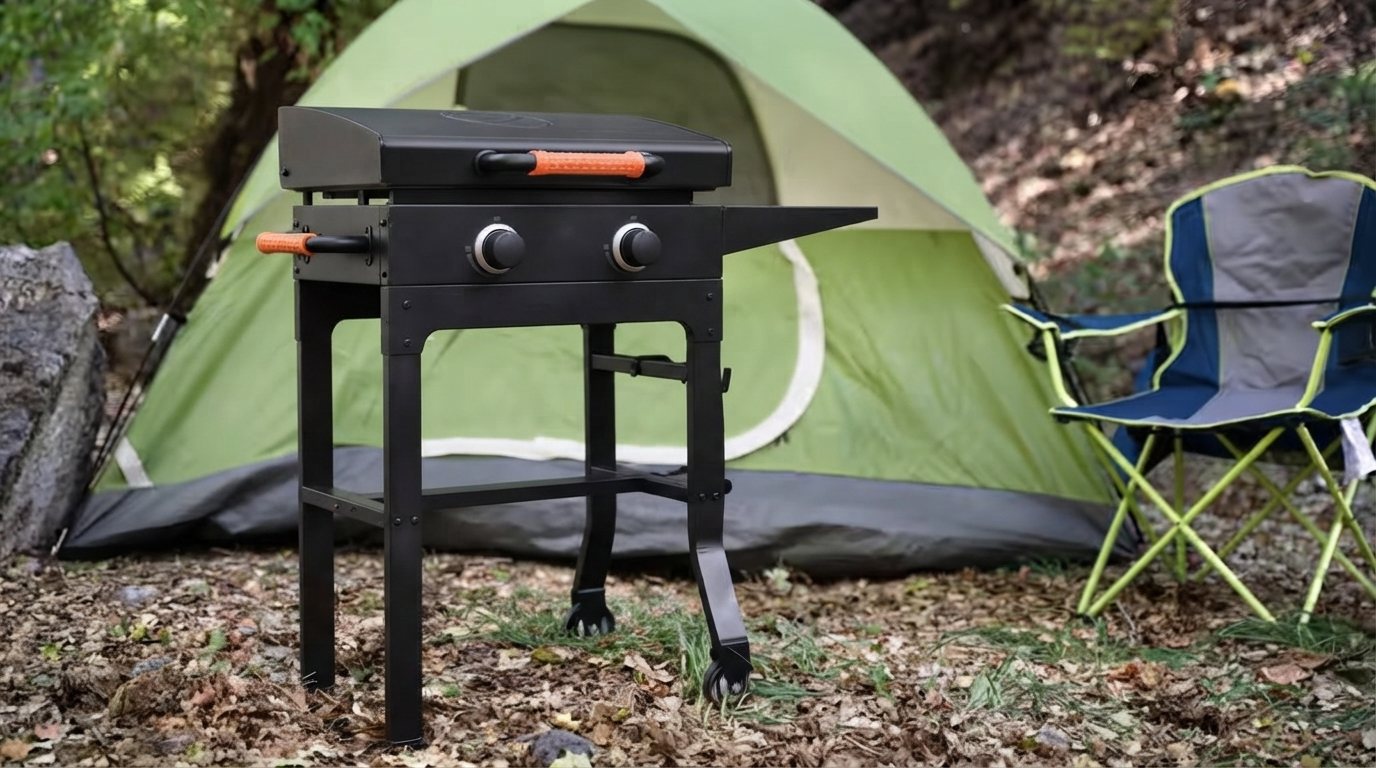
How long do Blackstone griddles last? With basic care, 10 to 20 years or more. Blackstone itself says its griddles are "built to last a lifetime," and long-term owners routinely report units still cooking after nine-plus years. Without care, the same griddle can rust out in a couple of seasons. The hardware is the same either way; a five-minute routine after each cook decides which griddle you end up with. Here is what actually determines a griddle's lifespan, the maintenance that stretches it, and how to bring a rusty top back, judged with the same practical lens as every kitchen gear review on this site.

Blackstone
Blackstone 1883 Original 28" Omnivore Griddle with Hood, Black
- 524 square inches of cooking space on the 28" Omnivore griddle plate, sized to cook for a crowd
- Even heat distribution with quick preheat and recovery, and a rear grease-management system for easy cleanup
- Hood and counter-height side shelves for prep and serving room
How Long a Blackstone Griddle Actually Lasts
The honest range is wide because maintenance, not manufacturing, sets the clock. Blackstone Products markets the griddles as lifetime equipment, and the claim is not empty: the cooking surface is a thick slab of cold-rolled steel with no coating to wear off, so unlike a nonstick pan there is nothing that "runs out." Owners on grilling forums regularly report griddles going strong at nine and ten years. For contrast, home-recreation retailer Watson's reports the average American replaces a standard grill about every three years, mostly because thin burners and grates corrode. A griddle's solid steel top sidesteps most of that, which is why a cared-for Blackstone outlives a typical gas grill several times over.
Rust Is What Kills a Blackstone Griddle
Nearly every dead Blackstone died the same way: moisture sat on bare steel. Cold-rolled steel has no chrome or enamel protecting it. Its only protection is the seasoning, the thin layer of polymerized oil you bake onto the surface. Leave a griddle uncovered through a rainy week, or put it away wet, and orange rust blooms through any gap in that layer. The burners and igniters below deck are the second weak point; they corrode faster in humid or coastal air. Warping is rarer and usually comes from blasting a cold top on high heat or dumping ice water on a hot one, so bring the surface up and down gradually.
The 5-Minute Routine That Makes It Last
Longevity comes down to what happens in the five minutes after you turn off the burners. While the top is still warm, scrape the food residue and grease to the trap with a metal scraper. Wipe it clean with paper towels; a splash of warm water loosens anything stuck, and a scouring pad handles stubborn spots. Then the step that matters most: rub a thin film of high-smoke-point oil over the whole surface, edge to edge. That oil layer is the seasoning's maintenance coat, and it is what stands between the steel and the air. Finish by covering the griddle or storing it somewhere dry.

| When | What to do | Why it matters |
|---|---|---|
| After every cook | Scrape warm, wipe clean, oil thinly | The oil film blocks moisture; this is 90% of lifespan |
| Before storage | Cover it, or move it somewhere dry | Uncovered outdoor storage is the #1 rust cause |
| Monthly-ish | Check burners, igniter, grease trap | Below-deck corrosion is the second failure point |
| Season start | Deep clean + 2-3 fresh seasoning coats | Rebuilds the polymerized layer for the year |
The routine costs less time than preheating does, and it is the whole difference between the three-year grill cycle and a griddle you hand down. Since uncovered storage is the top rust cause, a fitted cover is the one accessory that directly buys years.

Blackstone
Blackstone 5483 28" Griddle Cover, Black
- Fits Blackstone 28" griddles with hood and similarly sized models
- Heavy-duty 600D polyester with a water-resistant PVC coating against rain, snow, dust, and sun
- Semi-elastic cinch straps and clips keep it in place in wind
How to Clean Rust off a Blackstone Griddle
A rusty top looks terminal and almost never is: surface rust scrapes off, and the steel underneath re-seasons like new. Heat the griddle to loosen the rust, then work the surface with a metal scraper. Wipe the debris away, and scour the remaining spots with a scouring pad or grill stone and a little oil, repeating until the towel comes away clean. For stubborn patches, white vinegar helps dissolve the oxidation. Wipe it on, let it sit a few minutes, scrub, then rinse and dry completely so no acid or moisture stays behind. Finish by re-seasoning: coat the surface with a thin layer of oil and heat it past its smoking point until it darkens, then repeat for two or three coats. Cast-iron maker Lodge describes seasoning the same way for its own bare-metal cookware: oil baked past its smoke point polymerizes into a hard, rust-blocking layer. Rebuild that layer and the griddle is back in service.
Repair or Replace? Most Parts Are Swappable
Before you write off an aging griddle, price the part instead. Blackstone sells replacement burners, igniters, regulators, hoses, and even complete griddle tops through its own parts store, and most swaps need nothing more than a screwdriver. A griddle only really earns replacement when the frame itself has rusted through or a discontinued model leaves you without parts. Consumer Reports' grill coverage points the same direction: routine cleaning and timely part swaps, not new purchases, are what keep outdoor cookers alive. If the top is intact, the honest answer is almost always restore, not replace.
More outdoor cooking: our pick of grilling gifts that actually get used, the science of grilling ribs low and slow, and every kitchen gear review on the site.Blackstone Griddle Lifespan FAQs
The questions owners ask most: whether the steel rusts, cleaning rust off with vinegar, seasoning frequency, and outdoor storage.
Do Blackstone griddles rust?
Yes. The cooking surface is uncoated cold-rolled steel, so it rusts anywhere the seasoning layer is thin and moisture sits on it. That is ordinary bare-steel behavior. A thin coat of oil after each cook and a cover (or dry storage) prevent nearly all of it, and surface rust that does appear can be scraped off and re-seasoned.
How do I clean rust off a Blackstone griddle with vinegar?
Wipe white vinegar over the rusted areas, let it sit for about five minutes to loosen the oxidation, then scrub with a scouring pad or grill stone. Rinse with water, dry the surface completely, and re-season with two or three thin coats of oil heated past smoking. Never leave vinegar sitting long-term — the acid keeps working on the steel.
How often should I season a Blackstone griddle?
Fully season it (multiple baked-on coats) when new and again at the start of each season or after a rust cleanup. Between those, the thin film of oil you wipe on after every cook maintains the layer. If food starts sticking or the surface looks grey and dry, add a coat.
Can I leave my Blackstone griddle outside?
Yes, if it is covered. A fitted, vented cover keeps rain and dew off while letting trapped moisture escape. Uncovered outdoor storage is the fastest way to rust the top and corrode the burners. If you live somewhere humid or coastal, a garage or shed buys the burners years.
Is it safe to cook on a rusty griddle?
Cook only after removing the rust. A little surface rust is more nuisance than hazard: it flakes into food, tastes metallic, and marks a failed seasoning layer that will keep sticking. Scrape, scour, and re-season first — the fix takes under an hour.
When should I replace a Blackstone griddle instead of repairing it?
Replace when the frame or griddle top has rusted through, or when parts for your model are no longer sold. Anything short of that (weak flames, a dead igniter, pitted seasoning) is a cheap part swap or a re-season. Blackstone sells burners, igniters, regulators, and replacement tops directly.

About the Author
John Siracusa is the founder of Hell’s Kitchen Recipes. He focuses on technique-first, reproducible home cooking and researches recipes & kitchen equipment from published food science and professional chef methods since 2016.