Gordon Ramsay's homemade baked beans are British-style baked beans: small white navy (haricot) beans in a thick tomato sauce, made spicy and savory with crisp pancetta, a finely chopped red chilli, red onion, garlic, a little brown sugar, cider vinegar and Worcestershire sauce. He cooked them as the breakfast dish in the first episode of Gordon Ramsay's Home Cooking on Channel 4 in 2013, spooned over pan-fried potato cakes, and the clip still circulates on his social channels. It is a 30-minute sauce for cooked beans, and it tastes nothing like the sweet orange beans from a tin.
This page keeps his method and builds the from-scratch part around it: how to soak and boil dried navy beans safely, why the tomato and sugar wait until the beans are tender, and how to get the sauce thick enough to sit on toast. Canned navy beans work too, and they cut the time to about 30 minutes. If you are cooking for an American cookout, the comparison below shows how this British style differs from molasses-baked Boston beans and how to steer the same pot that way.
How Gordon Ramsay Makes Homemade Baked Beans
Gordon Ramsay makes homemade baked beans in one pan on the stovetop. He fries diced bacon or pancetta, adds a red chilli chopped with its seeds, then onion and garlic, and lets the meat crisp while the onion softens. Brown sugar goes in to caramelize, a few tablespoons of cider vinegar lift everything off the bottom of the pan, and Worcestershire sauce and pureed tomatoes turn it into a sauce before the beans are folded in. Tasting Table walks through that order and notes he uses haricot beans, the British name for navy beans.
The chilli is the signature. Ramsay has said he finds plain baked beans a bit bland, so he always makes them spicier, as Tasting Table reported from his video. The vinegar and Worcestershire matter just as much: they add the sharp, savory edge that keeps the sugar and tomato from tasting like dessert. He serves the beans on toast or, in the episode, on potato cakes made from leftover boiled potatoes, butter and flour, fried in olive oil until lightly crisp (Chowhound covered that pairing). His usual habits apply all the way through: dice the onion and chilli finely so they melt into the sauce, taste before you salt, and use up last night's potatoes instead of throwing them out.
British Baked Beans vs American Baked Beans
British baked beans are navy beans in a light, savory tomato sauce, eaten at breakfast or on toast, while American baked beans are usually slow-baked in a thick, dark sauce sweetened with molasses or brown sugar and cooked with salt pork or bacon. Both start with the same bean. The history of the dish explains the split: Heinz began canning beans in 1886 and later moved its UK recipe to a less sweet tomato sauce, while New England kept the older molasses-sweetened version that became tied to Boston. The tinned British kind is not baked at all; it is cooked in the can by steam.
| Style | Sauce | Sweetener | Meat | How it cooks | Served |
|---|---|---|---|---|---|
| British tinned beans | Thin, smooth tomato sauce | A little sugar | None | Steam-cooked in the can | Full English breakfast, beans on toast, jacket potatoes |
| Ramsay's homemade beans | Thick passata sauce with onion, chilli, cider vinegar, Worcestershire | 1 tbsp brown sugar | Pancetta or smoked bacon | Stovetop, 20 to 30 min in the sauce | Toast or potato cakes |
| Boston baked beans | Dark, sticky, mustardy | Molasses | Salt pork | Covered in a bean pot in a low oven, 6 to 8 h | Brown bread, franks, Saturday supper |
| Southern / BBQ beans | Ketchup or barbecue sauce base | Brown sugar, often lots | Bacon, sometimes ground beef | Oven or smoker, 1 to 2 h, often from canned beans | Cookouts, pulled pork, fried chicken |
Ramsay's version sits closest to the British tin in style, with far more flavor and texture: you can see the onion and taste the smoke from the pancetta. To take the same pot in the American direction, swap the tablespoon of brown sugar for 1/4 cup of molasses plus 2 tablespoons of brown sugar, add a teaspoon of dry mustard, cut the passata to 1 cup, and bake it covered in a 300°F (150°C) oven for 2 to 3 hours, uncovering for the last 30 minutes to darken the top. That is a Boston-style variation, not a Ramsay recipe, and it only works with beans that were already cooked tender first, for the reason explained further down.
How to Make Baked Beans From Scratch With Dried Beans
To make baked beans from scratch, soak dried navy beans overnight in salted water, drain them, cover them with fresh water, boil hard for 10 minutes, then simmer gently for 45 to 75 minutes until they are creamy inside. Only then do they go into the tomato sauce. A 9-ounce (250 g) bag yields about 3½ cups of cooked beans, enough for four breakfasts, at a fraction of the price of tinned beans.
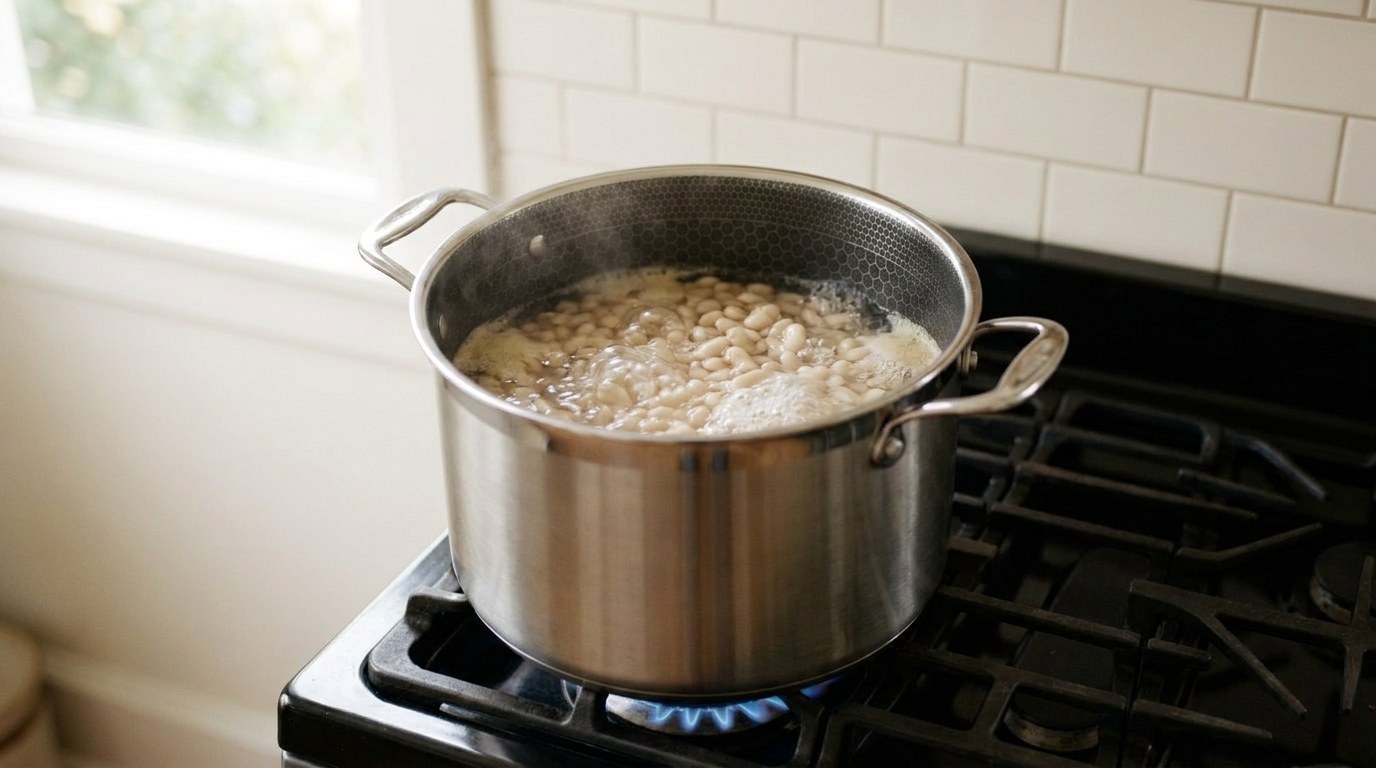
The overnight soak is hydration: the dried bean takes up water and swells, which shortens the cooking time and helps the beans cook evenly from skin to center. Salt in the soaking water helps rather than hurts. America's Test Kitchen explains that sodium swaps places with some of the calcium and magnesium holding the pectin in the skins together, so the skins soften and fewer beans split; its ratio is 3 tablespoons of table salt per 4 quarts of water for a pound of beans, soaked 8 to 24 hours. Use half of that for this smaller batch, then drain and rinse well.
In the pot, heat does two jobs. Water moving into the bean lets its starch granules swell and gelatinize, turning the chalky middle creamy, and the heat slowly dissolves the pectin that glues the cells together, which is what lets a bean go from firm to tender. North Dakota State University Extension puts cooking at one to two hours depending on the bean's size and age, and gives the test to use instead of the clock: a cooked bean should mash easily between two fingers. Navy beans are small and usually land at 45 to 75 minutes. Keep them covered with water, skim the pale foam in the first few minutes, and save half a cup of the cooking liquid before you drain them; it is full of starch and thickens the sauce later.
Lodge
Lodge 6-Quart Enameled Cast Iron Dutch Oven, Island Spice Red
- Heavy enameled cast iron holds a steady, gentle simmer for long braises and chilli
- Enamel interior will not rust and needs no seasoning
- Stovetop and oven safe to 500°F
A heavy pot like this enameled Dutch oven holds the low, steady simmer beans want without scorching the bottom, and it goes straight into the oven if you make the Boston-style bake above. The stockpot in the photo does the same job on the stovetop; what matters is a pot big enough that the beans stay under water as they swell.
Are Dried Navy Beans Safe? Why the 10-Minute Boil Matters
Dried navy beans are safe once they have been soaked and then boiled hard, because the boil destroys a natural lectin, phytohaemagglutinin, that causes severe vomiting and diarrhea when beans are eaten raw or undercooked. The FDA's Bad Bug Book says the toxin is highest in red kidney beans, where as few as four or five raw beans can make someone ill, and that it is found in many other species of beans as well; white kidney beans carry about a third of the red bean's level. Navy beans belong to the same species, Phaseolus vulgaris, so treat them the same way.
The fix is temperature, not time on low heat. The FDA cites research in which 10 minutes of boiling at 212°F (100°C) completely destroyed the toxin, and it advises soaking for at least 5 hours, pouring that water away and boiling the beans in fresh water for at least 30 minutes to be sure; the 45 to 75 minutes of simmering that follows the 10-minute hard boil covers that. What you must not do is cook dried beans from raw in a slow cooker: the same FDA chapter reports slow-cooked casseroles reaching only about 167°F (75°C) inside, too cool to destroy the lectin, and some outbreaks traced to exactly that. Canned beans are already fully cooked, so they need no boil. The same rule matters even more for red kidney beans in a pot of Gordon Ramsay chilli con carne.
Why the Tomato and Sugar Go In After the Beans Are Tender
Add the tomato, sugar and vinegar only after the beans are fully tender, because acid, sugar and calcium all strengthen pectin and can stop a half-cooked bean from ever softening. NDSU Extension lists tomatoes, vinegar, ketchup, chili sauce and molasses among the acidic ingredients to add after the beans are cooked. The pectin between the bean's cells holds firm in an acidic sauce, so a bean that goes into Ramsay's sauce still chalky in the middle can sit there for an hour and stay that way.
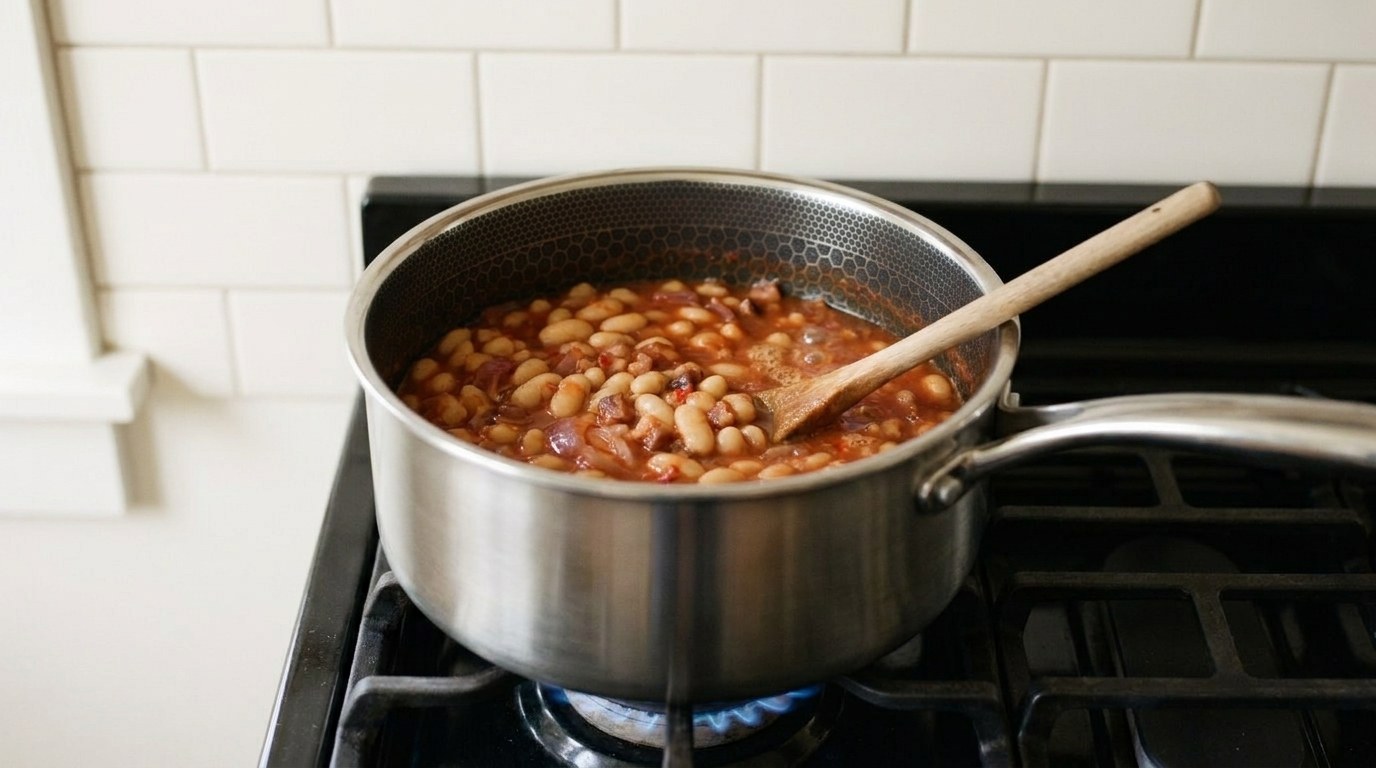
The same mechanism explains the most common complaint, beans that stay hard no matter how long they cook. If the sauce went in early, or your tap water is very hard, the calcium firms the pectin in the skins and slows everything down. Molasses is the worst offender in American recipes because it brings acid, sugar and calcium at once, which is why Boston-style beans are always cooked tender before they meet the molasses. Old beans, a year or more in the cupboard, also cook slowly however you treat them. Taste a few beans before you drain them; if any are chalky, give them another 15 minutes.
Building Ramsay's Spicy Tomato Sauce for Baked Beans
Ramsay's sauce for homemade baked beans is built in layers in one saucepan: pancetta first for fat and flavor, then chilli, onion and garlic, then brown sugar, a splash of cider vinegar, Worcestershire and passata. Each layer adds something the tin never has. Start the diced pancetta in a little olive oil over medium heat and let it cook for 5 to 6 minutes; as the fat renders out, the meat fries in it and the edges turn brown and crisp. That browning is the Maillard reaction, which only gets going once a surface passes about 284°F (140°C), and it leaves a savory brown film on the bottom of the pan.
The onion goes into that fat and softens for 6 to 8 minutes. Wet onion cannot get hotter than 212°F (100°C) while it is giving off water, so it sweetens and turns translucent before it colors at the edges; there is no need to rush it. Ramsay leaves the chilli seeds in for heat. The fiery capsaicin actually sits mostly in the pale pith that holds the seeds rather than in the seeds themselves, so scrape out that white rib if you want the flavor with less burn. The sugar melts into the onions for a minute, then the cider vinegar hits the hot pan, sizzles and dissolves the browned film into the sauce, which is why Ramsay uses it to deglaze.
Once the passata and beans are in, simmer uncovered for 20 to 30 minutes. Evaporation does most of the thickening, and the starch that leaks from the beans and from that saved cooking liquid gives the sauce body as it reduces. For a thicker, creamier sauce, crush a spoonful of beans against the side of the pan and stir them back in. Season at the end, not the start: pancetta and Worcestershire are both salty, and the sauce concentrates as it cooks, so taste first, then add salt and plenty of black pepper.
Homemade Baked Beans With Canned Beans
Homemade baked beans with canned beans take about 30 minutes: make Ramsay's sauce exactly the same way, stir in two 15-ounce cans of navy or cannellini beans, drained and rinsed, and simmer for 10 to 15 minutes. Use a half cup of water in place of the bean cooking liquid. Rinsing washes off the thick, salty canning liquid so you control the seasoning, and the shorter simmer stops already-soft canned beans from breaking up. Great Northern beans work too, a little larger and creamier. This is the route Ramsay's quick TV method suits best, and it is the one to use on a weekday morning.
Ramsay's Potato Cakes and Other Ways to Serve Homemade Baked Beans
The way Gordon Ramsay serves homemade baked beans is spooned over golden potato cakes, though thick buttered toast is the classic British plate. The potato cakes are leftover mashed potato worked with a little butter and flour into a soft dough, patted into rounds and fried in olive oil for 3 to 4 minutes a side. Cold mash is the right starting point: as cooked potato starch cools it retrogrades, firming into a dough that holds its shape in the pan, where warm mash would slump. A batch of Yukon Gold mashed potatoes from the night before is ideal, and a potato ricer keeps the mash smooth and free of lumps.
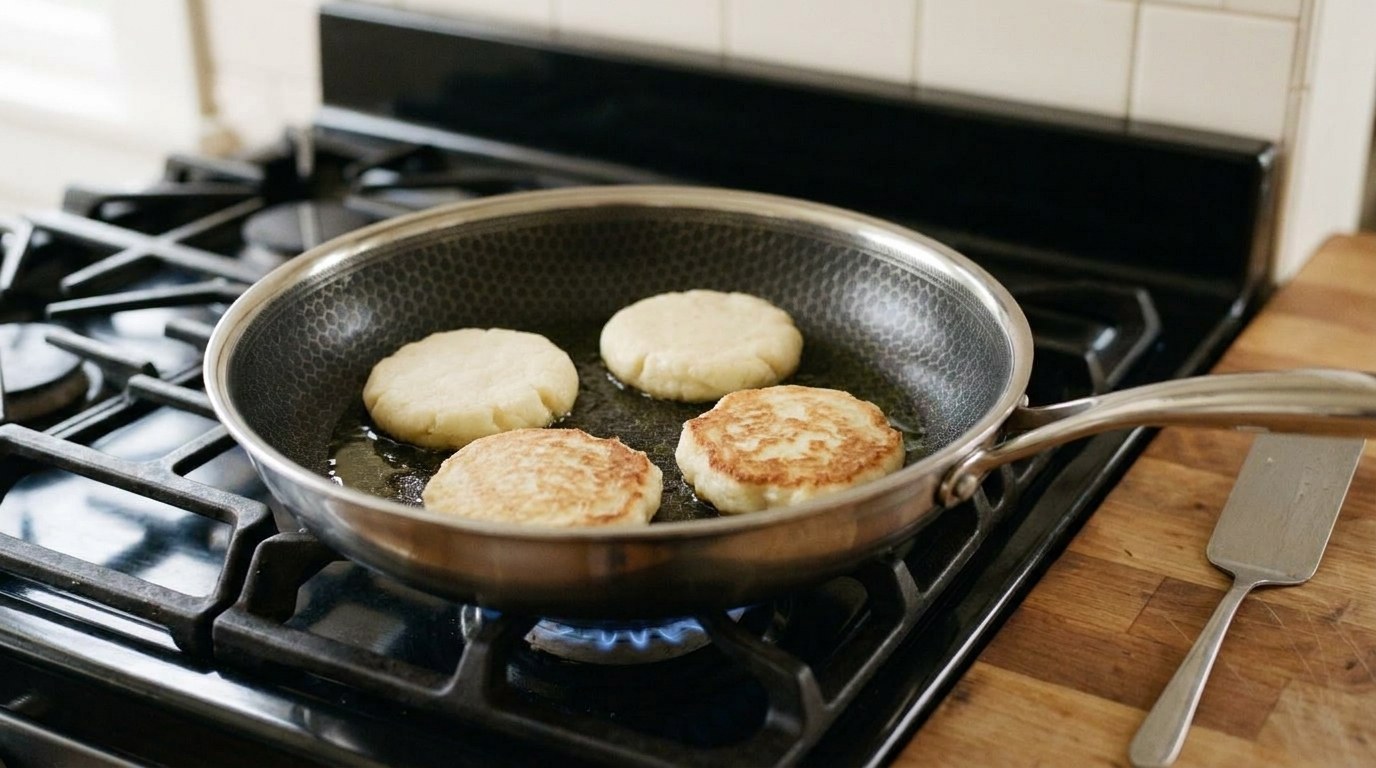
British baked beans also belong in a full breakfast next to Gordon Ramsay scrambled eggs, bacon, sausages and grilled tomato, and they make a fast lunch piled into a baked potato with grated cheddar. On the American side, a bowl of these spicy beans works at a cookout beside Gordon Ramsay fried chicken and a crisp Gordon Ramsay coleslaw.
Storing, Freezing and Reheating Homemade Baked Beans
Homemade baked beans keep for 3 to 4 days in the fridge and freeze well for about 3 months, and they often taste better the next day. Cool them and refrigerate within 2 hours of cooking, the window the USDA Food Safety and Inspection Service gives for leftovers, which it also advises eating within 3 to 4 days, freezing for longer storage and reheating to 165°F (74°C). Freeze the beans flat in zip-top bags so they thaw quickly in the fridge overnight.
Expect the beans to be much thicker when cold. The starch in the sauce and in the beans themselves retrogrades as it chills, setting the sauce almost solid. Reheat it gently in a saucepan with a splash of water, stirring, until it is bubbling and loose again. If you made a big pot of Gordon Ramsay's homemade baked beans for the weekend, they will see you through the week of breakfasts, and the heavy pans that make this kind of cooking easier are in the Gordon Ramsay cookware guide.
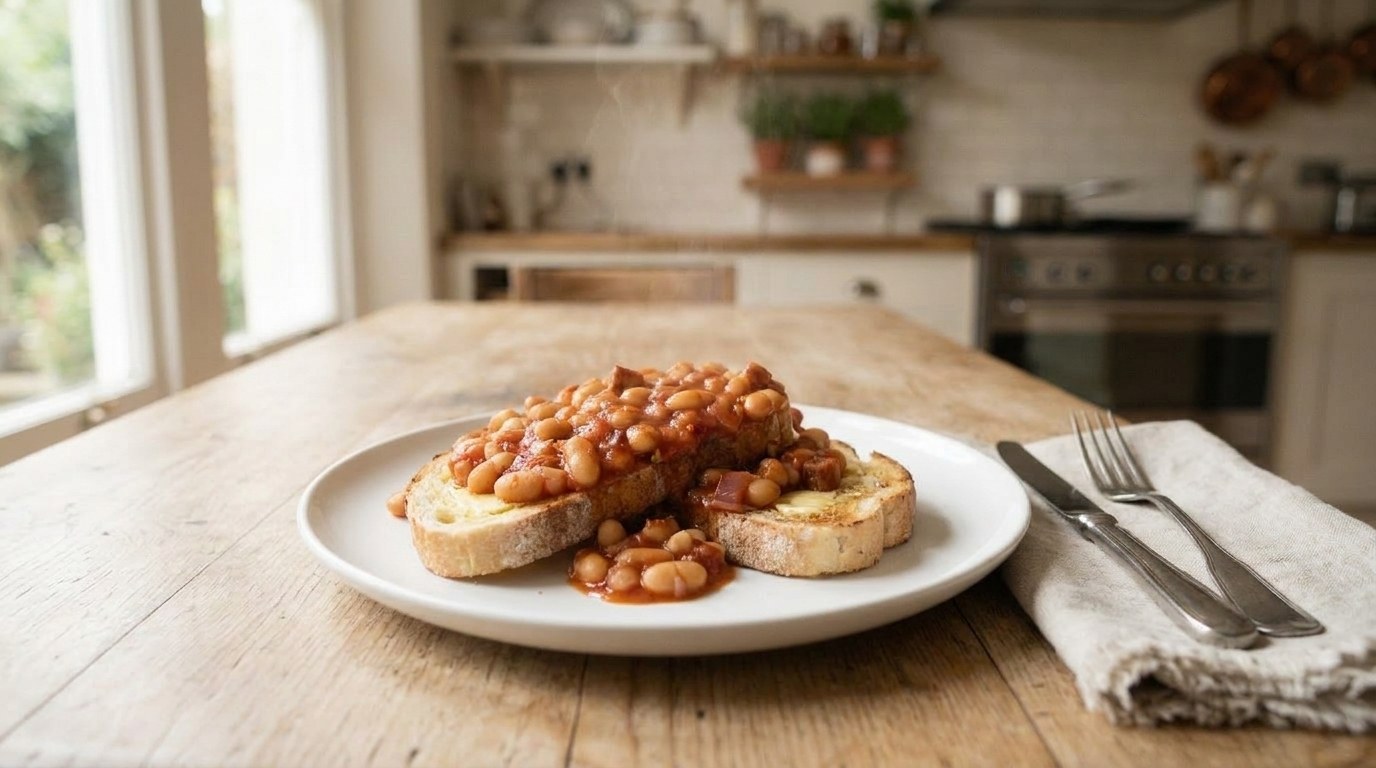
Gordon Ramsay Homemade Baked Beans with Potato Cakes
Ingredients
Beans
- 1 1/3 cups dried navy (haricot) beans, about 9 oz / 250 g (or two 15-oz cans navy beans, drained and rinsed)
- 1 tbsp table salt, for the soaking water
- 2 quarts cold water, for soaking, plus fresh water for cooking
Ramsay's spicy tomato sauce
- 1 tbsp olive oil
- 4 oz pancetta or smoked bacon, diced (about 115 g)
- 1 red chilli or jalapeño, finely chopped with its seeds
- 1 medium red onion, finely diced
- 2 garlic cloves, crushed
- 1 tbsp light brown sugar
- 2 tbsp cider vinegar (or dry sherry)
- 2 tsp Worcestershire sauce
- 1 1/2 cups passata (strained tomatoes), about 14 oz / 400 g
- 1/2 cup reserved bean cooking liquid (or water with canned beans)
- salt and freshly ground black pepper, to taste
To serve
- 4 thick slices rustic bread, toasted and buttered (or the potato cakes below)
Ramsay's potato cakes (optional)
- 2 cups cold leftover mashed potato (about 1 lb potatoes)
- 1 tbsp butter, softened
- 1/2 cup all-purpose flour, plus extra for dusting
- 2 tbsp olive oil, for frying
Instructions
- The night before, stir the table salt into the 2 quarts of cold water in a large bowl, add the dried beans (picked over and rinsed) and soak at room temperature for 8 to 24 hours, at least 5. Skip this step with canned beans.
- Drain and rinse the beans, put them in a large pot and cover with fresh water by 2 inches. Bring to a boil and boil hard, uncovered, for 10 minutes, skimming off the foam. Lower the heat and simmer gently, partly covered, for 45 to 75 minutes, topping up with water to keep them covered, until a bean mashes easily between two fingers. Scoop out 1/2 cup of the cooking liquid, then drain.
- Heat a 3-quart saucepan over medium heat, add the olive oil and then the pancetta. Cook for 5 to 6 minutes, stirring, until the fat has rendered and the pancetta is browned and crisp at the edges.
- Add the chilli, red onion and garlic and cook for 6 to 8 minutes, stirring often, until the onion is soft and just starting to color at the edges.
- Stir in the brown sugar for 1 minute until it melts into the onions. Pour in the cider vinegar, scrape up the browned bits from the bottom of the pan and let it bubble until almost gone, about 1 minute, then stir in the Worcestershire sauce.
- Add the passata and the reserved cooking liquid, bring to a simmer and stir in the beans. Simmer uncovered for 20 to 30 minutes (10 to 15 for canned beans), stirring now and then, until the sauce is thick enough to coat the beans. For a creamier sauce, crush a spoonful of beans against the side of the pan and stir them back in.
- Meanwhile, make the potato cakes if using: mix the mashed potato, butter, flour and a pinch of salt and pepper into a soft dough. Divide into 8 pieces and pat each into a round about 3 inches across and 3/4 inch thick on a floured board. Heat a skillet over medium heat, add the olive oil and fry the cakes for 3 to 4 minutes a side until golden.
- Taste the beans and season with salt and plenty of black pepper, loosening with a splash of water if they have thickened too much. Spoon over the buttered toast or the potato cakes and serve hot.
Notes
Homemade Baked Beans FAQs
The questions that come up most: does Gordon Ramsay make his own baked beans, what beans British baked beans use, how British and American baked beans differ, whether you have to soak dried beans, why homemade baked beans stay hard, whether you can make them in a slow cooker, whether they freeze, and whether British baked beans are actually baked.
Does Gordon Ramsay make his own baked beans?
Yes. He cooked homemade baked beans with potato cakes as the breakfast dish in the first episode of Gordon Ramsay's Home Cooking (Channel 4, 2013). He fries pancetta with a chopped red chilli, adds onion, garlic and brown sugar, deglazes with cider vinegar, adds Worcestershire sauce and pureed tomatoes, then stirs in haricot (navy) beans.
What beans are used for British baked beans?
Navy beans, which are called haricot beans in the UK. They are small, white and oval, hold their shape when cooked and turn creamy inside. Cannellini or Great Northern beans are good substitutes; they are a little larger.
What is the difference between British and American baked beans?
British baked beans come in a light, savory tomato sauce with only a little sugar and no meat, and are eaten at breakfast or on toast. American baked beans, Boston-style especially, are slow-baked with molasses or brown sugar and salt pork or bacon, so they are darker, thicker and much sweeter.
Do you have to soak dried beans for baked beans?
Soaking is strongly advised. It hydrates the beans so they cook evenly, and the FDA recommends soaking dried beans at least 5 hours, discarding the water and boiling them in fresh water. Overnight in salted water gives the softest skins. If you forget, bring the beans to a boil in salted water, boil 2 minutes, then cover and leave them for an hour before draining.
Why are my homemade baked beans still hard?
Usually because the tomato, sugar, vinegar or molasses went in before the beans were tender. Acid, sugar and calcium all firm the pectin in beans and stop them softening. Very hard water and old dried beans slow cooking too. Cook the beans until one mashes easily between two fingers, then add them to the sauce.
Can you make baked beans from dried beans in a slow cooker?
Not from raw. The FDA warns that slow cookers often stay around 167°F (75°C), too cool to destroy the natural bean lectin, and some illness outbreaks were traced to slow-cooked beans. Soak the beans, boil them hard for at least 10 minutes on the stove, then they can finish in a slow cooker.
Can you freeze homemade baked beans?
Yes. Cool them, then freeze in airtight containers or flat freezer bags for about 3 months. Thaw in the fridge overnight and reheat gently with a splash of water until bubbling hot, 165°F. In the fridge they keep 3 to 4 days.
Are British baked beans actually baked?
No. Tinned British baked beans are steam-cooked in the can, and homemade ones like Ramsay's simmer on the stovetop. The name comes from the older American method of baking beans slowly in a covered pot in the oven.

About the Author
John Siracusa is the founder of Hell’s Kitchen Recipes. He focuses on technique-first, reproducible home cooking and researches recipes & kitchen equipment from published food science and professional chef methods since 2016.