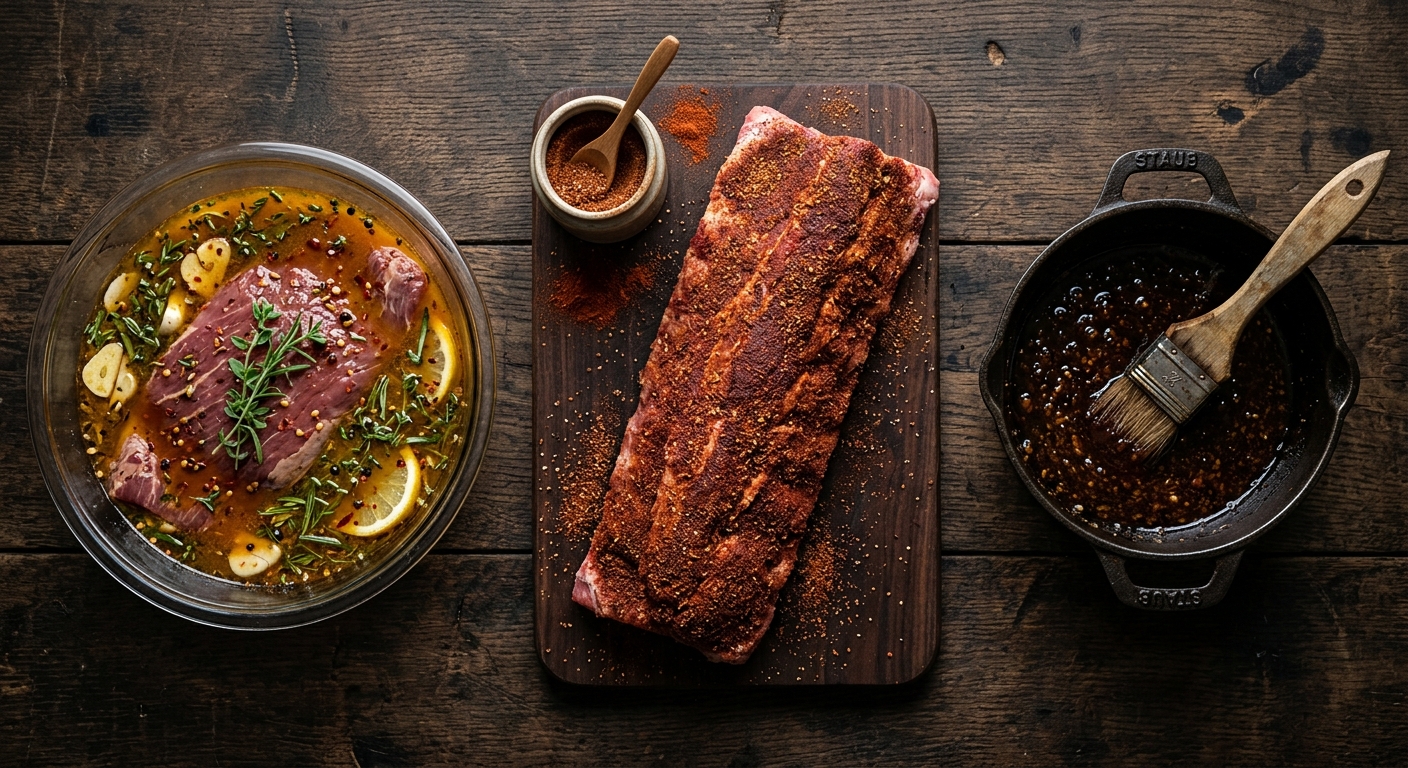
Chicken fricassee is the French braise in which chicken pieces are seared, then cooked through in a small amount of liquid that becomes the sauce, and Gordon Ramsay's version, from his Ultimate Home Cooking, is the brown one: bone-in thighs and drumsticks browned hard skin side down, smoked bacon lardons, halved button mushrooms, crushed garlic, bay, rosemary and thyme, a splash of brandy, and a 25-minute simmer in chicken stock. There is no cream, no egg yolk and no flour in it; the sauce is the reduced stock, thick with the chicken's own gelatin and the fat from the bacon. He serves it with sautéed potatoes tossed with herbs, and this page adds those, because the potatoes are half the point.
The guide covers what a fricassée is and how this one differs from the white classic, the sear, the bacon and mushroom stage and the brandy, the braise and the temperatures that decide it, the potatoes, and serving and leftovers. It sits in the site's recipes section with the other Ramsay chicken, the chicken cordon bleu, the roast chicken with chickpea stuffing and the Hell's Kitchen chicken recipes roundup, and the guide to jointing a chicken shows how to get the eight pieces from a whole bird.
What a Fricassée Is, and What Ramsay Changes
Fricassée sits between a sauté and a stew, and the classic French version is white. Escoffier's rule, written for veal and applied word for word to his chicken fricassée à l'ancienne, is that the meat is stiffened in butter without taking color, dusted with flour, moistened with white stock and cooked in that sauce with small onions and mushrooms, then finished with a liaison of egg yolks and cream.
"Fricassée differs from blanquette in this, namely, that the pieces of veal in the former are stiffened in butter without colouration… the meat and the garnish are cooked in the sauce, the leason of which is effected by means of egg-yolks and cream."
Auguste Escoffier, A Guide to Modern Cookery, the method his Fricassée de poulet à l'ancienne follows
Ramsay keeps the structure, sear then braise in the sauce with mushrooms, and reverses the color: the chicken is browned properly, the fat comes from smoked bacon rather than butter, brandy replaces the white wine, and the stock is reduced instead of thickened. It is closer to a pale coq au vin than to Escoffier's dish, and it is not a Cuban or Puerto Rican fricasé de pollo either, which is a tomato, olive and potato stew that shares only the name. The table sorts the versions people search for.
| Version | Fat and liquid | Thickener | Character |
|---|---|---|---|
| Escoffier's fricassée à l'ancienne | Butter, white stock | Flour, then egg yolks and cream | Pale, rich, velvety |
| Ramsay's (this recipe) | Olive oil and smoked bacon, brandy, chicken stock | None; the stock reduces on the chicken's gelatin | Brown, savory, rustic |
| Coq au vin | Bacon, red wine, stock | Beurre manié or reduction | Deep red, wine-led |
| Cuban / Puerto Rican fricasé de pollo | Oil, tomato, wine or beer | Potatoes cooked in | Red, olives and capers, over rice |
The reason to choose Ramsay's over the classic is practical as much as flavor: without the liaison there is nothing to curdle, so the sauce can boil, sit, reheat and be made a day ahead, which a yolk-and-cream sauce cannot.
The Sear: Skin Down, Dry, and Not Crowded
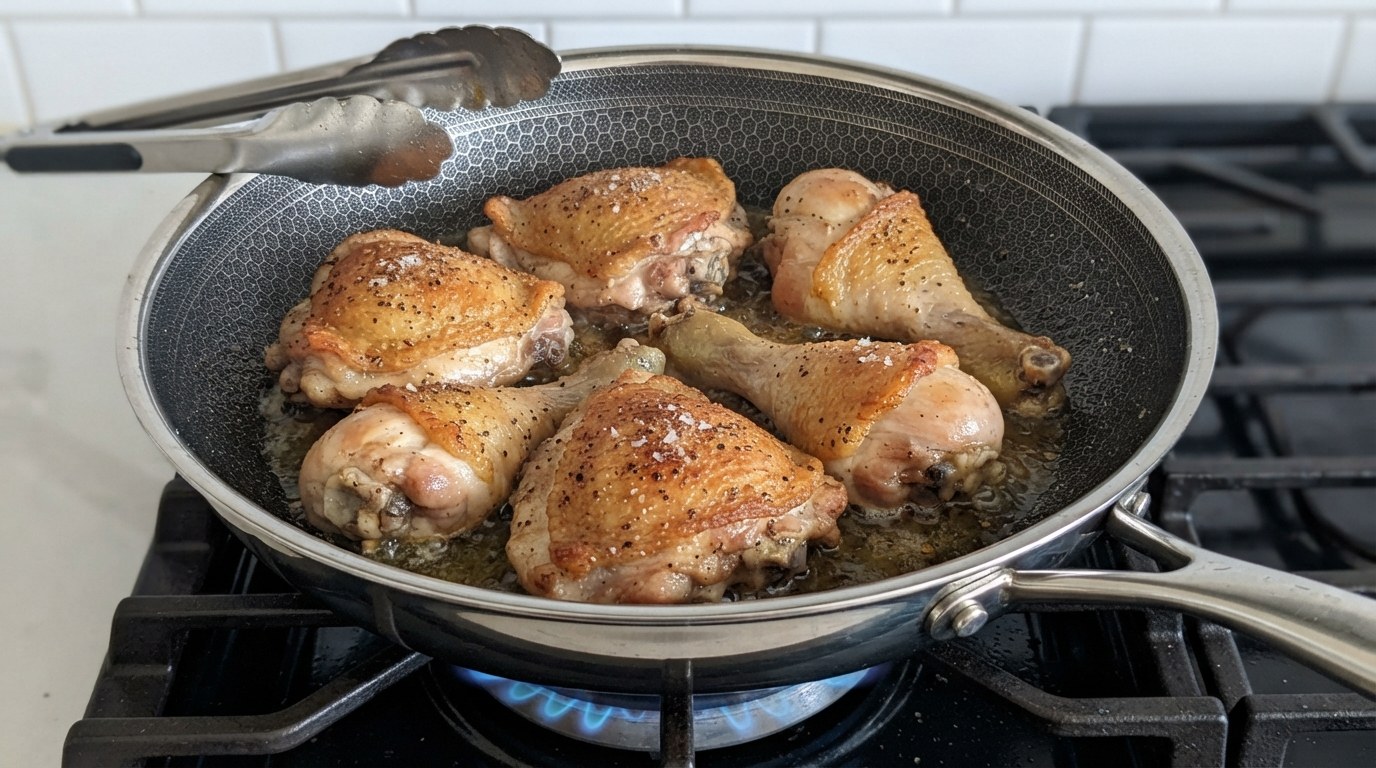
The chicken is seasoned, then laid skin side down in hot oil and left alone for 3 to 4 minutes, and the color it takes there is most of the flavor in the finished sauce. Ramsay's order in his MasterClass is hot pan, then oil, then the protein, and only when it sizzles; season the meat before it goes in, never after. Browning is the Maillard reaction between the skin's proteins and sugars, and it begins at about 284°F on a dry surface, which is why the skin is patted dry first and why a crowded pan fails: pieces packed edge to edge release their water faster than the pan can drive it off, the surface stalls at 212°F and the chicken steams grey instead of browning. Two batches in a wide pan, or one in a large casserole, is the rule the card states.
Skin down first also renders. Chicken skin is a sheet of fat under a thin layer of protein, and 3 to 4 minutes over medium heat melts enough of that fat into the pan to cook the lardons and mushrooms in, so the recipe's two tablespoons of oil are all the added fat it needs. Thighs go in skin down; drumsticks are turned as they color. The browned bits left on the pan, the fond, are dissolved later by the brandy and the stock, which is why the sauce made in the same pan tastes of roast chicken and one made in a clean pot does not.
| Ingredient | What it does | Do not substitute with |
|---|---|---|
| Chicken thighs 4 and drumsticks 4, bone in, skin on | Dark meat with the collagen that thickens the sauce and forgives the braise | Boneless breast (dry, and no gelatin) |
| Thick smoked bacon, ¼ lb, in strips | Rendered fat and smoke; the classic's butter, made savory | Thin streaky bacon (burns, no lardon bite) |
| White button mushrooms, ½ lb, halved | Earthiness; they give up their water, then brown | Canned mushrooms |
| Garlic 4 cloves, crushed, plus bay, rosemary, thyme | The aromatics of a French braise; garlic and rosemary come out at the end | Garlic powder, dried mixed herbs |
| Brandy, 1½ oz (3 tbsp) | Deglazes the fond; grape-and-oak sweetness | Skipping the deglaze entirely |
| Chicken stock, 1¾ cups | The braising liquid and, reduced, the sauce | A bouillon cube (salty, no gelatin) |
| Waxy potatoes, 1½ lb, for the sautéed potatoes | Hold their shape through parboiling and frying | Russets (collapse when boiled) |
Bacon, Mushrooms, Garlic and the Brandy
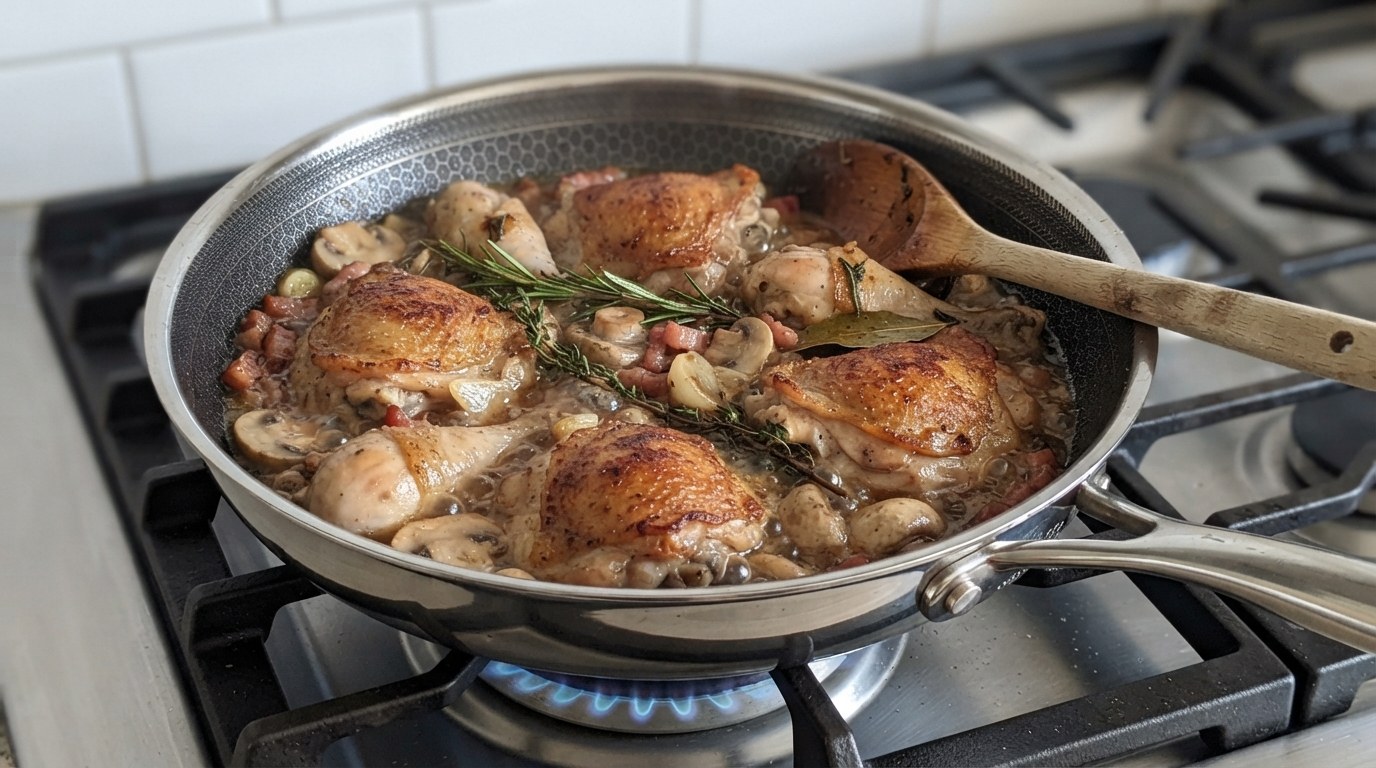
Once the chicken is turned, the lardons, garlic, mushrooms and herbs go into the rendered fat around it and cook together for a few minutes. The bacon renders and crisps at its edges; the mushrooms, which are mostly water, first release it and then, once the pan has driven that water off, begin to brown in the fat. Halving rather than slicing them keeps them meaty through the 25-minute braise. The garlic cloves are crushed whole, not chopped, so they perfume the sauce without burning and can be lifted out at the end with the rosemary and the bay leaf, which is what the card says to do; rosemary left in through a reduction turns the sauce resinous.
The brandy goes in next, the heat goes up, and it bubbles hard for a minute while a spoon scrapes the fond loose, then the heat comes back down for two or three minutes more. Ramsay flames it; the flame is optional and changes nothing in the pan, because a flambé burns only the vapor above the surface and dies once that vapor drops below about 3 percent alcohol, leaving more than two-thirds of the spirit behind. Simmering removes more, though not all of it. The USDA nutrient retention table puts alcohol retention at about 40 percent after 15 minutes of simmering and 35 percent after 30, so the 25 minutes of braising that follow leave a trace of the brandy in the sauce, which is part of its flavor. For a dish with no alcohol at all, deglaze with a splash of the stock instead and skip the brandy; the fond dissolves either way.
The Braise: Stock, Time and the Dark Meat
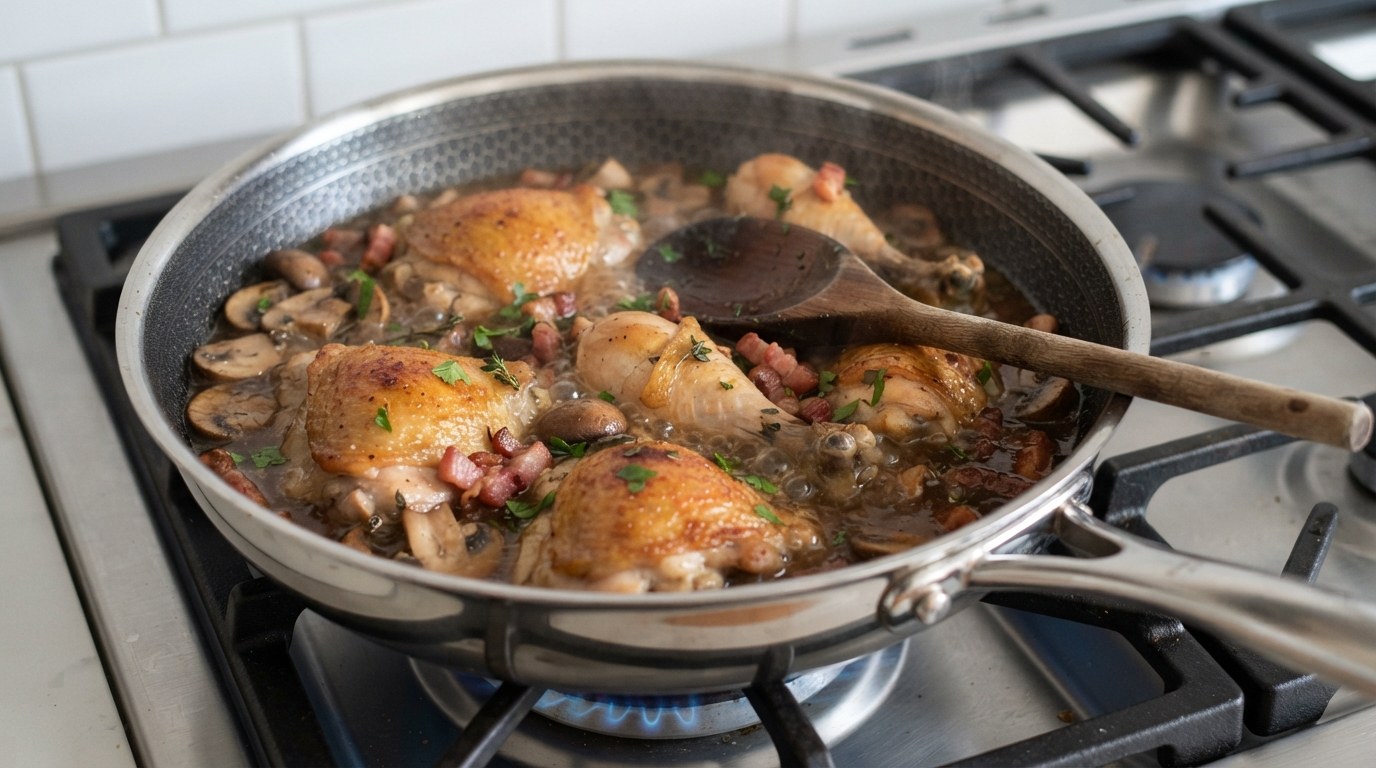
The stock goes in to come about halfway up the chicken, and the pan simmers gently, uncovered for 10 minutes and then covered for 15, until the chicken is cooked through. The recipe uses thighs and drumsticks and not breast for a reason that is chemistry, not preference. Dark meat carries connective tissue, and the collagen in it converts to gelatin from about 154°F, a process that needs time above that temperature, so a thigh held at a simmer for 25 minutes turns tender and silky and its gelatin leaks into the stock and thickens it; that is the thickener Ramsay's recipe does not list. A breast has almost no collagen, is done at 165°F, the USDA safe minimum for poultry, and dries out in the same 25 minutes because its lean muscle fibers keep contracting and squeezing out moisture past that point. Thighs pass 165°F early in the braise and only improve afterward.
Gently is the operative word. A rolling boil tightens the muscle fibers faster than the collagen can soften, and it emulsifies the bacon fat into the stock so the sauce turns cloudy; a simmer, a few bubbles breaking the surface, does neither. Keeping the pan uncovered for the first 10 minutes lets the stock reduce; covering it for the last 15 finishes the chicken in steam without reducing the sauce to a glaze. The skin, which was crisp after the sear, softens in the steam, and the card's optional step is the fix: lift the chicken onto a tray and put it under a hot broiler for 4 to 5 minutes while the pan goes back over medium-high heat to reduce the sauce until it coats a spoon. Check the thickest thigh with a thermometer, at the bone, if you are unsure; it should read well past 165°F.
| Stage | Number | What you see |
|---|---|---|
| Sear | 3 to 4 minutes skin down, medium heat, in batches | Deep golden skin, fat rendered |
| Bacon, garlic, mushrooms, herbs | 2 to 3 minutes in the rendered fat | Lardons crisping, mushrooms wet then browning |
| Brandy | 3 tbsp; 1 minute high, 2 to 3 minutes medium | Fond dissolved, sharp smell gone |
| Braise | 1¾ cups stock; 10 minutes uncovered, 15 covered | Gentle bubbles; chicken past 165°F |
| Broil (optional) | 4 to 5 minutes | Skin crisp again |
| Reduce | Medium-high, 3 to 5 minutes | Sauce coats a spoon; garlic, rosemary, bay removed |
The Herby Sautéed Potatoes
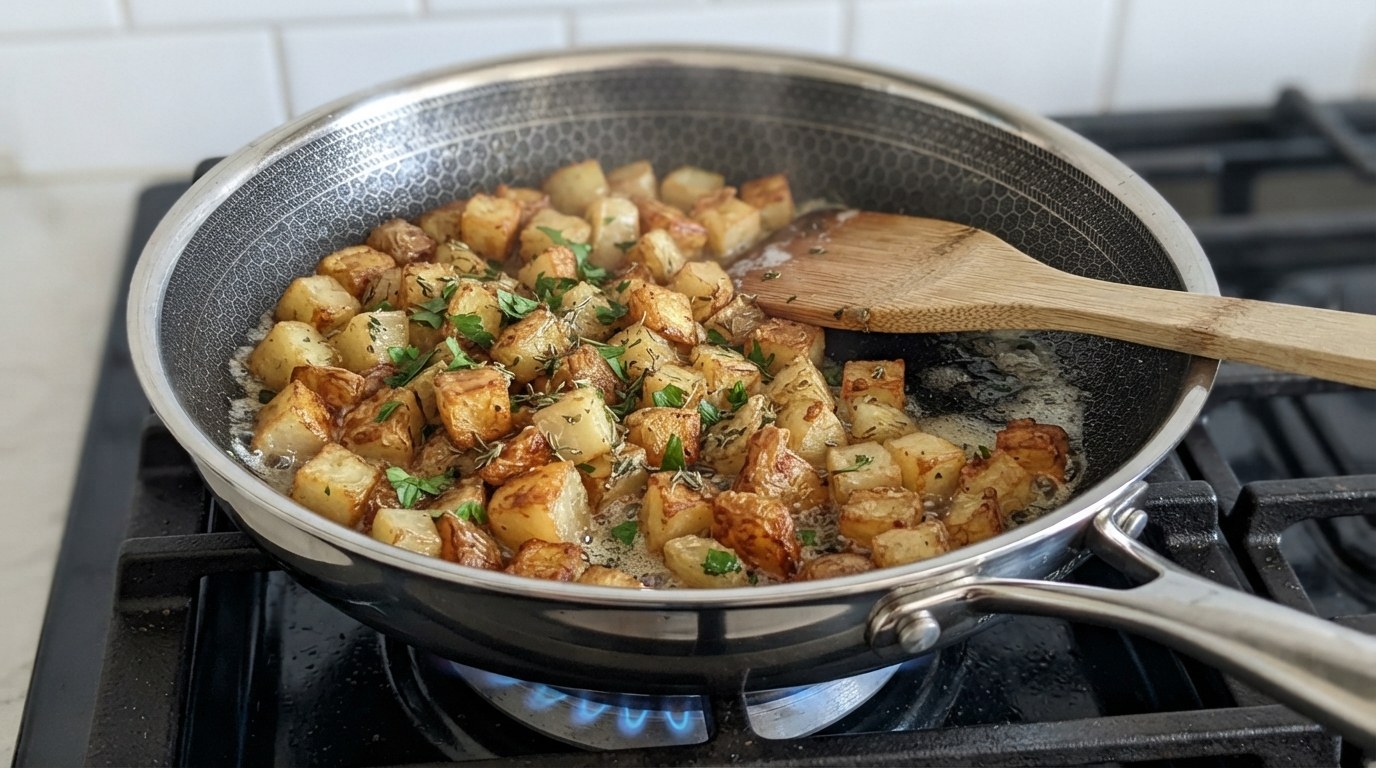
Ramsay serves the fricassée with potatoes parboiled, then fried with shallot, garlic, rosemary and thyme, and the choice of potato decides whether they hold together. Waxy varieties, red-skinned, fingerling or a yellow Yukon Gold, are lower in starch and hold their shape through boiling; russets are high in starch and low in moisture and fall apart in liquid, which is why the University of Arkansas extension guide files them under mash and fries and files the waxy ones under any dish where the potato has to stay a potato. Cut them into inch-wide chunks, boil in salted water 6 to 8 minutes until a knife meets slight resistance, drain, and leave them in the colander a minute to steam dry.
The steaming matters: a wet potato dropped into fat spits and stays pale, because its surface cannot climb past 212°F until the water is gone, and only a dry surface browns. Fry the chunks in a tablespoon of goose fat or butter with a tablespoon of oil over medium-high heat, turning now and then, for 12 to 15 minutes, adding the sliced shallot, crushed garlic and herb sprigs for the last 5 so they soften without burning. Season with salt at the end and toss with chopped parsley. They can be parboiled hours ahead and fried while the chicken braises.
Serving, Wine and Leftovers
Spoon the mushrooms, lardons and sauce into warm shallow bowls, set the chicken on top with the potatoes alongside, and scatter thyme leaves or chopped parsley over. Crusty bread for the sauce and a green salad with a sharp vinaigrette are the only additions it wants. A white Burgundy or an unoaked Chardonnay stands up to the bacon and mushrooms; a light red, Beaujolais or Pinot Noir, suits the brown sauce as well. For a fricassée that leans toward the classic, stir a quarter cup of crème fraîche into the reduced sauce off the heat; at 30 percent fat it will not curdle, where sour cream or milk would.
The dish keeps three days refrigerated and freezes well for three months, because there is no cream or yolk to split; the sauce sets to a soft jelly from the gelatin and melts back on reheating. Reheat it gently in a covered pan over low heat until the chicken is hot through, and crisp the skin under the broiler again if you want it. The potatoes are best fried fresh; reheated ones can be crisped in a hot pan with a little more fat. For a version that skips the braise entirely, the cordon bleu and the roast chicken on this site take the same jointed bird in different directions.
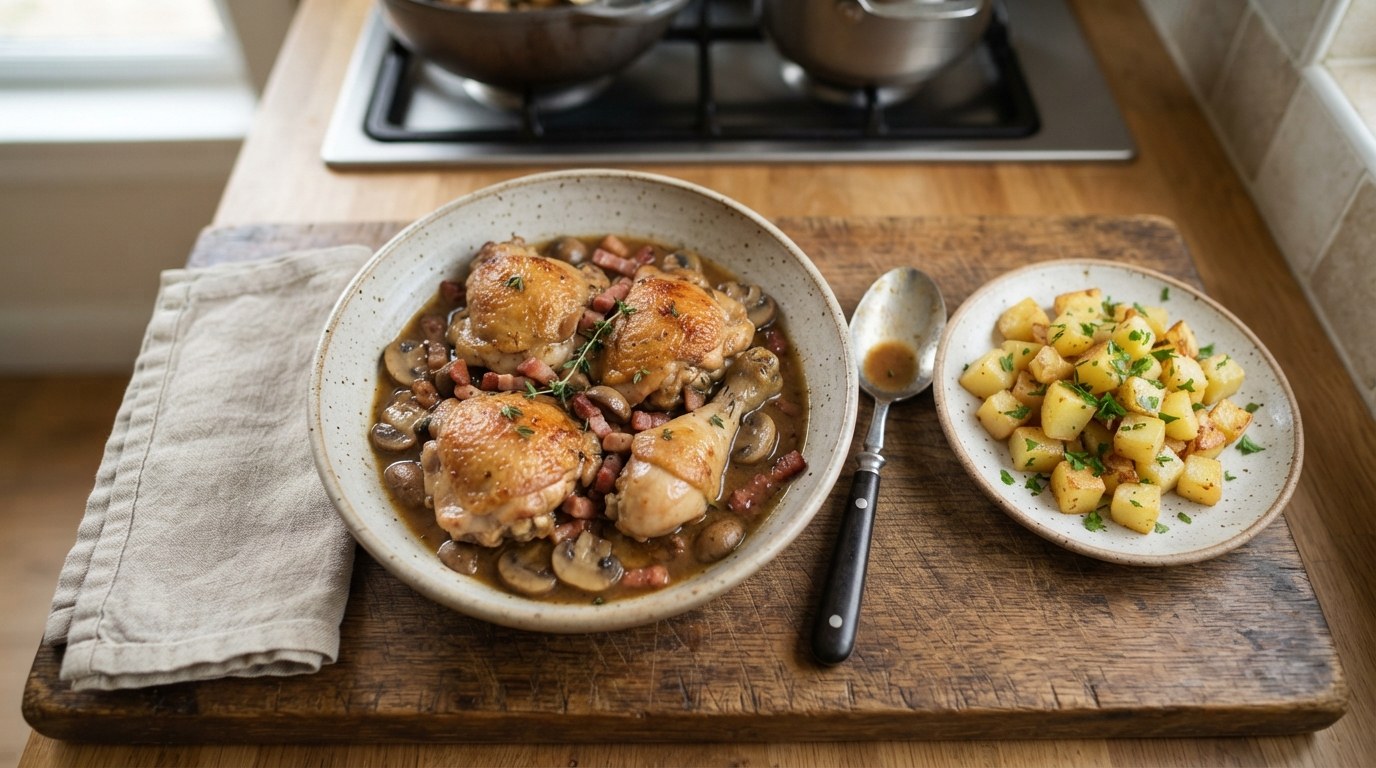
Chicken Fricassee (Gordon Ramsay's Brandy and Bacon Version) with Herby Sautéed Potatoes
Ingredients
- For the fricassee
- 2 tbsp olive oil
- 4 chicken drumsticks, skin on
- 4 bone-in chicken thighs, skin on
- ¼ lb thick-cut smoked bacon, cut into strips (lardons)
- 4 cloves garlic, peeled and crushed
- ½ lb white button mushrooms, halved
- 1 bay leaf
- 2 sprigs rosemary
- 2 sprigs thyme, plus thyme leaves or chopped parsley to serve
- 3 tbsp brandy (1½ oz)
- 1¾ cups chicken stock
- sea salt and freshly ground black pepper
- For the herby sautéed potatoes
- 1½ lb waxy potatoes (Yukon Gold, red or fingerling), cut into 1-inch chunks
- 1 tbsp goose fat or unsalted butter
- 1 tbsp olive oil
- 1 shallot, thinly sliced
- 2 cloves garlic, crushed
- 2 sprigs each rosemary and thyme
- 2 tbsp chopped flat-leaf parsley
Instructions
- Put the potatoes in a pan of cold salted water, bring to a boil and cook until a knife meets slight resistance, 6 to 8 minutes. Drain and leave them in the colander to steam dry.
- Heat the 2 tablespoons of oil in a large, heavy sauté pan or casserole over medium heat. Pat the chicken dry and season it with salt and pepper. Lay the pieces in the hot pan, thighs skin side down, without crowding (two batches if needed), and cook undisturbed until deep golden, 3 to 4 minutes, turning the drumsticks as they color.
- Turn the chicken over and add the lardons, garlic and mushrooms, stirring them into the fat around the chicken. Add the bay leaf, rosemary and thyme and cook 2 to 3 minutes, until the bacon begins to crisp and the mushrooms release their liquid.
- Pour in the brandy, raise the heat to medium-high and let it bubble hard for 1 minute, scraping up the browned bits, then lower the heat to medium and simmer 2 to 3 minutes.
- Pour in the stock and bring to a gentle simmer. Cook uncovered over medium-low heat for 10 minutes, then cover and cook 15 minutes more, until the chicken is cooked through (well past 165°F at the bone).
- While the chicken braises, heat the goose fat and oil in a large skillet over medium-high heat and fry the potatoes, turning now and then, until golden and crisp at the edges, 12 to 15 minutes, adding the shallot, garlic and herb sprigs for the last 5 minutes. Season with salt and pepper, discard the herb sprigs and toss with the parsley.
- Optional, for crisp skin: lift the chicken onto a baking tray and put it under a hot broiler for 4 to 5 minutes. Meanwhile raise the heat under the pan to medium-high and reduce the sauce until it coats a spoon, 3 to 5 minutes. Discard the garlic, rosemary and bay leaf and season the sauce.
- Spoon the sauce with the mushrooms and bacon into warm bowls, set the chicken on top, add the potatoes alongside and scatter with thyme leaves or parsley.
Notes
Chicken Fricassee FAQs
The questions that come up most: what chicken fricassee is, how it differs from coq au vin and from the Cuban fricasé de pollo, whether it is supposed to have a white cream sauce, whether chicken breast works, how to make it without brandy or wine, whether it can be made ahead or frozen, what to serve with it, and why the sauce is thin.
What is chicken fricassee?
A French braise in which chicken pieces are seared and then cooked in a small amount of liquid that becomes the sauce. The classic version is white, with the chicken kept pale, cooked in stock thickened with flour and finished with egg yolks and cream; Gordon Ramsay's version browns the chicken, adds smoked bacon, mushrooms, garlic, herbs and brandy, and reduces the stock with no cream or flour.
What is the difference between chicken fricassee and coq au vin?
The liquid. Coq au vin braises the chicken in red wine with bacon and mushrooms and comes out deep red and wine-led; a fricassée braises it in stock, white in the classic and pale brown in Ramsay's, with brandy rather than wine. The structure, sear then braise in the sauce with mushrooms and bacon, is the same, which is why the two taste like cousins.
Is chicken fricassee supposed to have a white cream sauce?
The classic French one is, finished with egg yolks and cream as Escoffier describes. Ramsay's is a brown fricassée with no cream at all; the sauce is the reduced stock, thickened by the gelatin from the thighs and drumsticks. To move it toward the classic, stir a quarter cup of crème fraîche into the reduced sauce off the heat.
Can I make chicken fricassee with chicken breast?
You can, but it is a different dish. Breast has almost no collagen, so it adds no body to the sauce, and it is done at 165°F and dries out during a 25-minute braise. If you must, use bone-in, skin-on breasts, halve them, and add them for only the last 12 to 15 minutes of the braise; thighs and drumsticks are the recipe for a reason.
Can I make it without brandy or wine?
Yes. Deglaze the pan with a splash of the stock instead and go straight to the braise; the brandy's main job is dissolving the browned bits, which stock does as well. Note that simmering does not remove all the alcohol from a dish that uses it, about 40 percent remains after 15 minutes, so an alcohol-free fricassée has to leave the brandy out rather than cook it longer.
Can chicken fricassee be made ahead or frozen?
Yes, and it improves overnight. Because Ramsay's version has no cream or egg yolk, nothing splits: it keeps three days in the refrigerator, where the sauce sets to a soft jelly, and freezes for three months. Reheat gently in a covered pan over low heat and crisp the skin under the broiler. Fry the potatoes fresh.
What do you serve with chicken fricassee?
Ramsay serves it with sautéed potatoes tossed with shallot, garlic, rosemary, thyme and parsley, which this page includes. Mashed potatoes, buttered noodles, rice or crusty bread all take the sauce, with a green salad or green beans alongside. A white Burgundy or a light red such as Beaujolais suits the bacon and mushrooms.
Why is my fricassee sauce thin?
Either the stock had no gelatin, a bouillon cube instead of real stock, or the sauce was not reduced after the braise. Lift the chicken out, put the pan over medium-high heat and reduce the liquid until it coats a spoon, 3 to 5 minutes. A teaspoon of unflavored gelatin bloomed in a spoon of water fixes a thin boxed stock; a teaspoon of cornstarch slurried in cold water is the fast fix.

About the Author
John Siracusa is the founder of Hell’s Kitchen Recipes. He focuses on technique-first, reproducible home cooking and researches recipes & kitchen equipment from published food science and professional chef methods since 2016.