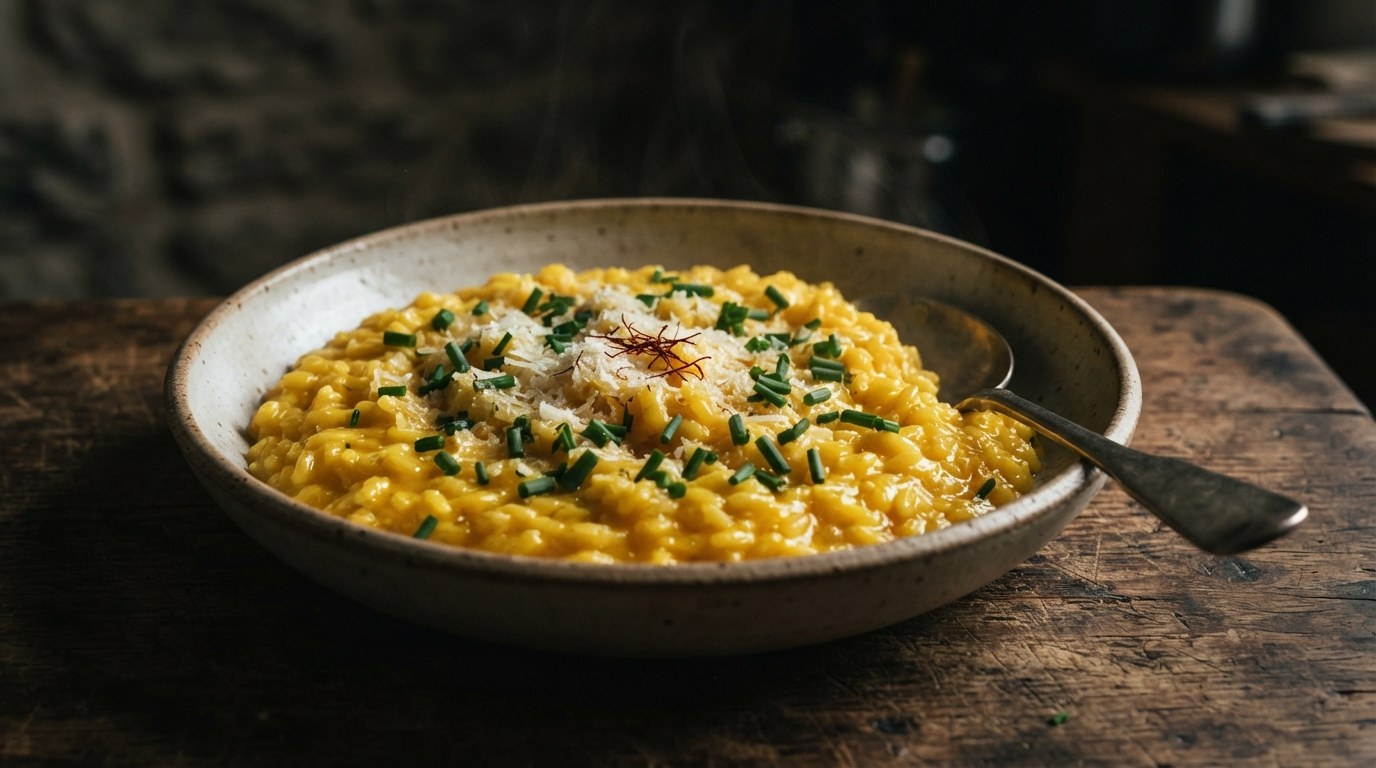
Gordon Ramsay gets color into risotto the way Italian cooks have for centuries: with pigment-dense ingredients dropped in at exactly the right moment. Saffron turns the rice a deep marigold gold, roasted beetroot stains it magenta, blanched spinach or peas make it spring green, and a spoonful of squid ink turns it glossy black. The whole game is timing. Each pigment behaves differently in a hot, wet pan, so when you add it decides whether the color stays vivid or fades to a muddy beige by the time you serve.
What Color Should Risotto Be?
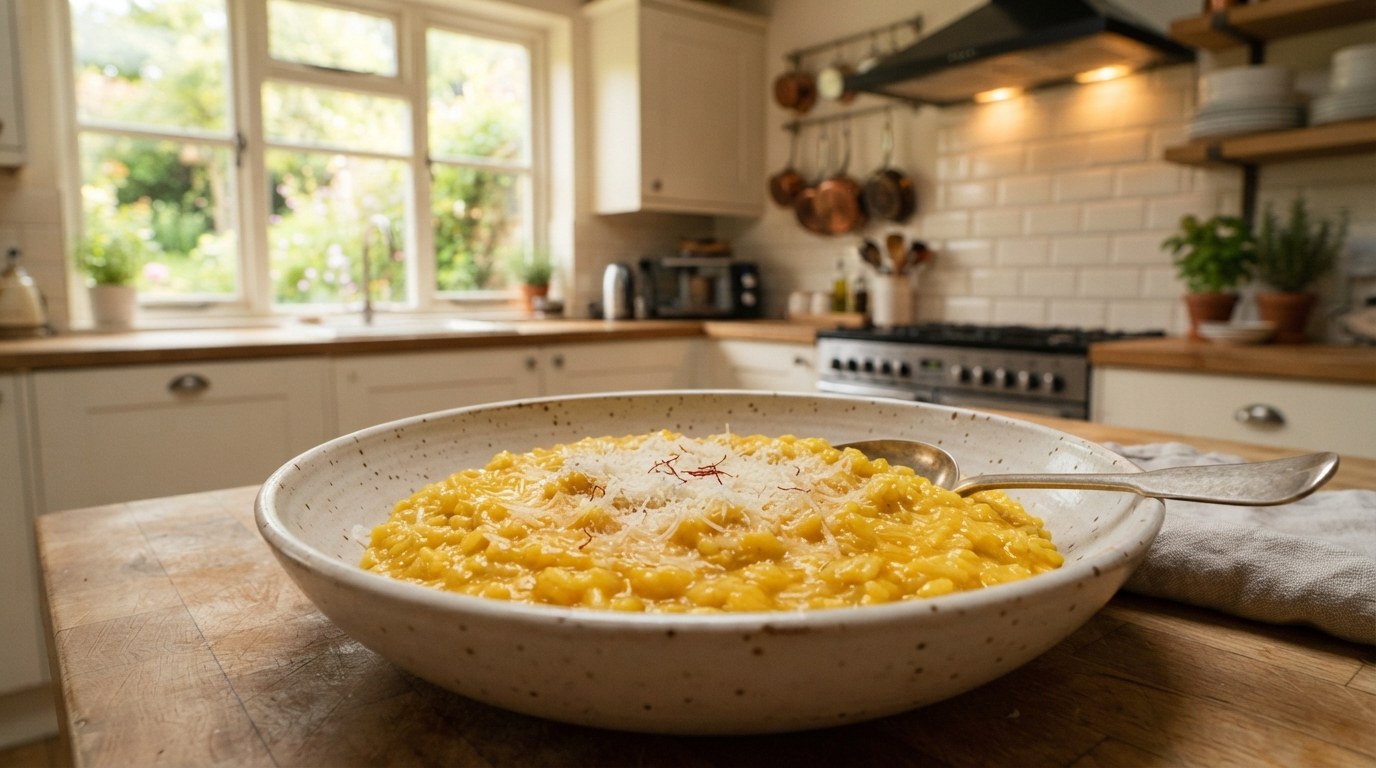
A plain risotto should be pale ivory to soft cream, not stark white and not yellow. That base color comes from the finish, not the rice. Beating cold butter and grated Parmesan into the starchy rice off the heat, the step Italians call the mantecatura, emulsifies fat and starch into a glossy, off-white sauce that coats every grain. Add a colored ingredient and that creamy base carries the pigment evenly across the whole dish.
Risotto alla milanese, the saffron version, is the famous exception, reading a warm golden yellow rather than cream. That gold comes from crocin, saffron’s main pigment, which is water-soluble and dissolves straight into the cooking liquid and then into the rice. If your risotto turns grey or beige instead of holding a color, either the pigment has broken down from too much heat or you started with over-browned rice, whose flat brown muddies whatever you add next. For a look at the classic yellow done properly, Serious Eats breaks down risotto alla milanese step by step.
How Gordon Ramsay Builds Color Into His Risotto
Ramsay builds color on top of a solid base method, not instead of one. He starts organized, with everything measured and within reach, because risotto moves fast once the rice hits the pan. Onion or shallot softens in olive oil, then Arborio or Carnaroli rice goes in dry and toasts for a minute or two before any liquid follows.
That toasting step, the tostatura, is worth the extra minute. The hot fat coats each grain and the surface starch firms up, so the rice releases its starch slowly instead of all at once, which is what keeps the finished dish creamy rather than gluey. A splash of white wine goes in next and cooks off, then hot stock follows one ladle at a time. Keeping the stock hot is the part people skip: cold stock drops the pan below a simmer and stalls the cook, so the outside of each grain overcooks while the center stays hard.
Stirring is where the creaminess actually comes from. Arborio is loaded with amylopectin, a branching starch, and gentle, regular stirring rubs it off the grains into the liquid, thickening it into that silky sauce. You do not need to stir every second, whatever most recipes tell you; you need to stir often enough to work the starch loose. The rice is ready at al dente, when the outer layer has softened but the core still has a faint bite. Starch granules only take on water and swell above about 150°F (65°C), so an undercooked grain stays chalky and an overcooked one bursts and slumps into mush.
Color slots into this base. Saffron blooms in a little warm stock or wine early, so the gold has time to spread through the pan. Fragile green and beet purees go in at the very end, off the heat, where they keep their color instead of cooking out. If you want the restaurant version of the base, our Hell’s Kitchen risotto guide walks through Ramsay’s full method and five variations built on it.
The Best Ingredients for a Colorful Risotto
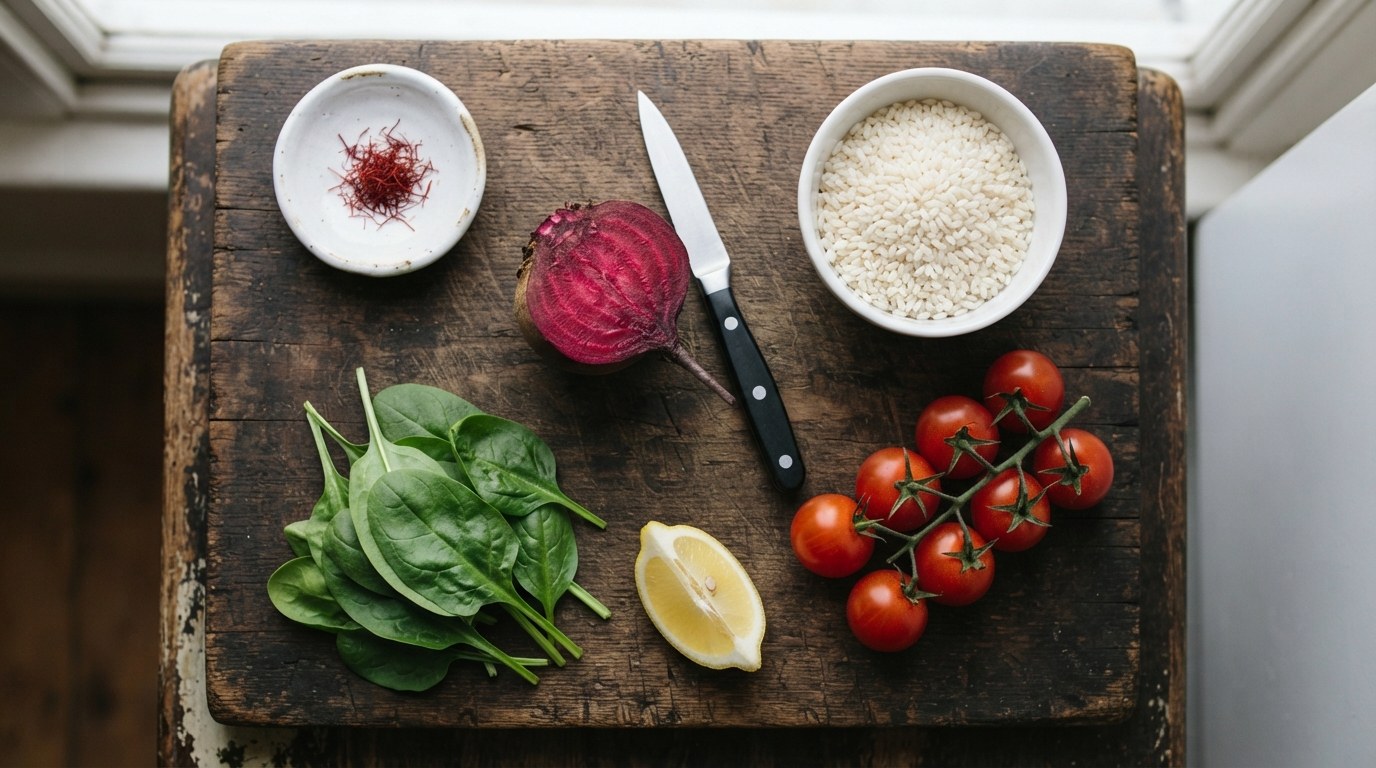
The most reliable way to color risotto is with real food, not drops of dye. Each ingredient below brings its own natural pigment, its own flavor, and its own rule for when it should go in the pan.
| Ingredient | Color it gives | Natural pigment | How to prep | When to add |
|---|---|---|---|---|
| Saffron | Golden yellow | Crocin (water-soluble carotenoid) | Steep a pinch of threads in warm stock or wine | Early, so the color spreads |
| Roasted beetroot | Magenta / fuchsia | Betalains (heat-sensitive) | Roast and puree, or grate fine | At the end, off the heat |
| Spinach or basil | Bright green | Chlorophyll (heat- and acid-sensitive) | Blanch, shock in ice water, puree | At the very end, off the heat |
| Peas or asparagus | Green | Chlorophyll | Blanch briefly, keep whole or halve | Last few minutes |
| Roasted red pepper or tomato | Orange-red | Lycopene and carotenoids (heat-stable) | Puree or use paste | Early or mid; holds up to heat |
| Butternut squash or pumpkin | Warm orange | Carotenoids (heat-stable) | Roast and mash, or dice small | Early to mid |
| Squid ink | Glossy black | Melanin | Stir a sachet into the wine | Early, with the wine |
The pattern is simple once you see it. The fat-soluble, heat-stable pigments, the carotenoids in saffron, squash, tomato and pepper, can take the heat and go in early. The fragile ones, chlorophyll in greens and betalains in beets, fade if they cook too long, so they go in last. The Guardian’s rainbow of risottos is a good tour of how far the idea stretches.
How Much Saffron for Risotto, and When to Add It
For a risotto that serves four, a good pinch of saffron is plenty: roughly 15 to 20 threads, or about a quarter teaspoon once crushed. Saffron is potent, and too much tips the flavor bitter and medicinal, so start small and add more next time if you want it deeper. Bloom the threads first, in a few tablespoons of warm (not boiling) stock or wine, for 10 to 20 minutes before you cook.
That soak is what makes the color even. It dissolves the crocin, the water-soluble pigment that carries both the gold and saffron’s honeyed aroma, so it disperses through the rice instead of sitting in streaks. Stir the bloomed liquid in early, once the rice is toasted and the first few ladles of stock have gone in, and the whole pan takes on the color as it cooks. Saffron is the world’s costliest spice by weight for a reason, and Britannica’s entry on saffron explains where those threads (and that pigment) actually come from.
Beyond Saffron: Beetroot, Green, and Black Risotto
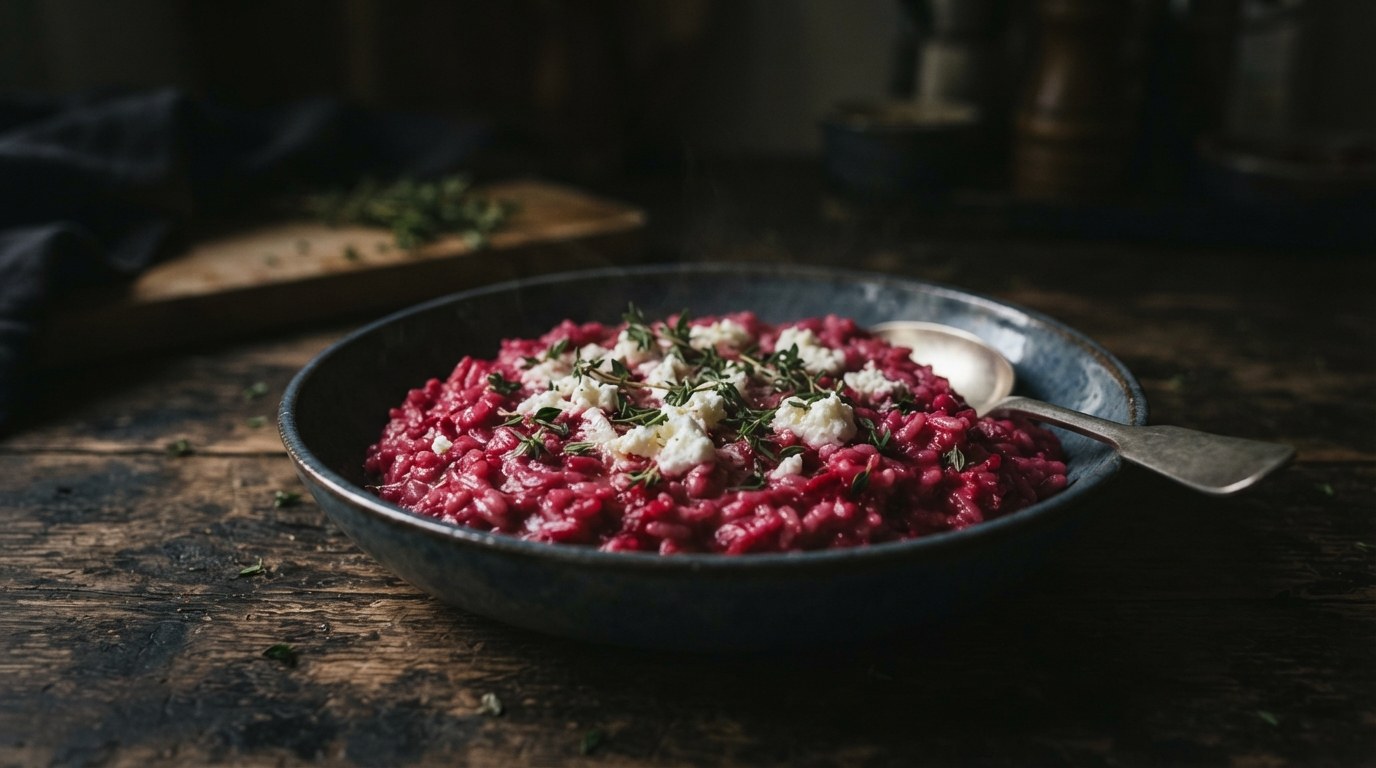
Once you understand the timing, the whole color wheel opens up. Beetroot gives the most dramatic result of all. Roast it, puree it, and fold it into the finished rice off the heat for a shocking magenta, then set it off with crumbled goat cheese. Its pigment, betalain, is heat-sensitive, so cooking it hard drags the color down to a dull brown-pink. Add it at the last second and it stays electric.
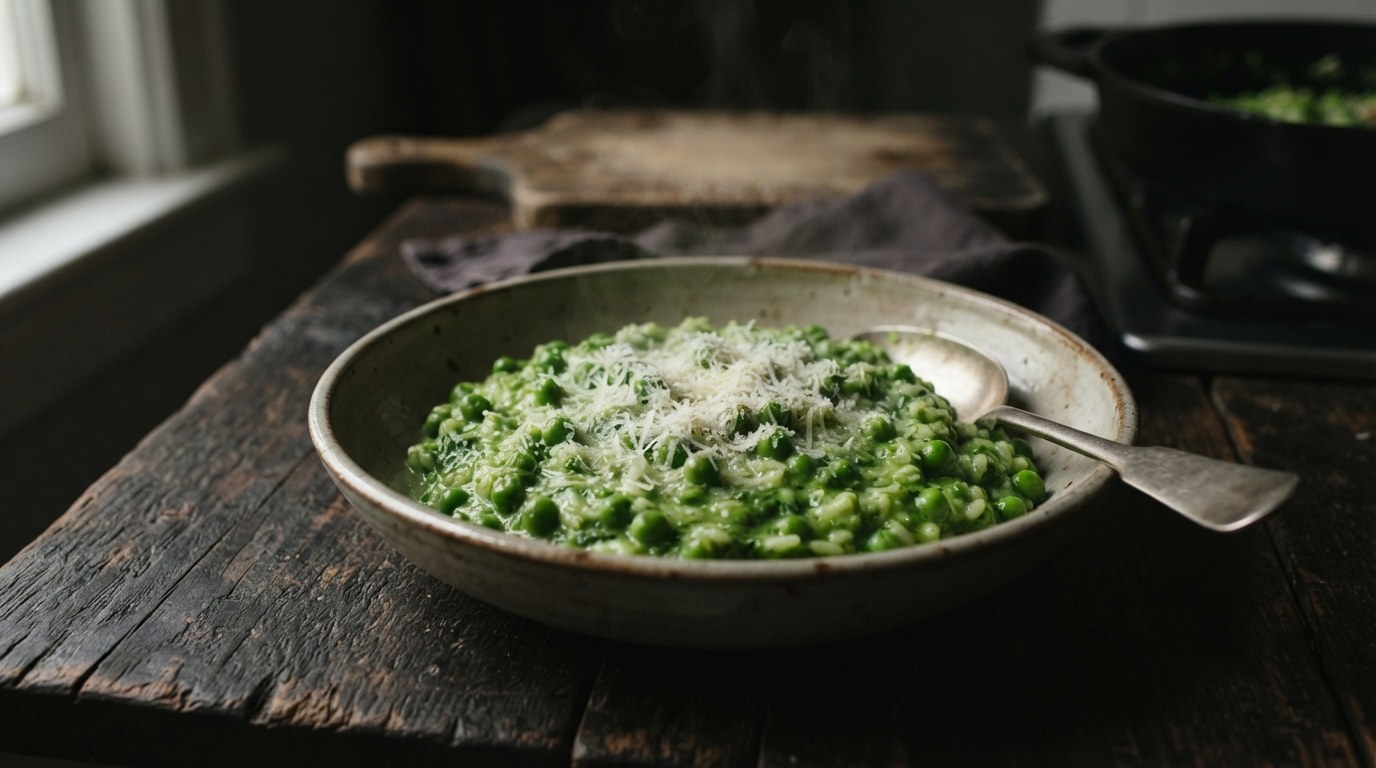
Green risotto works on the same principle. Blanch spinach, basil or peas, shock them in ice water to lock the color, then puree and stir in at the very last moment. Chlorophyll breaks down into a drab olive when it meets heat and acid for too long, which is exactly why a green risotto simmered with the puree stirred in early comes out the color of pond water. Add it late and it stays spring-bright. A gentler route to green is to build the dish around whole green vegetables, the way our creamy asparagus risotto does, or to lean into a warm orange with the roasted squash in our butternut squash and lobster risotto. For black risotto, squid ink goes in with the wine at the start, dispersing through the whole pan and bringing a briny, mineral note along with the color.
Common Colorful Risotto Mistakes to Avoid
Most color problems come down to heat and timing, not the ingredient itself. Sidestep these five and the color takes care of itself.
- Cooking the color too long. Chlorophyll and betalains both fade with prolonged heat, so blanch and shock your greens and fold beet or green purees in off the heat, not at the start.
- Overcooking the rice. Past al dente, the starch granules swell until they burst and the grains slump into mush. Taste often and pull the pan while the core still has a faint bite. Our mushroom risotto guide has more on hitting that texture.
- Adding cold stock. It drops the pan out of a simmer and cooks the rice unevenly, chalky in the middle and blown out at the edges. Keep the stock hot on a back burner.
- Skipping the toast, or scorching it. A light toast helps the grains release starch slowly; browning them too far muddies any color you add afterward.
- Not blooming the saffron. Dropped in dry, the threads never fully release their crocin, so the gold comes out patchy instead of even.
Colorful Risotto FAQs
The questions that come up most: what color risotto should be, what makes risotto alla milanese yellow, how much saffron to use, and how to keep a green risotto from turning dull.
What color should risotto be?
A plain risotto should be pale ivory to soft cream. That base color comes from the mantecatura, the final step of beating butter and Parmesan into the starchy rice, which emulsifies into a glossy off-white sauce. Colored versions layer a pigment on top of that creamy base, so saffron risotto reads golden, beetroot risotto magenta, and spinach risotto green.
What color is risotto alla milanese, and why?
It is a warm golden yellow. The color comes from saffron, whose main pigment, crocin, is water-soluble. When the saffron blooms in the cooking liquid, the crocin dissolves and spreads through the rice, tinting the whole dish gold rather than leaving colored specks.
How much saffron do you need for risotto?
For four servings, a good pinch is plenty: about 15 to 20 threads, or roughly a quarter teaspoon crushed. Saffron is strong, and too much turns bitter, so it is better to start light and build up over time.
When should you add saffron to risotto?
Early, and bloomed first. Steep the threads in a few tablespoons of warm stock or wine for 10 to 20 minutes, then stir that liquid in once the rice is toasted and the first ladles of stock have gone in. Blooming dissolves the water-soluble crocin so the gold spreads evenly instead of streaking.
How do you keep green risotto from turning dull?
Blanch the greens, shock them in ice water, puree them, and stir the puree in at the very end off the heat. Chlorophyll degrades to a dull olive when it sits in heat and acid, so the less time the green spends cooking, the brighter it stays.
What vegetables add the most color to risotto?
Roasted beetroot for magenta, spinach or peas for green, roasted red pepper or tomato for orange-red, and butternut squash or pumpkin for a warm orange. Heat-stable carotenoids (squash, tomato, pepper) can go in early; heat-sensitive beets and greens go in at the end.
Can you make risotto colorful without artificial food coloring?
Yes, and it is the better way. Every color here comes from a natural pigment already in the food: crocin from saffron, betalains from beetroot, chlorophyll from greens, carotenoids from squash and tomato, and melanin from squid ink. Real ingredients bring flavor along with the color, which dye cannot.

About the Author
John Siracusa is the founder of Hell’s Kitchen Recipes. He focuses on technique-first, reproducible home cooking and researches recipes & kitchen equipment from published food science and professional chef methods since 2016.