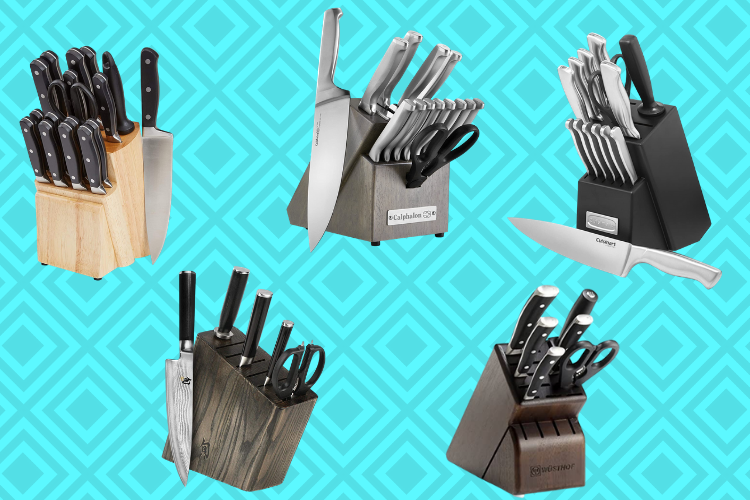
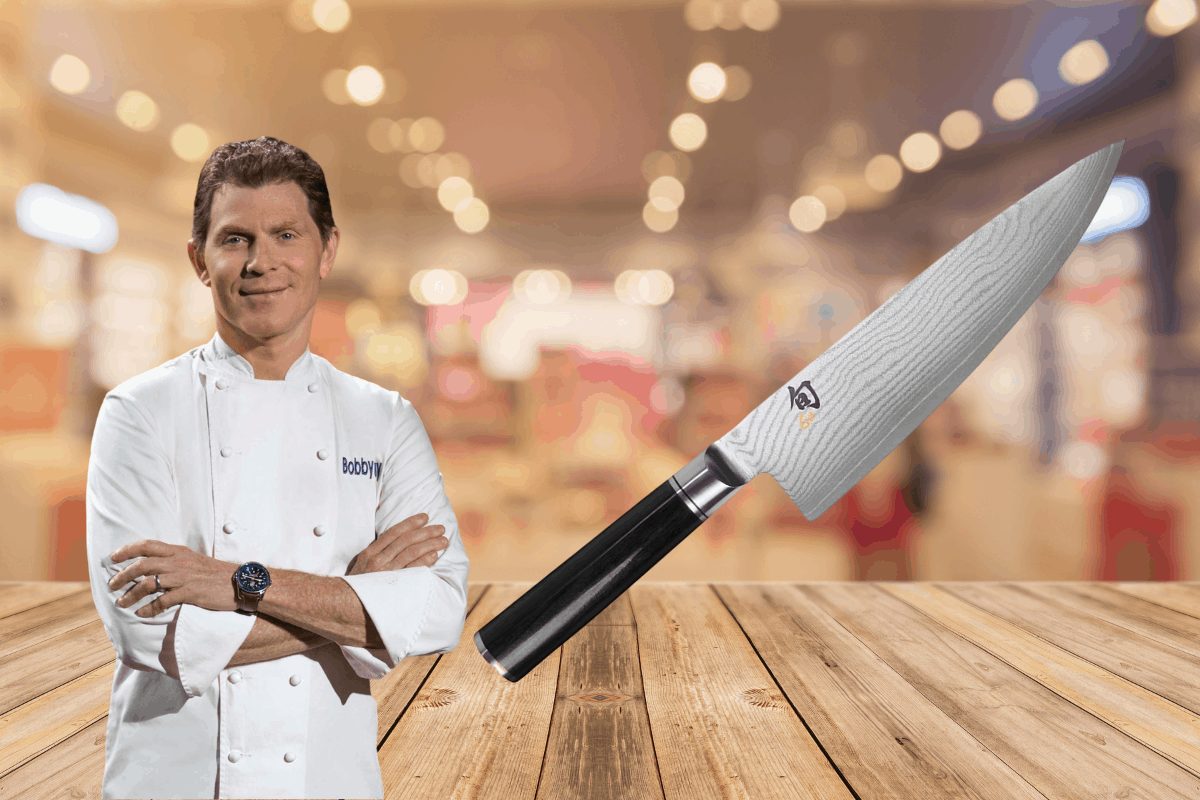
A good kitchen knife set gives you the three blades you actually use — chef’s knife, paring knife, bread knife — plus the supporting pieces that round out a full prep station. The wrong set gives you 16 knives in a block where half of them never leave the slot. This kitchen equipment guide compares five knife sets across steel type, hardness, edge geometry, and real-world value to help you pick the right one for how you actually cook.
Hell’s Kitchen Recipes is reader-supported. When you buy through links on this page, we may earn a commission. We only recommend products we would use ourselves.
We cross-referenced manufacturer-published specifications, owner reviews across Amazon and cooking forums, and steel data from published metallurgical references. No sets were sent to us for testing. For individual knife recommendations, our Henckels brand evaluation and Gordon Ramsay knife guide cover single-blade picks in detail.
Best Kitchen Knife Sets Compared (2026)
| Set | Pieces | Steel | HRC | Origin | Best For |
|---|---|---|---|---|---|
| Wüsthof Classic | 15 | X50CrMoV15 | ~58 | Solingen, Germany | Best overall |
| Zwilling Professional S | 16 | High Carbon No Stain | ~57 | Solingen, Germany | Best German alternative |
| Shun Classic | 6 | VG-MAX + Damascus | ~60–61 | Seki City, Japan | Best Japanese |
| Calphalon Self-Sharpening | 15 | HC Stainless | ~56 | China | Best mid-range |
| Chicago Cutlery Malden | 16 | Stainless Steel | ~55 | China | Best budget |
Wüsthof Classic 15-Piece — Best Kitchen Knife Set Overall

★★★★½ (334 reviews)
The Wüsthof Classic 15-piece is forged in Solingen, Germany from X50CrMoV15 high-carbon stainless steel. Each blade is a single piece of metal from tip to butt — full tang, triple-riveted handle, no weak points. The factory edge is set to 14 degrees per side using Wüsthof’s Precision Edge Technology (PEtec), which is sharper than the 15-degree standard most German manufacturers use.
At 58 HRC on the Rockwell hardness scale, the steel balances edge retention with toughness. It holds an edge through weeks of daily use and does not chip on bone or frozen food the way harder Japanese steels can. According to Wüsthof’s manufacturing page, every Classic blade goes through 40 production steps before leaving the Solingen factory.
The set includes an 8-inch chef’s knife, 8-inch bread knife, 6-inch utility, 3.5-inch paring, kitchen shears, honing steel, and six steak knives in an acacia wood block. The chef’s knife and bread knife alone justify the set — both are professional-grade tools that last decades with basic maintenance.
Why it wins: The deepest track record of any kitchen knife set. Wüsthof Classic has been the default recommendation from professional kitchens and culinary schools for over 50 years. The steel, balance, and edge geometry have not changed because they do not need to.
Zwilling Professional S 16-Piece — Best German Alternative

★★★★½ (242 reviews)
The Zwilling Professional S uses ice-hardened FRIODUR steel at approximately 57 HRC. The SIGMAFORGE process stamps each blade from a single piece of steel — different from Wüsthof’s forging method but producing a similar full-tang result. The bolster runs the full length of the handle, which adds weight forward of the pinch grip.
Sixteen pieces include the core trio (chef’s, paring, bread), plus utility knives, steak knives, shears, and a honing steel. The three-rivet polymer handle is comfortable for long prep sessions. According to Zwilling’s product line page, the Professional S series is their most popular line worldwide.
Why it ranks here: If you want German steel quality and the Wüsthof price is too high, the Zwilling Professional S delivers 90 percent of the performance at a lower price point. The main trade-off is a slightly softer steel (57 vs 58 HRC) which means marginally more frequent honing.
Shun Classic 6-Piece — Best Japanese Knife Set

★★★★½ (400 reviews)
The Shun Classic 6-piece is built around a VG-MAX steel core with 34-layer Damascus cladding on each side. The edge is ground to 16 degrees per side — steeper than the German sets, which means a sharper initial edge that cuts with less resistance. Hardness is 60 to 61 HRC, harder than any German set on this list.
The trade-off with harder steel is brittleness. VG-MAX at 61 HRC can chip if you twist the blade laterally or use it on frozen food. These knives reward precise, controlled cuts. If you rock-chop aggressively, German steel handles the abuse better. If you push-cut cleanly and value sharpness over toughness, the Shun Classic is the pick.
Six pieces in a slim block: 8-inch chef’s, 6-inch utility, 3.5-inch paring, bread knife, kitchen shears, and honing steel. The PakkaWood handles are comfortable and moisture-resistant. The set costs less than either German option because you get 6 pieces instead of 15 or 16 — but every piece is a knife you will actually use.
Calphalon Self-Sharpening 15-Piece — Best Mid-Range

★★★★½ (2,536 reviews)
The Calphalon Classic Self-Sharpening set has ceramic sharpeners built into the knife block slots. Every time you pull a knife out or slide it back in, the edge passes over the sharpener. It does not replace proper sharpening with a whetstone, but it keeps the edge serviceable between professional sharpenings.
for 15 pieces, this set covers every task a home kitchen needs. The steel is softer than the German and Japanese options (~56 HRC), which means it dulls faster but is also easier to sharpen. The labeled handles are a nice touch — you can see which knife is which without pulling it out of the block.
Best for: Home cooks who want a complete set at a reasonable price and do not want to think about maintenance. The self-sharpening block does the minimum for you.
Chicago Cutlery Malden 16-Piece — Best Budget Knife Set

★★★★½ (1,951 reviews)
The Chicago Cutlery Malden is the entry point for a real knife set. Stainless steel at approximately 55 HRC — the softest on this list — with a taper-grind edge. It dulls faster than the German and Japanese options, but it also costs a tenth of the price.
The built-in block sharpener works the same way as the Calphalon’s. Sixteen pieces give you a full knife drawer from day one. If you are outfitting your first kitchen or replacing a 10-year-old set from a department store, this is the right starting point. Upgrade the chef’s knife to a Henckels or Zwilling individual blade when you are ready, and keep the rest of the set for daily tasks.
German Steel vs. Japanese Steel — Which Is Right for You
| Factor | German (Wüsthof, Zwilling) | Japanese (Shun) |
|---|---|---|
| Hardness | 56 – 58 HRC | 60 – 61 HRC |
| Edge angle | 14 – 15° per side | 16° per side (thinner grind) |
| Cutting style | Rock-chop friendly | Push-cut and pull-cut |
| Chip resistance | High — handles lateral force | Lower — can chip on bone or frozen food |
| Sharpening frequency | Every 2 – 4 weeks with honing | Less often, but harder to sharpen when needed |
| Weight | Heavier, more forward balance | Lighter, more nimble |
| Price range (sets) |
Neither is objectively better. German steel forgives mistakes and handles rough tasks. Japanese steel rewards precision and feels sharper out of the box. Pick based on how you cook, not which sounds more impressive.
How We Evaluated These Knife Sets
We did not run lab tests or slice tomatoes on camera. We compared manufacturer-published steel specifications (alloy composition, HRC hardness, tang construction), cross-referenced owner reviews on Amazon and Reddit for patterns in edge retention and handle durability, and used published metallurgical data to contextualize the hardness and chip-resistance claims each brand makes.
Sets with fewer than 200 owner reviews or less than 12 months of availability were excluded. We weighted steel quality and the chef’s knife performance highest because that single blade handles 70 percent or more of kitchen prep work. Block design, steak knife inclusion, and bonus pieces were secondary factors.
Frequently Asked Questions
Common questions about choosing the best kitchen knife set, answered with specs and practical advice.
How many knives do you actually need?
Three: an 8-inch chef’s knife, a 3.5-inch paring knife, and a serrated bread knife. These three cover 95 percent of home kitchen prep. A set gives you those three plus supporting pieces — utility knives, steak knives, shears — that are nice to have but not requirements.
Is a knife set worth it?
If you cook daily and plan to keep the knives for 10+ years, yes. Wüsthof Classic and Zwilling Professional S sets use steel that holds an edge for weeks between honings and will outlast multiple budget sets. If you cook a few times a week, the Calphalon handles the job fine.
Can I put kitchen knives in the dishwasher?
No. The heat, detergent, and jostling against other items dull the edge and can damage handle materials. Hand wash with soap and water, dry immediately, and store in a block or on a magnetic strip. This applies to every knife set on this list regardless of price.
What is Rockwell hardness and why does it matter?
Rockwell hardness (HRC) measures how resistant the steel is to deformation. Higher HRC means the edge stays sharp longer but is more brittle. Lower HRC means the blade is tougher but dulls faster. German kitchen knives typically fall between 56 and 58 HRC. Japanese knives run 60 to 67 HRC. For home use, 56 to 61 HRC covers the practical range.
Should I buy a set or individual knives?
A set is cheaper per knife and gives you a block for storage. Individual knives let you pick the exact steel, weight, and handle style you prefer for each task. If you are starting from scratch, a set is more efficient. If you already have a chef’s knife you love, buy individual pieces to fill gaps.
Hell’s Kitchen Recipes is reader-supported. When you buy through links on this page, we may earn a commission. We only recommend products we would use ourselves.
This article is for informational purposes only. Prices and availability may change. Check the retailer for current pricing.