Strawberry Caprese with burrata isn’t traditional—Italy didn’t invent it in the 1950s—but it works. Sweet strawberries replace tomatoes, their brightness cutting through the cheese’s richness. Use ripe, firm berries: slice them ¼-inch thick. Chill the burrata until ready to serve—warm cheese collapses. Tear it over the fruit, not slice. Fresh basil is non-negotiable: 10 leaves per serving. Drizzle with aged balsamic reduction—thick enough to coat the back of a spoon. Olive oil? Extra virgin, yes, but don’t oversaturate. Salt brings it all together: flaky sea salt, applied last. Balance is the goal.
Recipe Snapshot
- Strawberry Caprese with burrata combines ripe strawberries, creamy burrata, fresh basil, and balsamic glaze for a sweet-savory balance.
- Use ripe, in-season strawberries sliced ¼-inch thick and serve at cool room temperature for the best flavor.
- Drizzle with balsamic glaze and sprinkle flaky sea salt just before serving to prevent sogginess and enhance taste.
- Fresh basil should be chiffonaded and added for aromatic freshness that cuts through the richness of burrata.
- Pair with grilled shrimp skewers for a smoky contrast, ideal for summer gatherings or elegant appetizer presentations.
Originated in Italy, 1950s
While most think of tomatoes when Caprese comes to mind, the salad’s roots run deep in postwar Italy, where simplicity met abundance in the 1950s.
Regional farmers, armed with ripe produce and fresh mozzarella, built dishes on what was immediate and honest—no waste, no fuss. The original Caprese relied on color, texture, and minimal seasoning: red tomato, white cheese, green basil—flag on a plate.
Farmers built Caprese from what was ripe, real, and ready—no waste, no fuss. Just the flag on a plate: tomato, mozzarella, basil.
It wasn’t crafted for trend; it served hunger with dignity. That ethos matters. When you plate food for others, honor that intent.
Use peak-season strawberries now, not for novelty, but continuity: they carry the same spirit. Local, in-season, uncluttered. Let each ingredient speak—don’t drown it.
Salt just before serving. Drizzle olive oil with control. Presentation follows purpose. This isn’t reinvention—it’s respect.
Recipe
A Strawberry Caprese Salad is a rejuvenating twist on the classic Italian Caprese, traditionally made with tomatoes, fresh mozzarella, and basil. By replacing tomatoes with ripe strawberries, this variation offers a sweet and savory combination that’s perfect for warm-weather dining, light lunches, or elegant appetizers. The natural acidity of the strawberries pairs beautifully with the creamy mozzarella, while fresh basil and a high-quality balsamic glaze improve the complete flavor profile.
This dish comes together quickly and requires only a few high-quality ingredients to shine. It’s essential to use fresh, ripe strawberries and top-grade mozzarella—preferably fresh mozzarella di bufala or on-the-vine mozzarella balls. The key is balancing the sweetness of the fruit with the saltiness of the cheese and the tang of the balsamic, creating a harmonious bite in every forkful.
Minimal prep and elegant presentation make this salad ideal for brunches, picnics, or as a starter at dinner parties.
- Ripe strawberries (1 lb), hulled and sliced
- Fresh burrata or mozzarella (8 oz), sliced or sub small balls
- Fresh basil leaves (1/4 cup), loosely packed
- Extra virgin olive oil (2 tbsp)
- Balsamic glaze (2–3 tbsp)
- Flaky sea salt (to taste)
- Freshly ground black pepper (to taste)
Arrange the sliced strawberries and mozzarella alternately on a serving platter or individual plates, layering them slightly overlapping for visual appeal. Tuck fresh basil leaves throughout the arrangement. Drizzle evenly with extra virgin olive oil and balsamic glaze. Finish with a light sprinkle of flaky sea salt and a twist of black pepper just before serving.
For the best flavor and texture, assemble the salad shortly before serving to prevent the strawberries from releasing too much juice and the mozzarella from becoming soggy. Use only ripe, in-season strawberries for peak sweetness.
If desired, a splash of balsamic vinegar can be reduced at home to make a thicker glaze. Avoid refrigerating the assembled salad, as cold temperatures dull the flavors—serve at cool room temperature instead.
Cooking Steps
Start by slicing heirloom strawberries to a clean half-inch thickness—this guarantees a balanced bite without losing structural integrity on the plate.
Arrange them in overlapping rounds, then tuck fresh basil leaves between the slices: the herb’s volatile oils will lift the fruit’s natural sweetness.
Top with torn burrata, a confident drizzle of balsamic glaze, and a whisper of flaky sea salt to tie the dish together.
Step 1. Slice Heirloom Strawberries
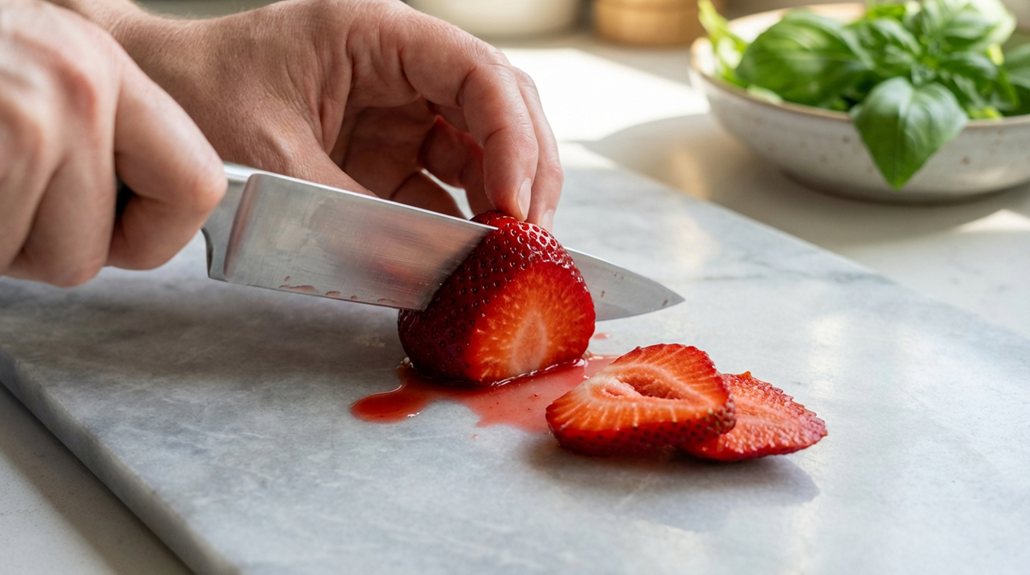
Grab those deep-red heirloom strawberries and lay them out on a clean board—moisture is the enemy here, so towel them dry if they’re damp.
A sharp chef’s knife—8 inches, well-honed—is non-negotiable: dull blades crush, not cut. Slice off the stem end, then cut each berry into ¼-inch thick rounds. Uniformity matters: even slices guarantee balanced texture and elegant presentation.
Work swiftly, but don’t rush—precision honors the fruit. If berries vary in size, halve the largest ones to match the thickness.
Place slices in a single layer on a tray; overlapping invites bruising. These aren’t garnishes—they’re the foundation of flavor. Bright, slightly tart, deeply aromatic, they’ll carry the dish.
Keep them at cool room temperature; refrigeration dulls taste and mutes fragrance. You’re not just prepping—you’re setting the stage for generosity. A beautiful salad reflects care, and care feeds more than hunger.
Step 2. Add Fresh Basil Leaves
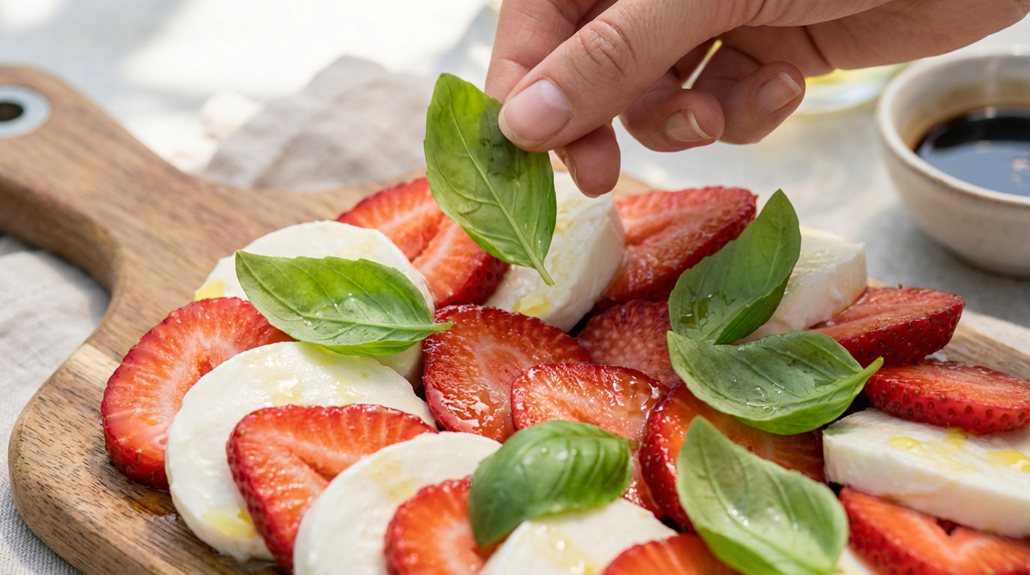
Pluck basil leaves with intention—size and freshness matter, and only the best cut. Large, vibrant leaves deliver the most aroma and visual appeal: small ones wilt too fast, damaged ones turn bitter.
Hold the stem gently—inspect for dark spots or brittleness—discard any that fail. Stack five to seven leaves at a time, roll them tightly like a cigar, then slice crosswise into thin ribbons: this technique—chiffonade—exposes more surface area, releasing flavor without chopping.
Scatter the ribbons evenly over the arranged strawberries and burrata. Don’t tuck them underneath—elevation guarantees every bite carries basil’s sweet, peppery note. Use within minutes of cutting—oxidation dulls both color and taste.
This isn’t garnish: basil pulls the dish together, bridging fruit and cheese with garden-fresh clarity. Guest plates should show balance—red, white, green—inviting and thoughtful.
When done right, one inhale before the initial bite says everything.

Step 3. Drizzle With Balsamic Glaze
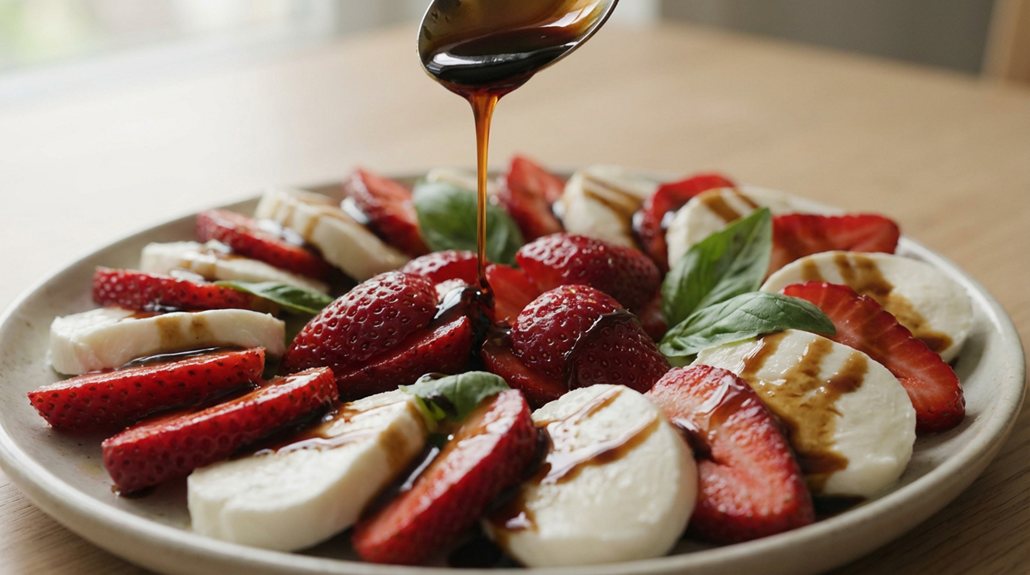
The glaze is non-negotiable: it’s the dark silk that ties the dish together. Without it, the sweetness of the strawberry and the herbal lift of basil float untethered—delicious, but ungrounded.
A proper balsamic glaze isn’t store-bought syrup in a plastic bottle: it’s reduction. Real reduction. Simmer quality balsamic vinegar—a 250ml bottle of Modena-grade—for 18 to 22 minutes over medium-low heat, stirring once or twice, until it coats the back of a spoon and holds a clean line when you drag a finger through it.
Cool completely. Transfer to a squeeze bottle: precision matters here. Drizzle in thin, deliberate lines—like gridding a map—over the arranged strawberries and basil.
Too heavy-handed? Cloying. Too light? Wasted effort. Aim for balance—the tang cuts richness, the shine invites the eye. Serve immediately.
Step 4. Add Creamy Burrata Cheese
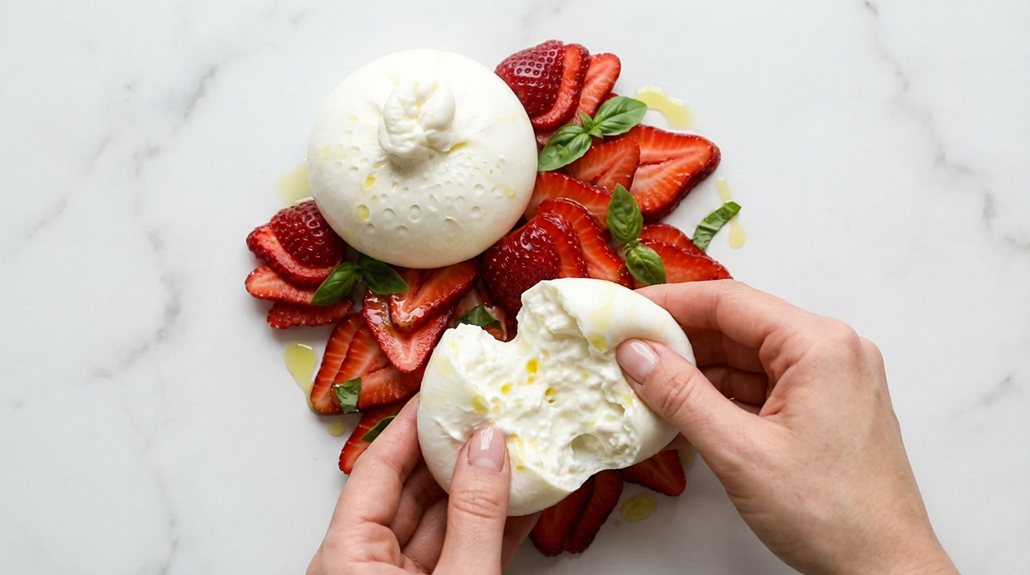
One large, chilled ball of burrata—about 8 ounces—goes on last, placed dead center over the arranged strawberries and basil: this isn’t optional staging, it’s structural.
The cold cheese holds its shape briefly, creating a visual anchor before yielding to warm hands at the table. Use tongs or two spoons when transferring—burrata’s delicate; rupture is part of the plan, but timing matters.
Let guests witness the split—the creamy curds spilling like thick cream—this is the dish’s moment. Pre-slicing ruins the reveal.
Source burrata packed in water, consumed within 24 hours of opening; available at specialty markets. If serving four, one is enough—generosity lies in presentation, not portion.
The fat content carries flavor, balances the balsamic’s sharpness, and softens the strawberry’s brightness. This isn’t garnish: it’s the hinge the dish swings on.
Keep it cold, keep it whole, then serve immediately.
Step 5. Sprinkle Flaky Sea Salt
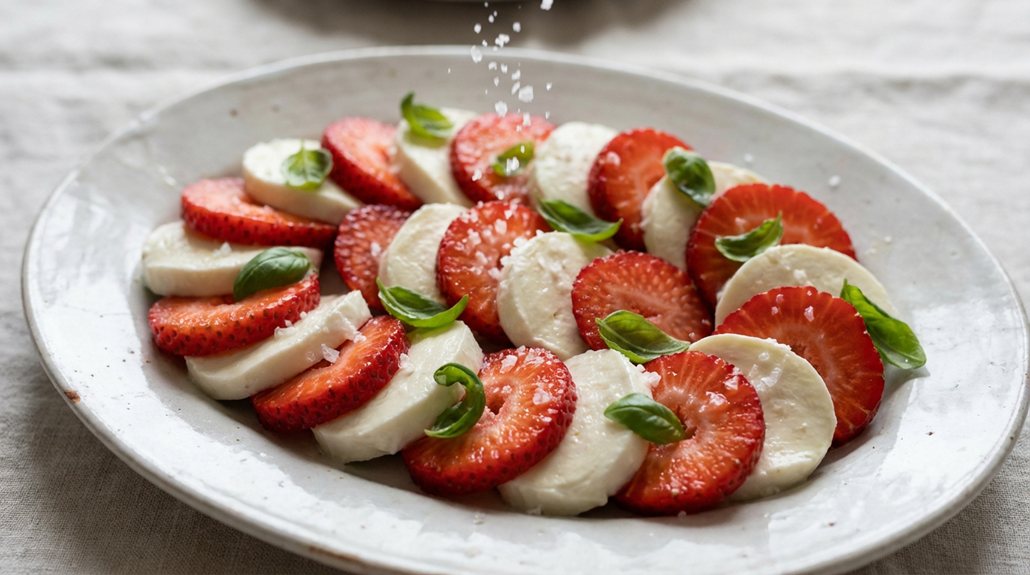
While the burrata’s richness sets the stage, it’s the flaky sea salt that sharpens the entire dish—don’t skip it, don’t underestimate it. A light sprinkle lifts every component: the fruit’s sweetness, the cheese’s cream, the basil’s perfume.
Use Maldon or any pyramid-textured salt—worth every penny. What matters: crystal structure. Flat salt dissolves too fast—vanishes before the palate notices. Flaky salt lands with intent: little bursts of salinity that balance without overpowering.
Apply by hand—never a shaker. Pinch and scatter from two inches above. One light layer. That’s all. You’re not curing meat; you’re highlighting freshness.
Serve immediately after seasoning—no lag. The salt draws moisture, yes, but that moisture pools into the plate: it becomes part of the eating experience. Spoon it over bread—your guests will thank you.
This isn’t garnish. It’s an adjustment. Precision. Care. You’ve built something delicate. Honor it with the right finish.
Common Questions About This Recipe
Why do so many versions of this salad miss the mark? They ignore balance: sweet without acid, rich without cut. The key lies in contrast—ripe strawberries demand sharp balsamic, fat from burrata needs the bite of fresh basil.
Salt isn’t optional: a pinch lifts every layer. Use flaky sea salt—Maldon, if available—applied just before serving.
Don’t dress the salad too early; the berries bleed, the greens wilt. Wait ten minutes. Always serve at cool room temperature—fridge-chilled burrata mutes flavor, cold dulls taste.
Cut the burrata just before plating: clean hands work better than knives for gentle separation. Use 12 ounces of strawberries, hulled and sliced ¼-inch thick. One 8-ounce ball of burrata serves two.
Quality matters: find fresh, milky burrata—never rubbery. Trust the process. It’s simple, not simplistic.
Pair With Grilled Shrimp Skewers
Grilled shrimp skewers bring a smoky-sweet companion to the cool richness of Strawberry Caprese. The contrast of charred crustacean and creamy burrata creates balance—temperature, texture, fat, and acid falling into place.
Skewers enhance the dish from salad to centerpiece, ideal for summer gatherings where guests remember both taste and presentation. Prep: leave tails on for grip, use soaked bamboo or stainless steel skewers, and oil grates well.
Skewers elevate the dish to centerpiece status, perfect for summer gatherings where flavor and flair linger in every guest’s memory.
- Shrimp size: 16/20 count—large enough to grill, small enough to cook fast
- Marinate 10 minutes: olive oil, lemon zest, minced garlic, pinch of Calabrian chili
- Grill 2 minutes per side: direct heat, 400°F, until opaque and lightly marked
- Rest before serving: let meat reabsorb juices—don’t rush this step
Serve skewers alongside—never on top—to preserve the salad’s integrity.