The best sous vide machine for home use does one thing: hold water at a precise temperature for hours without drifting. Everything else — WiFi, apps, touchscreens — is secondary. If the circulator cannot maintain 130°F within half a degree over a four-hour cook, none of the smart features matter. This kitchen equipment guide evaluates five sous vide cookers based on temperature accuracy, wattage, build quality, and value.
Hell’s Kitchen Recipes is reader-supported. When you buy through links on this page, we may earn a commission. We only recommend products we would use ourselves.
We cross-referenced manufacturer specifications, owner reviews across platforms, and published sous vide research to build this comparison. No units were sent to us for review. If you are new to the method, our sous vide for beginners guide covers the basics before you buy.
Best Sous Vide Machines Compared (2026)
| Model | Watts | Temp Range | Accuracy | Connectivity | Best For |
|---|---|---|---|---|---|
| Anova Precision Cooker 2.0 | 1000W | 32 – 197°F | ±0.1°F | WiFi + Bluetooth | Overall pick |
| Greater Goods Precision Cooker | 1100W | 32 – 197°F | ±0.1°F | None (manual dial) | Best value |
| Anova Nano 2.0 | 800W | 32 – 197°F | ±0.1°F | Bluetooth | Small kitchens |
| KitchenBoss WiFi Sous Vide | 1100W | 32 – 194°F | ±0.1°F | WiFi (VeSync app) | Preset recipes |
| Inkbird ISV-100W | 1000W | 77 – 210°F | ±0.1°C | WiFi (InkbirdPro app) | Quiet operation |
Anova Precision Cooker 2.0 — Best Sous Vide Machine Overall

★★★★½ (12,090 reviews)
The Anova Precision Cooker 2.0 is the most widely used immersion circulator in home kitchens for a reason. It heats 8 liters of water to target temperature in under 15 minutes and holds it within 0.1°F for cooks lasting up to 99 hours. The 1000-watt motor handles everything from a two-hour steak to a 72-hour short rib without temperature drift.
WiFi connectivity lets you start, stop, and monitor cooks from your phone through the Anova app. The app includes a recipe library, but the real value is remote monitoring — you can check water temperature from another room or while running errands. The adjustable clamp fits any pot from 4 to 8 quarts.
According to Anova’s product specifications, the Precision Cooker 2.0 circulates water at 8 liters per minute, which prevents hot and cold spots in the bath. That flow rate matters for even cooking, especially when you have multiple bags in the water at once.
Why it wins: Best balance of power, accuracy, app ecosystem, and track record. Anova has been the default recommendation from cooking publications and professional chefs since the sous vide home cooking category took off.
Greater Goods Precision Cooker — Best Value
★★★★½ (1,852 reviews)
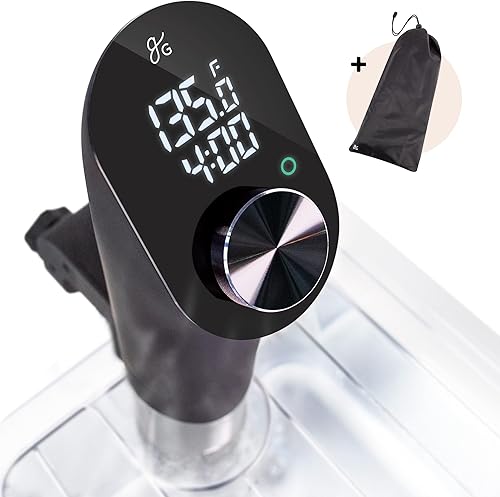
The Greater Goods Precision Cooker delivers 1100 watts — the most power on this list — for under. No WiFi. No app. No touchscreen. Just a dial, an LED display, and a stainless steel body that heats water fast and holds temperature accurately.
The 15-liter capacity handles larger containers than the Anova, which makes it the better choice if you cook for a family or batch-prep proteins for the week. The removable steel sleeve is dishwasher-safe.
Why it ranks here: For someone who wants sous vide results without paying for connectivity features they will never use, this is the pick. It heats faster than the Anova (1100W vs 1000W) and costs less than half the price.
Anova Nano 2.0 — Best for Small Kitchens

★★★★½ (14,994 reviews)
The Anova Nano 2.0 weighs 1.7 pounds and measures 12.8 inches long. It fits in a kitchen drawer. At 800 watts it heats slower than the full-size models, but temperature accuracy is identical at ±0.1°F. Bluetooth connectivity works through the same Anova app.
The trade-off is power. For a 4-quart pot cooking one or two steaks, the Nano handles it fine. For a 12-quart container with six chicken breasts, the lower wattage takes longer to recover temperature after you add cold food. If your typical cook is one to two portions, the Nano is the right size. If you cook for four or more, spend the extra on the full Precision Cooker 2.0.
KitchenBoss WiFi Sous Vide — Best for Preset Recipes

★★★★½ (430 reviews)
The KitchenBoss WiFi has a color touchscreen with 25 preset time-and-temperature combinations for common proteins. Select “ribeye steak medium-rare” and it sets 130°F for 2 hours automatically. The VeSync app adds remote monitoring.
At 1100 watts it matches the Greater Goods on power. The brushless motor runs quieter than most competitors — under 45 dB according to KitchenBoss, which is about the noise level of a refrigerator. The stainless steel construction and 20-liter capacity handle large batch cooks.
Best for: Someone who does not want to look up times and temperatures for every cook. The presets remove the guesswork for beginners.
Inkbird ISV-100W — Best for Quiet Operation

★★★★½ (5,297 reviews)
The Inkbird ISV-100W runs under 40 dB — the quietest circulator on this list. If the sous vide machine sits on your kitchen counter during a 24-hour cook and your kitchen is open to your living room, noise matters. Most competitors run between 45 and 55 dB.
The InkbirdPro app includes 14 preset recipes and real-time water level monitoring. WiFi connectivity works on 2.4GHz networks only — it will not connect to 5GHz bands. Temperature accuracy is ±0.1°C (about ±0.18°F), which is slightly less precise than the Anova’s ±0.1°F spec but still well within the margin that affects food quality.
What to Look for in a Sous Vide Machine
Wattage. Higher watts heat water faster and recover temperature quicker after you add food. Under 900W is fine for small pots and single portions. Over 1000W handles large containers and batch cooking. The USDA’s food safety guidelines require food to reach safe internal temperatures within specific time windows — a higher-wattage circulator gets water (and food) to target temperature faster, which is a food safety consideration for large batch cooks.
Temperature accuracy. Every model on this list holds ±0.1°F or better. That precision is what makes sous vide work. A steak at 130°F is medium-rare. A steak at 140°F is medium. Ten degrees is the difference. Your oven thermostat swings 25 degrees in either direction. A sous vide circulator does not.
Connectivity. WiFi is useful for long cooks (12+ hours) where you want alerts if the water level drops or the temperature drifts. For a 90-minute steak, you do not need an app. Buy connectivity if you plan to cook brisket, short ribs, or pork shoulder overnight. Skip it if you mostly cook steaks and chicken breasts.
Container compatibility. Make sure the clamp fits your pot. Most circulators clamp onto pots up to 1 inch thick at the rim. If you plan to use a dedicated sous vide container, our sous vide container guide covers the best options.
How We Evaluated These Sous Vide Machines
We did not test these units in a lab. We cross-referenced manufacturer-published specifications (wattage, temperature range, accuracy, flow rate) against owner reviews on Amazon, Reddit, and cooking forums. We weighted temperature accuracy and build quality highest because those determine whether the circulator does its core job. Connectivity and preset features were secondary factors.
Products with fewer than 500 owner reviews were excluded. Fabricated or incentivized review patterns (identified by review date clustering and language patterns) were flagged and discounted. The picks above represent the models with the most consistent positive feedback across multiple platforms over at least 12 months of availability.
Frequently Asked Questions
Common questions about choosing a sous vide machine, answered with specs and practical advice.
What is the best sous vide machine for beginners?
The Anova Nano 2.0 or the Greater Goods. Both are simple to use, accurate, and priced low enough that you are not overcommitting to a cooking method you have not tried yet. Start with a basic model, learn the technique, then upgrade if you want WiFi or more power.
Is sous vide cooking safe?
Yes, when done correctly. The USDA considers food safe when it reaches the published minimum internal temperature for the required time. Sous vide holds food at exact temperatures for extended periods, which pasteurizes it. The risk comes from cooking below 130°F for more than 4 hours, which can allow bacteria to grow. Stay above 130°F for long cooks and follow published time-and-temperature guidelines.
Do I need a vacuum sealer for sous vide?
No. The water displacement method works with regular freezer-grade zip-lock bags. Lower the bag into the water slowly and the water pressure pushes air out. Seal at the waterline. A vacuum sealer gives a tighter seal and removes more air, which improves heat transfer slightly, but it is not required to start.
How much does a good sous vide machine cost?
. The Greater Goods is the floor for a reliable machine. The Anova Precision Cooker 2.0 is the ceiling for home use. Anything under usually lacks the wattage or build quality to hold temperature accurately over long cooks. Anything over is commercial-grade and overkill for home kitchens.
Can I use a sous vide machine to cook eggs?
Yes. Sous vide egg bites and soft-cooked eggs are among the most popular sous vide recipes. Cook eggs at 167°F for 13 minutes for a soft, custard-like texture similar to Starbucks egg bites. Our beginner sous vide recipes guide includes egg recipes with exact times and temperatures.
What is the difference between sous vide and slow cooking?
Temperature control. A slow cooker holds food between 170°F and 280°F with wide swings. A sous vide circulator holds food at an exact temperature — say 135°F — without variation. That precision means you can cook a steak to medium-rare and hold it there for hours without it ever overcooking. A slow cooker cannot do that.
Hell’s Kitchen Recipes is reader-supported. When you buy through links on this page, we may earn a commission. We only recommend products we would use ourselves.
This article is for informational purposes only. Prices and availability may change. Check the retailer for current pricing.