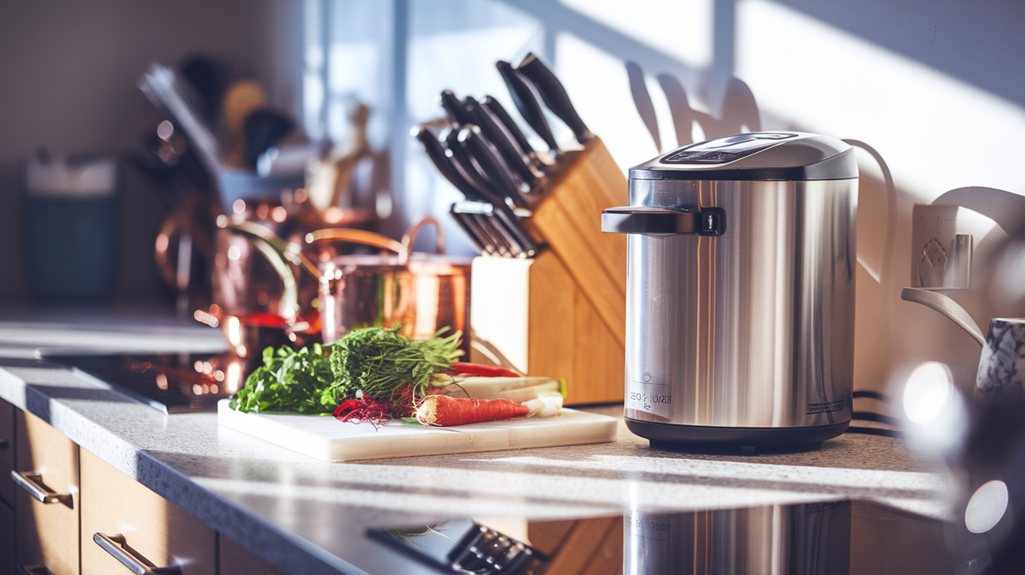
For most home kitchens the best sous vide cooker is the Anova Precision Cooker 3.0: 1100 watts, WiFi and Bluetooth, and it holds the water within a fraction of a degree, which is the one thing a circulator has to get right. If you would rather skip the app entirely, the Greater Goods cooker does the same job with a plain dial, and if you are just testing the method, the SousVide Art kit hands you the cooker, the bags, and a vacuum pump in one box.
A sous vide cooker (an immersion circulator) clamps to a pot, heats the water to a set temperature, and keeps it moving so every part of the bath sits at the same number. Below are 11 machines compared, then the short version of why the method works and how to pick by budget.
Best Sous Vide Cookers Compared (2026)
Every machine here is an immersion circulator that clamps to a pot or tub. The real differences are power (how fast it reaches temperature and recovers when you add cold food), connectivity, and whether it ships as a bare cooker or a full kit.
| Model | Power | Connectivity | Best for |
|---|---|---|---|
| Anova Precision 3.0 | 1100W | WiFi + Bluetooth | Overall pick |
| Greater Goods | 1100W | None (manual dial) | No-app simplicity |
| SousVide Art Kit | Digital dial | None | Best starter kit |
| Anova Nano 2.0 | 750–800W | Bluetooth | Small kitchens |
| Breville Joule Turbo | Turbo heat-up | WiFi + Bluetooth (app only) | Premium, compact |
| Inkbird ISV-100W | 1000W | WiFi | Quiet, budget WiFi |
| Anova Precision 2.0 | 1000W | WiFi + Bluetooth | The prior flagship |
| KitchenBoss G330 | 1100W | WiFi | Preset recipes |
| Inkbird ISV-200W | 1000W | WiFi (2.4G) | App presets |
| Inkbird ISV-300W | 1000W | WiFi (IPX7) | Splash resistance |
| Vpcok Kit | 1000W | None | Kit with container |
Why Sous Vide Works, in One Section
Water carries heat far better than air and cannot climb past the temperature you set it to, so the food can only ever reach the number on the dial. That is the whole trick. Set the bath to 130°F for a medium-rare steak and it will never cross 130°F no matter how long it sits, which is why the method is so hard to overshoot.
The reason the exact number matters is that proteins firm up at specific thresholds. Fish proteins begin to set around 104 to 122°F, land-animal muscle around 122 to 140°F, and the tough collagen in cheaper cuts only melts to gelatin once it holds above roughly 154°F (68°C) for a long stretch. A few degrees is the difference between silky and chalky, so a circulator earns its keep by holding the bath steady and moving the water so there are no cold pockets. Power decides how quickly it recovers after you drop in cold bags; accuracy decides how close to that threshold you can safely sit.
Food safety rides on the same physics. The USDA safe-temperature guidance from its Food Safety and Inspection Service still applies: hold long enough at temperature and sous vide pasteurizes as it cooks, but a bath below about 130°F is a holding zone, not a safe long cook.
Anova Precision Cooker 3.0: Best Overall
The 3.0 is the one to buy if you want a single machine that does everything well. Anova states 1100 watts and a stainless-steel body on its product page, and it keeps both the app control and a physical dial, so a dead phone never strands you. The extra wattage over the older 2.0 mostly shows up as faster recovery when you load a full bath of cold food.

Anova Culinary
Anova Culinary Sous Vide Precision Cooker 3.0 (WiFi), 1100 Watts, Stainless Steel
- 1100 watts, stainless-steel body that shrugs off long cooks
- WiFi and Bluetooth through the Anova app, with a manual dial if the phone is busy
- Holds the water within a fraction of a degree, which is the whole job
Greater Goods Sous Vide: Best No-App Cooker
Not everyone wants a kitchen tool that needs a login. The Greater Goods cooker is 1100 watts with a plain dial and display: set the temperature and the timer, clip it to a pot, and it runs. There is nothing to pair and nothing to update, which is exactly the point for a lot of cooks.

Greater Goods
Greater Goods Sous Vide Cooker, 1100W, No App or WiFi Needed (Onyx Black)
- 1100 watts, no app and no WiFi to fight with
- Set the temperature and time on the dial and walk away
- The pick if you just want it to work out of the box
SousVide Art Kit: Best Starter Setup
The usual hidden cost of starting sous vide is the stuff around the cooker: bags, a way to get the air out, a vessel. The SousVide Art kit folds most of that in with 30 reusable bags and a hand vacuum pump alongside the cooker, so a beginner can run a first cook the day it arrives. Pair it with our beginner sous vide recipes to get going.

SousVide Art
SousVide Art Immersion Cooker Kit with Digital Timer, Temp Control, 30 Bags and Vacuum Pump
- Immersion cooker with a digital timer and temperature control
- Comes with 30 reusable bags and a hand vacuum pump
- A whole starter setup in one box, so there is nothing else to buy
Anova Nano 2.0: Best for Small Kitchens
The Nano is the compact Anova that stores in a drawer next to the whisk. It runs the same 32 to 197°F range within about a tenth of a degree and clamps to any stockpot, so it gives up size, not accuracy. For one or two people and limited counter space, it is plenty of cooker.

Anova Culinary
Anova Culinary Sous Vide Precision Cooker Nano 2.0
- Small enough to stash in a kitchen drawer
- Runs 32 to 197°F within about a tenth of a degree
- Clamps to any stockpot, so no special vessel needed
Breville Joule Turbo: Best Premium Pick
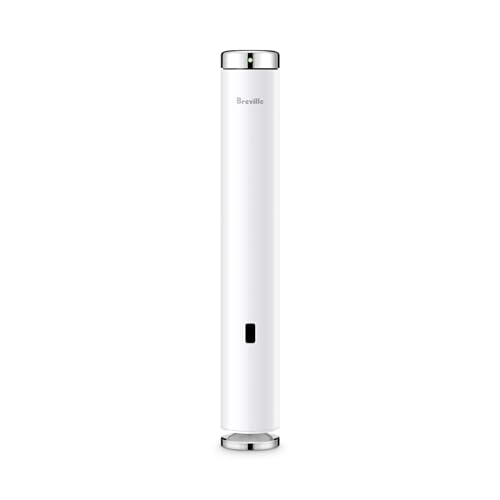
The Joule Turbo is the smallest circulator here and the most app-led: it has no control panel at all, and Breville leans on the phone for visual doneness guides and a Turbo mode that heats the bath faster. If you cook from your phone anyway and want the least gear on the counter, this is the splurge. Breville lists the full specification on its product page.
Breville
Breville BSV600PSS Joule Turbo Sous Vide Machine, Polished Stainless Steel
- Turbo mode heats the bath faster to shorten the wait
- Runs entirely from the app, with visual doneness guides
- The smallest of the group, with no panel to clutter it
Inkbird ISV-100W: Best Budget WiFi
The Inkbird ISV-100W is the value WiFi option: 1000 watts, a free app with 14 presets, and quiet running once the water is up to temperature. It does not have the fit and finish of the Anova, but it holds temperature well and costs noticeably less, which makes it an easy first circulator.

Inkbird
Inkbird WiFi Sous Vide Cooker ISV-100W, 1000W, Free App with 14 Preset Recipes
- 1000 watts and quick to come up to temperature
- WiFi with a free app and 14 built-in presets
- One of the quieter circulators once it settles in
What to Look For in a Sous Vide Machine
Power comes first: 1000 to 1100 watts recovers quickly after you add cold food, while a weaker unit sags and takes longer to climb back. Accuracy is second, and most quality circulators hold within about a tenth of a degree, which is all you need. After that it is preference: WiFi is genuinely handy for long cooks you want to check from another room, a manual dial is one less thing to break, and a fixed clamp lets you use any pot instead of a special container. Noise varies, so if the kitchen is near a bedroom, look at the quieter models.
How Much Should You Spend?
You do not need to spend much to cook well. A budget cooker or a starter kit is enough to hold a steady bath, and the jump in price mostly buys faster recovery, a nicer app, and better build. Spend at the bottom of the range if you are testing the method, in the middle for a machine you will keep, and at the top only if you want the smallest footprint or the Turbo heat-up. Whatever you pick, a good sous vide container and lid saves water and cuts evaporation on long cooks more than an extra hundred watts will.
Sous Vide Cooker FAQs
The questions that come up most: which cooker suits a beginner, whether it is safe, whether you need a vacuum sealer, and what a good one costs.
What is the best sous vide machine for beginners?
A starter kit like the SousVide Art, which includes bags and a vacuum pump, or a value WiFi cooker like the Inkbird ISV-100W. Both hold temperature well and cost little, so there is no risk in learning on them.
Is sous vide cooking safe?
Yes, as long as you cook hot enough for long enough. Held at temperature, sous vide pasteurizes food as it cooks. Follow the USDA safe-temperature guidance, and treat any bath below about 130°F as a short hold rather than a long, low cook.
Do I need a vacuum sealer for sous vide?
No. Zip-top bags and the water-displacement method work fine: lower the bagged food into the water and let the pressure push the air out before sealing the last corner. A vacuum sealer is tidier for batch cooking, not required.
How much does a good sous vide machine cost?
Budget cookers and starter kits sit at the low end, capable mid-range WiFi models in the middle, and the compact premium units like the Breville Joule at the top. The extra money buys faster recovery, a better app, and a smaller footprint, not better core accuracy.
Can I use a sous vide machine to cook eggs?
Yes, eggs are one of the best uses. A 63 to 75°C (145 to 167°F) bath gives you everything from a just-set custardy yolk to a firmer soft-boil, and because the water never exceeds the set number, the result is repeatable every time.
What is the difference between sous vide and slow cooking?
A slow cooker runs hot and imprecise, often well above 190°F, so it drives food toward well-done. Sous vide holds an exact, lower temperature, so a steak stays medium-rare edge to edge no matter how long it sits.
Is WiFi worth it on a sous vide cooker?
For long cooks it is genuinely useful, since you can start, check, and get an alert from another room. For short cooks a manual dial is just as good and one less thing to pair, so buy WiFi for convenience, not accuracy.
How accurate does a sous vide cooker need to be?
Within about a tenth of a degree is plenty, and most quality circulators manage that. Stable circulation matters as much as the rated accuracy, because a machine that moves the water evenly avoids cold pockets that a spec sheet will not show.

About the Author
John Siracusa is the founder of Hell’s Kitchen Recipes. He focuses on technique-first, reproducible home cooking and researches recipes & kitchen equipment from published food science and professional chef methods since 2016.